


🎧 Here on The ChinaHealthPulse Podcast, I chat in depth with the real experts who have dedicated years to working in and with China’s health - across policy, industry, academia and well beyond. Our candid conversations aim to provide you with real insight into how care is delivered, how decisions are made, and why it all matters, far beyond China’s borders.
Watch or listen here on Substack or Youtube, and/or subscribe on Spotify & Apple Podcasts. These newsletter posts provide all links, plus a full text transcript of each episode.
This past month, China’s role in global Health was more visible than ever.
The 79th World Health Assembly was held in Geneva last week, bringing governments into the annual forum where health policy financing, technical cooperation on health and diplomacy collide. For countries all around the world, the WHA is much more a health meeting; it’s also a test of how nations can present themselves inside the multilateral institutional platform and how they handle sovereignty questions, how they talk about development and how much global health leadership each nation is aiming for. And for China, certainly, it was a really important platform.
The week prior, in mid-May, President Trump visited Beijing for a high-profile summit with President Xi Jinping. And though health may not have been the headline issue, it is a topic that underlies so many of the difficult questions within U.S.-China relations today, whether that’s drug supply chains, biotech competition, health data and disease surveillance, or tariffs or aid or trust.
And if we go back a little further, to March earlier this year, and the Two Sessions, China’s annual plenary. This year, China’s 15th Five Year Plan was delivered, and it showed how much pressure China’s domestic health system is under, whether that’s hospital reforms, ageing, long-term care, rising chronic disease burdens. These health policy challenges are part of much larger domestic themes around how China aims to govern healthcare, cost, technology, and social stability at the same time.
This episode is a chance for us to step back from all of those headlines and events and ask: what does Beijing actually want from healthcare now? i.e. the policy logic underneath both China’s domestic and international health strategy.
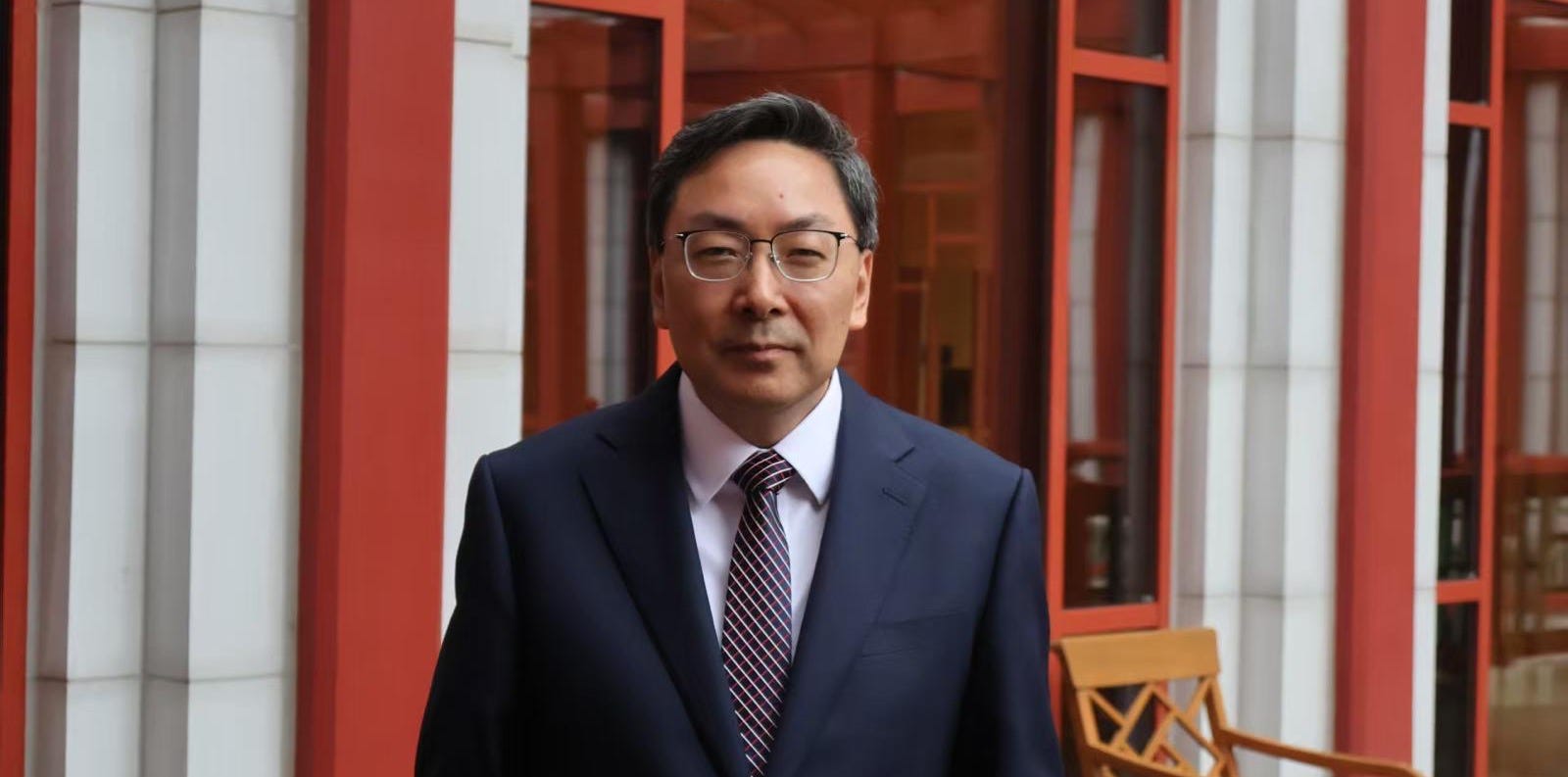
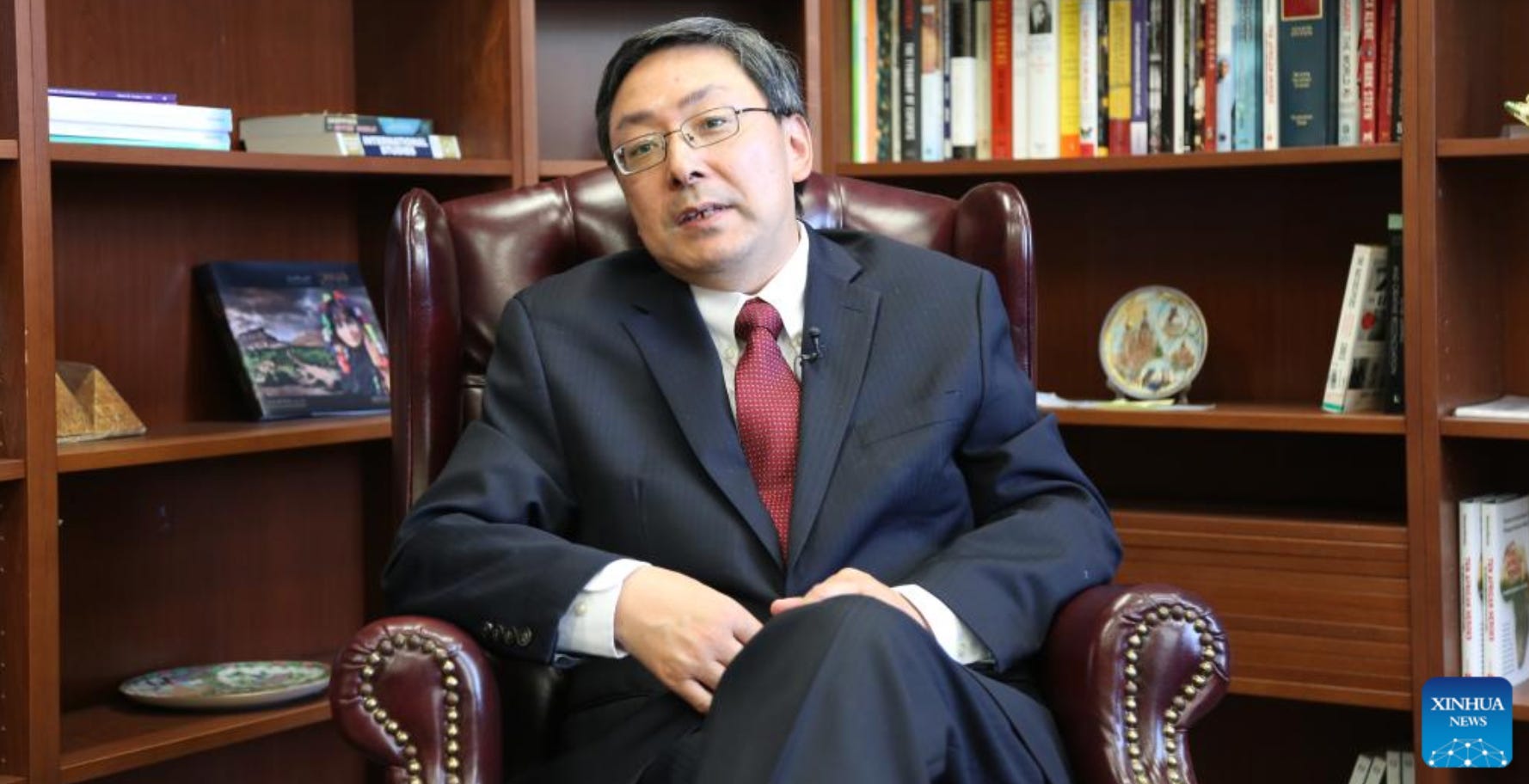
To help make sense of this, our guest Professor Yanzhong Huang is one of the leading scholars of China’s health politics and governance, global health security and US-China relations. He looks at China’s health policy through institutions, incentives, state capacity, trust, bureaucracy, international relations and security, connecting all of these dots across both the domestic and the international in a way that many health discussions on China miss.
Professor Huang is a Senior Fellow for Global Health at the Council on Foreign Relations, where he directs the Global Health Governance Roundtable Series. He is Professor on Global Health at Schwarzman College at Tsinghua University, and also Professor and Director of Global Health Studies at Seton Hall University’s School of Diplomacy and International Relations, where he developed the first academic concentration among US professional international affairs schools focused specifically on the security and foreign policy dimensions of health.
Professor Huang has testified before US congressional committees multiple times and is regularly consulted by media, government, industry, and NGOs on global health in China. He is the author of several major works, including Governing Health in Contemporary China, Toxic Politics: China’s Environmental Health Crisis and its Challenge to the Chinese State, and The COVID Pandemic and China’s Global Health Leadership. He is also Founding Editor of Global Health Governance, the scholarly journal for the new health security paradigm.
Watch/listen/read on Substack, on Youtube, or subscribe to the audio podcast on Spotify and Apple:
Read our Conversation:
(Audio transcript adjusted for clarity and flow)
1. China’s Health Ambitions & Challenges
Ruby: Let’s start with the big picture first. When we look at China’s health system in 2026, what do you think does the state want from healthcare now? Is it being treated as a public service, a social stability issue, an innovation engine, a fiscal challenge, a governance test? Or is the challenge that it is all of these things at once?
Professor Yanzhong Huang: Well I think if you want to single the most important tension and challenge for China’s healthcare system, in 2026, it all boils down to this challenge, that is: China wants a developer ward health system at a developing country price. But rather than to significantly invest in its healthcare system, for example, it makes its hospitals earn their own cap. So once you see that one choice, (it leads to) almost everything else that people worry about: the inequality, the corruption, the over-treatment, the stunted private sector, all if it starts to look like a consequence of that.
Certainly, the government ambition is enormous, Healthy China 2030 aims to raise China’s average life expectancy to around 80 years old by 2030, to cut claims coverage above 95 per cent, pushing to lead in biopharma and AI. But if you look at how much China has spent, it is only around 5 per cent of GDP on health. That is well below what countries with those ambitions usually spend. How do you square that? Not by writing big checks to hospitals, but by telling hospitals to go find the money themselves.
A couple of weeks ago I was in my hometown, meeting with the director of the county hospital. I was told that the direct government funding was about 1 per cent of the total revenue, which was roughly 600 million yuan. What is that institution really? A public hospital that behaves like a business, or a money-making machine, if you will. Remember in China, public hospitals provide roughly 80 to 90 per cent of the hospital services, China has imported the incentive of the market, to chase revenue, chase volume, chase the demand, into a system that is still publicly owned but without the discipline a real market imposes. So you get the incentives of the market without its accountability and the ownership of the state without its funding. That is like the worst of both worlds, right? I think that is the major challenge.
Just to give an example of the potential consequences. A relative of mine had cerebral haemorrhage last month and needed emergency surgery. The bill was about 100,000 RMB. She is covered, she is insured, but after reimbursement, she was still left paying close to an entire year’s average raw income out of pocket. So the gap between covered and protected - it’s enormous. There’s still a threshold beyond which ordinary families simply fall through. You might call this China’s key line.
2. China’s 15th Five Year Plan
Ruby: Bearing in mind China’s persisting challenges, gaps in access, cost inequalities. The Two Sessions in March gave us the 15th five-year plan, the forward-looking five-year blueprint vision of what China wants to achieve across all sectors, including on health care and social welfare. From those health signals, which priorities do you think outside observers should take seriously? And which ones might feel more like repeated policy language that might be harder to translate into real change with time? Do you think we’re seeing a new phase of health reform or continuing unresolved persisting problems as the fiscal demographic and pressures that you mentioned, continue?
Yanzhong Huang: Honestly, I think most of what gets announced at the two sessions on health is continuity, or you might call it a gradual approach - essentially, the same '‘Healthy China” language year after year. So the useful question isn’t “what did they say”, it’s “what actually it signalled”, and this year, there are two (areas) that I believe are worth taken seriously. The government is admitting that the basic public health insurer, the health insurance, has hit a ceiling, so it’s doing two things: building rails for private money to share the load, and concentrating the scale of public money on the demographic emergency.
The first one, the outside observers tend to most underrate, because it sounds technical, but it isn’t. For the first time, commercial health insurance showed up in the government work report. Premier Li Qiang said that the government would move faster to develop it. In January, China launched its first ever commercial health insurance drug list, the so-called “Category C” list, sitting deliberately outside the basic health insurance catalog, and designed to capture the expensive, highly innovative drugs the public fund can’t afford. So it is simultaneously a confession and an invitation: the confession because the basic insurance can no longer pay for everything, the invitation, to the private sector, here is the official reimbursement pathway for premium medicine, so go and build a market. So for pharma and insurers, that’s the most consequential thing from the Two Sessions.
And the second signal is the demographic pivot. That’s where the real money is moving. The government announced that measures to improve total fertility rate to a national child care subsidy 3600 RMB a year per child aged under three. That is around 90 billion RMB of central government money, reaching over 20 million families. They also announced a goal of making basic childbirth essentially free, and even more interesting, assisted reproduction. In-Vitro Fertilisation, IVF, now is covered by insurance in all 31 provincial regions - that was unthinkable, a few years ago.
These are some very interesting signals, but cash baby bonuses have a weak track record everywhere, because fertility essentially doesn’t respond much to a few thousand RMB when the real cost we know is more about housing, education, and careers, right? So birth rebounded slightly to about 9.4 million in 2024, but the trajectory is still down, China’s new birth population this year is still dropping. to the 1939 year level.
So is this spending demographically effective or just the politically necessary? My read is the latter, dressed as the former. I would really be interested in watching the long-term care insurance, well the structural one. China keeps calling it the sixth pillar of social insurance, but the financing has never been resolved. If they solve that, it’s going to be a game changer. If they fail to, then families will keep bearing the full financial burden of an ageing population.
Related:

Health and the Two Sessions (Pt 1 of 2): What China’s Top Political Event Really Revealed This Year

3. Financing and Insurance
Ruby: that was exactly going to be my next question! On how financing and insurance might solve China’s demographic challenges.
Yanzhong Huang: We cannot answer this without the long view, right? Because the tension I just described, of the hospitals being told to fund themselves, is not a 2026 invention, it was a choice China made in the 1980s when it marketised healthcare and cut direct funding and told hospitals “you are on your own”, to make up the differences. That was when the rural co-operative system collapsed, and this “affordability and access” problem entered the language. So the core problem is already about 40 years old.
There have been genuine attempts to to fix those problems. In 2009, the government launched healthcare reforms and committed an extra eight 850 billion RMB, that’s about 124 billion US dollars. That’s how they expanded coverage, from a minority, to over 95%, so anyone who says China never funds health is wrong.
But here is the catch: that money unfortunately went mostly into the demand side. It expanded who was covered, but what it did not do was fix how public hospitals are financed. That was always the harder second phase and that has never been delivered. The government leaders and the decision makers recognise that problem. They always say that hospital reform is the core of China’s healthcare reform. But so far, they have left that structural part untouched.
We’ve also seen since 2018, China created the National Healthcare Security Administration, the NHSA. For the first time you have a single powerful buyer with enormous leverage over prices, but shifting from passive paying bills to what they call “strategic purchasing”. This is how the VBP, volume-based procurement, DRG (diagnosis related groupings), and DIP (Diagnosis-Intervention Packet) payment reform became relevant. It is a sophisticated modern toolkit that didn’t exist 15 years ago - but here’s why still I came down with some kind of pessimism: every one of those tools is a cost management device, and not one of them touch this original choice, There is this continuous reluctance to fund the public hospital delivery from general revenue. Even though the state is becoming more sophisticated and managing the symptoms of the 1980s decision, they never revisited that decision. So it’s essentially like new bandages on a very old wound.
4. Primary Care and Hospital Reform
Ruby: That’s a very appropriate medical metaphor. Focusing a bit more about the hospital structure that China is struggling with: this focus still on tertiary centres, difficulty in balancing public hospitals that act like private businesses, private hospitals and the commercial drug reimbursement list that’s being implemented now, There’s also the patient and consumer demand side where Chinese patients to generalise might still prefer larger hospitals and specialist centers over going to local community centers, primary care clinics, which they might perceive or actually might in reality still be lower in quality, have lower capacity than the specialist centers. So can you share a bit more about how that progression is transforming, how China viewed primary care reform maybe 10 years ago compared to today, why it’s remained so difficult and the role of technology making a difference in how patients access tertiary centers, maybe skipping over primary care even, and that behavior, that trust, ⁓ and how that kind of interacts with the deeper structural issues.
Yanzhong Huang: the issue is still related to that question of the public hospital reform. essentially, if you are a medical student, and you finished your medical school. You’re hired by, let’s assume, a township health centre. You have a basic salary, but the demand for services is very low, because people prefer the tertiary hospital service or even urban health centre service to a township health centre. So you really don’t have the demand, and without the demand you end up only being paid your basic salary, no bonuses, so there’s no real incentive (for you as a doctor) to stay at the grassroots level, so you would try your best try to get hired by a county hospital or urban health centre to get better paid. Eventually this creates this vicious cycle of a quality issue at the grassroots level. It affects people’s incentive to seek treatment there. there’s a trust issue certainly. people would prefer but to go to the urban health centers, including the county hospitals, this reform trying to Than keep those those basic services being provided at the grassroots level is not quite successful, I think.
Related:


5. Central Policy vs. Local Implementation
Ruby: And that top-down, visionary, long-term governance, blueprints, initiatives versus implementation on the ground, how incentives of different institutions or even incentives of local governments. The ideology or the theory, versus the practical implementation - bearing in mind all of these different agendas and challenges. Does the China context makes all of that more difficult because of the diversity on the ground - or actually does it makes it all a bit simpler than in other countries, because of the central role of governance in driving change?
Yanzhong Huang: I think the key thing is this gap between central policy design, the local delivery right in Chinese health sector, it’s not a failure of implementation. It is the actual building to that architecture or that institution. We can talk about this fiscal decision made in 1994 when Zhurong Ji was the Chinese premier - China did a big tax sharing reform that pulled the revenue up to the central government, but left the spending responsibilities. We’re talking about 85 per cent of the spending responsibilities down at the local level. So Beijing collects the line’s share of the money, but local governments from provinces to counties have to actually deliver health education, social services. The policies are designed in Beijing, but the bills are paid in the counties. This sounds very simple, but that is why I tell people not to talk about the Chinese healthcare system as if it’s one thing. It’s actually thousands of local systems with widely different capacities.
Insurance was historically poured at the city or even county level, so a rich coastal city and a poor inland county each run their own fund. A wealthy municipality can offer generous reimbursement, although that seems to be becoming increasingly difficult given the sluggish economy. A struggling country with an older, sicker, poorer population can barely keep its bonds sovereignty, so the same national policy could produce completely different reality, but in China, the centre is now pushing to pull at the provincial level to even this out. I think this is a sensible decision, but implementation is slow because richer areas don’t like this idea of subsidising poor ones,
But with that being said, some of those decentralisation measures are deliberate and smart. China is huge and diverse, and leading localities experimenting has been a real strength. A lot of that I wouldn’t necessarily call the best, but good reforms have started at local pilots that have then scaled. The problem here is that such experimentation becomes a feature when localities have resources, and a bug when they are just handed obligations they can’t fund - but increasingly the second seems to be the case.
There are also two practical rules we need to keep in mind. The first is that we need to discount a central announcement by the local fiscal capacity, because the policy is only as real as the poorest country’s ability to pay for it, And second, we need to watch the transport payments and the polling reforms, and not just the headline policies, because the real question is never what Beijing actually wants, it’s whether the money flows down to where care is delivered.
Related:


6. Health as Core Governance
Ruby: In terms of how the health sector in China influences social policy and economic policy, as a core pillar and as an opportunity area, compared to in other countries e.g. UK, where health as a public sector service is often viewed as one which absorbs costs rather than creates opportunity. Can you analyse the viewpoint from the state in China and how it delivers health governance and policy in such different ways?
Yanzhong Huang: The Chinese healthcare system, it’s different from in many countries. The public hospitals have a commandingly high proportion, even though number wise, they’re outnumbered by the private sector, but 80 to 90 per cent of the services in China are still provided by the public hospitals. And the government has made it clear, in terms of rhetoric, that public hospitals are supposed to show the so-called “public benefit'“. But in reality, because the government only fund a very, very small percentage, a fraction of the public hospitals revenue, they instead ask them to make money themselves to cover their spending, transforming those hospitals into a money making machine, that has not been changed. That is very different from many other countries.
I think biggest problem here when people talk about public hospital reform, even though it’s identified as a priority for many years, the biggest challenge is that you cannot change one incentive in isolation because they’re all wired into a single circuit. And that circuit traces back to the financing problem we keep hitting. For decades, Chinese public hospitals could add a 15 per cent markup on the drugs they sold. That’s how they made up for the government not funding them. For a time it was about, 40, even sometimes 45 per cent of hospital revenue, that came from selling drugs. So the predictable result was massive overprescribing. The government they abolished that nationwide by implementing that zero markup policy.
This is a good thing, right? It’s well intentioned. But here is what happened. Drug revenue went down as designed, but total cost to patients didn’t fall that much, because the hospitals, which still had to fund themselves, just shifted that revenue seeking elsewhere. So suddenly you see more medical tests, more imaging, more high-tech procedurals, more billable services. The zero markup didn’t reduce the underlying behaviour, it just moved it from one revenue stream to another. So you squeezed the balloon on one end, and the budget on the other. This is sort of like a whack-a-mole approach essentially.
7. Affordability vs Innovation
Ruby: I wanted to ask about this difficult balance that we’re seeing now between China’s priorities in trying to promote affordability and address the persisting inequalities and promote access to care for more of its population.But at the same time, innovation - whether that’s biotech and drug development or health technology and digital health - that’s a huge priority for China right now, too. And we’ve seen that again in the 15th five year plan.
Innovation, especially frontier cutting edge innovation, costs a lot. And these companies developing that innovation need funding to remain sustainable. So there’s this paradox between affordability in healthcare versus increasingly expensive front-end innovation. The biotech industry in China is struggling with this. And that’s one of the reasons they’re also moving overseas to look at the potentially more lucrative US market. So domestically, in China, what do you think about this difficult balance?
Yanzhong Huang: Well I think supporting innovative drugs, devices, AI, digital health, and they was to trying to improve access, they might be two different dynamics. We tend to describe this as a sort of elegant loop, where you crush old generics with bulk-buying and public-private partnerships and recycle the savings into the shiny new drugs and then squeeze the commodity end, to then fund the frontier. But they’re really two separate engines.
On the one hand, you have this brutal cost control machine, but on the other there’s a genuine innovation boom. The link between these two is not very clear. For example cost control works on price almost too well. Winning bids for the National Drug Reimbursement List are roughly 60 to 80 per cent below the old price, sometimes over 90 per cent. Generic aspirin went for about three cents, right? That costs less than packaging. But this past year it bit down on the quality and trust. You might have read how a senior surgeon at Shanghai’s regional hospital, talked about how some domestic generics are simply not performing: blood pressure drugs not controlling hypertension, and anaesthetics not putting patients under. And because the the foreign originals by Pfizer and AstroZeneca can (and have to) match the prices, they’re vanishing from hospitals’ shelves, so regulators had to fly to Shanghai to calm it all down because this could potentially become a social stability challenge. So cost control has a real ceiling. How long can you push price before you lose quality and the trust of your own doctors?
Then, the innovation boom to me is like the second engine. Here, the crucial correction is that China did not get there by recycling generic savings. You get there by deliberate, decades-long state strategy. And the 2015 regulatory overhaul cleaned out fraudulent trial data and slashed approval times, then the whole nation system, where biopharma was named the strategic sector, talent repatriation enabled trial machine that’s now the world’s largest - over 7,000 trials a year, at a fraction of the US cost. This booming Chinese biotech, biopharmaceutical industry, It’s a record $136 billion in outlicensing deals in 2025. That’s nearly a triple by the year before. So now China is second in the world, the first to launch new molecules. And that is why Pfizer’s CEO warned that for the first time in decades, American biotech dominance is being seriously challenged by China.
So, how do the squeeze and the boom connect? I think it’s almost the opposite of this story. The domestic price war is so brutal, and there’s so much Me-Too over-capacity, for example, 20 drugs approved in a single cancer immunotherapy class, margins at home collapse, that pushes firms to outlicense to the West and chase the US market because they cannot own at home. So those innovations, essentially a lot of that stays bordered at home or gets sold to Western partners, rather than reaching the world as Chinese products. That is the unfortunately the case, but the shining spot here is that constraint becomes an advantage. With AI in the system short of doctors, dig hard on cheap software, and Deepseek was running in around 90 top hospitals within weeks of release.
Ruby: I definitely agree with you. The innovation story and the health access story are two separate pieces. And I think the way China views its science and drug innovation as a source of pride and urgency, it does seem quite separate from this affordability access issue. When I was in Beijing last month, I caught up with some health ministry officials, and to them, it’s very simple: in the China landscape, affordability and accessibility is key. So whether you’re a domestic biotech company or a foreign company, if you want your drugs to be bought and taken by Chinese patients. you have to fit the rules. You have to cut the prices. They’re not going to give you any leeway or benefit, even if you’re struggling. That’s the cost of playing in the Chinese market.
Related:


8. US-China Health Relations
Ruby: Now, on China’s cross-border role, firstly about US-China health relations, for which Professor Huang, you’re one of the leading experts, you’ve written and analysed this topic so extensively. Health used to be recognised as perhaps a softer or safer area of cooperation. Naturally, everyone agrees that longer, healthier lives are important for all populations. But somehow that feeling is perhaps less true now in certain circumstances, with drug supply chains, biotech competition, health data, disease surveillance, tariffs, even, the sensitivities of the COVID pandemic and what that means for future disease risks.
Trump had a recent visit to Beijing in May. How have you been monitoring health within the US-China geopolitical relationship? And how does that feel when you talk to US policymakers versus then when you’re back in China and Beijing?
Yanzhong Huang: Certainly fentanyl, that is a major concern, if you can consider that as part of the US China Health co-operation. The momentum has continued under Trump, and certainly China also has incentives to pursue that co-operation because it could be some kind of leverage for the US to collaborate in other areas. But the other one the US would prioritise would be the biotech issue, right? This concern about over-dependence on Chinese APIs, active pharmaceutical ingredients, key starting materials. And now the innovative pharmaceutical products, because the Big Pharma are now facing patent cliffs, they badly need rely on China for new innovative products, but in the meantime they’re very concerned that China might leverage rare earths in their talks.
Both the United States and China are certainly aware of that leverage, though so far they haven’t really weaponised it, but US policy thinktanks are very concerned that could be a “nuclear” option that China could leverage in the future within the bilateral relationship, and are calling for securitising US supply chains and also potentially imitating China’s industrial policy. This again is unfortunate, because if they collaborate with each other, globalising the supply chain, that would be a win-win. But if you both invest in securitising that, it’s going to be very costly.
Ruby: Right, it’s a thorny issue. In terms of the biopharma companies, their incentives - whether they’re multinationals, they’re labeled as “US”, or now we have BeOne and others as “Chinese biopharma” multinationals popping up - multinational companies are only ever loyal to their home country when it’s strategically useful. Otherwise, what they care about is sourcing the best assets from anywhere around the world, and then selling that anywhere around the world. That is always interesting to remind ourselves of. I guess policymakers it’s easy for them to assume that American pharma companies are loyal to the US, when they’re not necessarily so.
Yanzhong Huang: Basically there’s a trade-off in what the decision makers: investing right in building or improving the bilateral relationship, the marginal cost of doing that vis a vis the marginal cost of investing or securitising the supply chain to avoid dependence on the other side, which one would be more cost effective? I think that is this is a very important question they have to address before making any decisions.
Related:


9. Global Health Governance
Ruby: And then, from a global health, multilateral lens. So the World Health Assembly takes place every year, usually in May, and the 79th WHA was the third week of May, the 18th to the 23rd. And as always, it’s a “pomp and circumstance” platform where diplomats on stages read off their lines and talk about cooperation and influence and addressing shared challenges. But last year, the 78th World Health Assembly was regarded quite strongly. Big moves were made. The US left the WHO, USAID more broadly retreated from the global health development landscape, and then China became the World Health Organization’s largest donor, and brought the largest delegation.
You’ve written about this in foreign affairs. I was also viewing the landscape very keenly and writing about it too. Can you share what happened this year, and what China is trying to achieve now on the global health stage as it works with developing countries more and more?
Yanzhong Huang: Last year, China sent a 130 member delegation when the US officially was still there, but this year the US was no longer there and didn’t send an official delegation, and China sent a 100 member delegation. I was wondering if the number of people they sent had anything to do with US withdrawal, as China is naturally now the largest state donor, so they no longer need to really care about the US competition, and they’re actually sending a smaller, delegation there?
The expectation last year was hoping that the Pandemic Accord, its appendix, the PABS (Pathogen Access and Benefit-Sharing System) approval for signature progress was very slow, still subject to negotiation. And then you have this concern about the Ebola outbreak that is clearly not under control yet, I don’t think it’s going to develop into a pandemic, but the WHO has announced it as a public health emergency of international concern.
We’re institutionally not really well prepared for such a pathogen with pandemic potential, in a way, I think we’re even less well prepared than we were in 2019 before the COVID-19 pandemic. Certainly, there were geopolitical tensions during the Cold War era in the USSR confrontation, but even in spite of the confrontation, still they were able to cooperate on health issues, on polio eradication, on smallpox eradication, primary health care. But the geopolitical tensions now, it’s become a major factor hindering by the US-China relationship.
There’s no serious government-to-government dialogue, right? Trump was talking about the G2 (Group of Two) structure, between the US and China, but how is G2 supposed to cope with major global health challenges like Ebola? We saw in 2014 that US and China worked hand in hand in Western Africa dealing with Ebola, but I’m still not seeing any US-China cooperation now in dealing with Ebola in Congo and Uganda. So that I think should be a litmus test on the so-called G2 structure.
Then, if you look at the Chinese contribution to WHO last year, it became headlines when China announced 500 million USD funding to WHO over the next five years. but now it seems increasingly clear that’s more like a PR victory for China than actual donations. Most of the money actually will be the assessed funding that China will pay anyway for the next five years. China paid eighty eight million last year, and if you consider the 20 per cent increase, that’s close to one hundred million a year. So in five years, that’s close to five hundred million. It’s not voluntary contributions, so it would be correct to say that China becomes the largest state donor.
Related:


Ruby: And then, at the World Health Assembly or otherwise, China is optimising these multilateral platforms and selectively participating where it’s beneficial, but also using those opportunities to deliver bilateral health objectives. side events, side meetings with developing countries.or on the ground, e.g. in the African continent in Southeast Asia and LATAM, bilateral health partnerships, which are often private-public partnerships, industry and gov together, which then actually oftentimes the local partners quite like as well, because perhaps it’s more transparent, even if it’s more transactional, built on mutual gain, mutual capacity building, mutual prosperity, building economic strength, development strength, the nation’s strength, as well as global good. This is a very different angle from the traditional global health and international development space that Western institutions, Western nations tended to operate along.
Yanzhong Huang: I remember years ago there was a leading Chinese scholar who basically said that the most important contribution China could make to global health is to '‘take care of our own business”. This suggested that domestic health care remained a priority. And certainly now, with the economic slowdown and then the reluctance to significantly invest in the healthcare sector in social security, Chinese contribution in terms of health related development assistance comparing with countries like the United States, it will remain modest.
Actually if you look at the the health aid by the share of the total, Chinese foreign aid is a fraction of the total foreign aid. Even with the US withdrawal, I believe China still do not have a clear global health strategy, In terms of how to deal with US withdrawal, we do not see any significant increase of the Chinese health-related development assistance. In sub-Saharan Africa, we’ve seen some of the countries are hit hard by the US withdrawal, but we don’t see China stepping to fill the void. In Southeast Asia, we are seeing some efforts e.g. Cambodia, but there’s no indication to suggest China is willing to fill the void left by the United States. In fact, the head of the Chinese international development agency, CIDCA, made it very clear that “we don’t want to fit the US void”. China’s health aid might want to use it in a more strategic, selective manner, or just for helping achieving geopolitical and commercial objectives.
10. Predictions Ahead
Ruby: To wrap up, what areas of focus will you pay attention to in this health governance space in terms of China?
Yanzhong Huang: Well, I would pay attention to China’s role in the WHO, now the largest state donor, but there’s no Chinese national in the senior WHO leadership. I think China wants to play a more active role, but leadership composition suggests something different - and in the meantime WHO China has a soured relationship because of the original (COVID origins) probe issue. It would be more interesting to look at who would be the next WHO Director-General. I think the relationship won’t fundamentally change after Dr. Tedros steps down and you have a new DG.
Second, I would also look at whether China is willing to significantly increase its health aid including to regions that are still a priority, like Africa, because we are seeing some interesting shifts of this priority in terms of health aid, moving from sub-Saharan Africa to Southeast Asia. But officially, China still identifies Africa as the priority, so unless they significant increase their overall health aid level, in practice, Africa would cease to be a health aid priority.
Ruby: And then domestically, inside China?
Yanzhong Huang: I would pay attention to how the government would respond to calls for investing more in social security, healthcare, compared with manufacturing, compared with high-tech self reliance. As long as consumption is not considered the top priority. then you don’t have strong incentives to invest in by those building a stronger social safety net or healthcare system.
Watch or listen here on substack or Youtube, and/or subscribe on Spotify & Apple Podcasts.


