


🎧 Here on The ChinaHealthPulse Podcast, I chat in depth with the real experts who have dedicated years to working in and with China’s health - across policy, industry, academia and well beyond. Our candid conversations aim to provide you with real insight into how care is delivered, how decisions are made, and why it all matters, far beyond China’s borders.
Watch or listen here on substack, and/or subscribe on Spotify & Apple Podcasts. These newsletter posts provide all links, plus a full text transcript of each episode.
Happy 2026!
To welcome in the new year, the CHP Podcast is delighted to be joined by Josh Smiley, President and Chief Operating Officer at Zai Lab 再鼎医药 - one of China’s most globally recognised innovative biotechs. As a seasoned senior executive in the global biopharma landscape, Josh sits directly within the intersection of science, regulation and capital markets - he brings a rare insider’s view into China’s biotech rise.
Zai Lab was founded in Shanghai in 2014 and now operates with offices and dual-listing across China and the US (NASDAQ & HKEX). It is well known for bringing cutting-edge medicines into China, partnering with argenx, Bristol-Myers-Squibb, GSK etc. in immunology, oncology and neuroscience, while increasingly advancing its own pipelines toward international markets.
Since joining Zai Lab in 2022 as President and COO, Josh oversees all aspects of the company’s commercial operations, manufacturing, business development, finance, human resources, information technology, corporate affairs and overall strategy.
Prior to Zai Lab, he served as Chief Financial Officer for Eli Lilly, one of the world's largest biopharma multi-national companies. He spent more than 25 years at Lilly, in positions of increasing responsibility, including as senior vice president of finance, corporate controller and treasurer, and in leading US sales and marketing, business development, and mergers and acquisitions. Earlier in his career, he worked in investment banking and consulting, and he holds a BA in History from Harvard University.
In our conversation, Josh speaks candidly about the realities of operating inside China’s biotech ecosystem, where ambition meets constraint, and how global innovation is scaled and adapted across borders. It is a wide-ranging and substantive discussion that offers genuinely distinctive insights from someone who is shaping the sector from the inside.
Watch/listen/read on Substack, on Youtube, or subscribe to the audio podcast on Spotify and Apple.
Read our Conversation:
(Audio transcript adjusted for clarity and flow)
1. Introduction and the Evolution of China’s Biotech
Ruby: Josh, it’s so great to have you here. Through my strategy work with you at Zai Lab, I’ve had a front-road seat to how you think about the global biotech landscape and China’s position within it. Many people have strong views about this space, but few have a true insider’s perspective like you do.
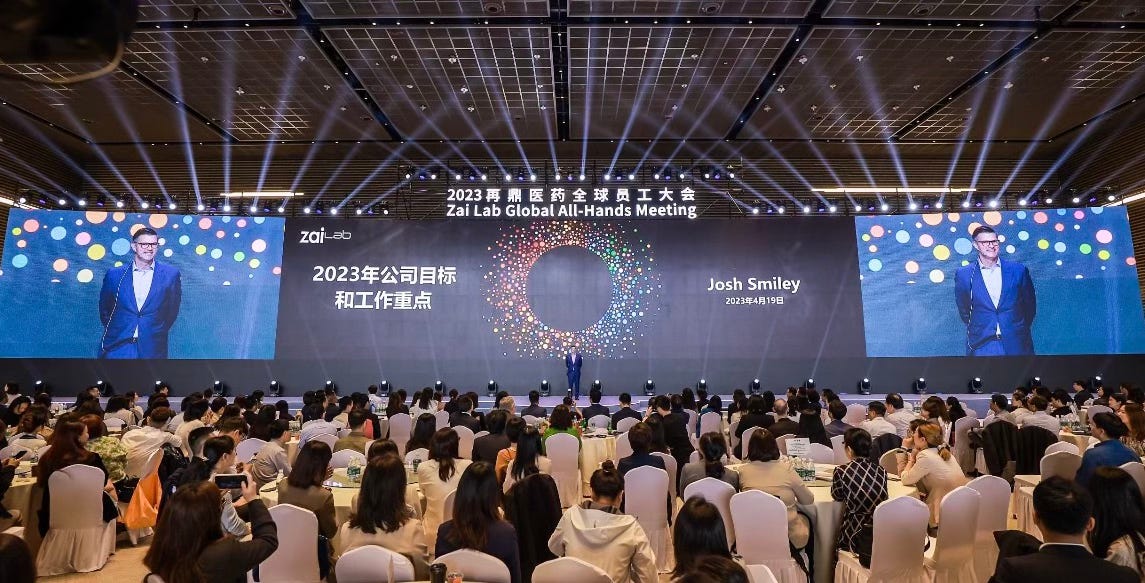
Josh: We’ve been around for 11 years now at Zai Lab and our founder and CEO, Samantha Du, was one of the pioneers in China biotech going back to a company called HutchMed back in the early 2000s. She’s from China, but trained in the US at Pfizer and went back to start a biotech company.
Back in about 2015, and you know this well, you’ve written a lot about this: as the China internal market was growing and becoming much more open to global innovation, Samantha saw the opportunity to start a new company really that would focus on first serving as a partner for global biotechs who otherwise didn’t have capabilities or insights on the ground in China to take advantage of the fact that there was IP harmonisation, regulatory harmonisation with the rest of the world, and now health insurance or access for patients for innovative drugs.
So those forces coming together about 10 years ago led to a really good opportunity, and it allows me now in my role to work across the globe on innovation. We get to see the best biotech products that are working their way through the global pipelines. And for many of those companies who otherwise don’t have a presence in China, we serve as their partner to get drugs in oncology, immunology and neuroscience approved and marketed into patients in China. At the same time, we’re working on our own pipeline and taking advantage of the really exciting and accelerating innovation ecosystem across China.
I sort of sit between - I have an office in Cambridge, Massachusetts and an office in Shanghai. I get to sit in two of the capitals of biotech in the world and work across borders. Its’s a great time to be in a role like that - it is a great vantage point to get to see how innovation is working on a global scale.
Related:

Ruby: You joined Zai Lab about three years ago. before general Western or English language discourse had realized the opportunity and what is coming out of China - the quality of innovation, the cost, the scale, the pace of it. What made you want to join the industry from the China angle? What was compelling about Zai in particular?
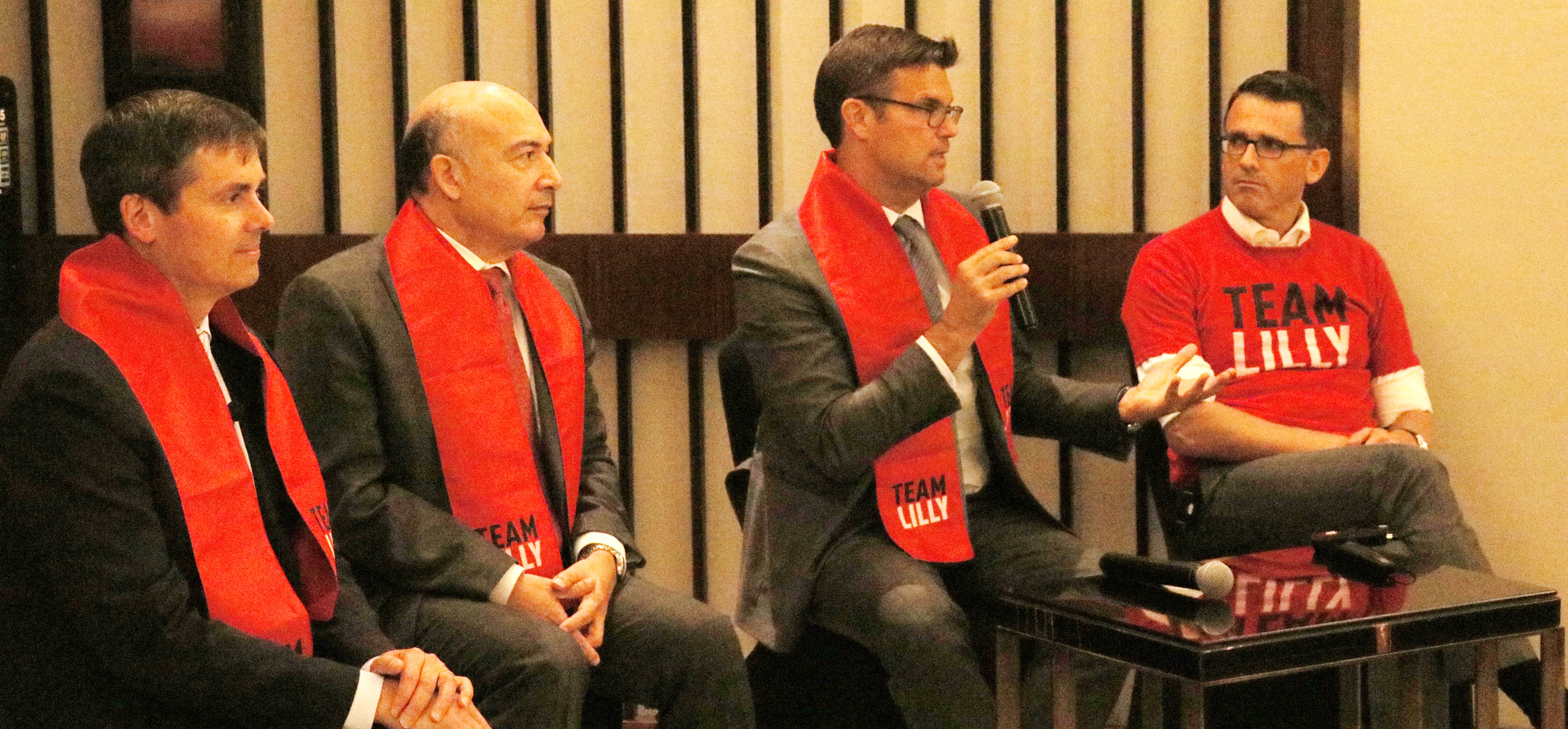
Josh: I worked at Eli Lilly for a long time, and in my various roles, I always had an eye on China. Lilly was one of the earlier multinational companies to really look at China as a potential source of innovation, ans not just as a big market. We were the first of the corporate pharmas to establish a venture capital presence in China - we started a group called Lilly Asia Ventures that I was part of, and I got to see opportunities to invest in innovative biotech companies emerging from China. This goes back almost 15-20 years, so I had a front row seat even in my old job to look at biotech in China. Lilly also began an R &D centre in Shanghai that focused on discovery. And again, that was one of the earlier attempts by a Western pharma to really tap into innovation, not just market access.
So by 2022 when I joined Zai, I was already seeing that the second and third generation of biotech companies in China were moving from fast follower, me-too innovation, into things that truly have an opportunity to play on a global stage. About a year later, that’s when recognition of what I was seeing from the inside out, started to emerge, and we began to see the huge influx of Western capital and Western attention on really good opportunities for global medicines, with impact not just in China, but for the globe.
I think Zai was uniquely positioned to do that because we were already in both the global piece and China. We work closely with global biotechs and pharmas so we know what good innovation looks like, and we know what regulators are looking for in terms of unmet needs and data and otherwise, for areas that we’re in. We’re really well positioned to take advantage of the fact that there are really good medicines now coming out of China, both from our own labs, but also from other partners across the ecosystem in China.
2. Navigating Perceptions and Building Credibility
Ruby: That dual engine capability of bringing assets into China, but also bringing assets out to the rest of the world. It’s really interesting niche. With China-origin biotechs, some of them begin with China’s domestic market and when they succeed with good assets, they might then start looking at the rest of the world. And others like Zai Lab are globally oriented from the outset. But regardless of the initial strategy versus how it pans out later, it’s still not easy to build trust globally, or sustain the right types of attention. In the past few months, and past year, scientific quality has been conflated with geopolitical risk or perceptions. What do you think are the biggest enablers or tests for demonstrating credibility internationally?
Josh: We’re at an interesting point for China innovation and China biotech for the globe. What we’re seeing today is that, in some particular focused areas like oncology and ADCs or T-cell engagers or bi-specifics, there are modalities that benefit from iterative innovation, when you’re combining different molecules and thinking about how those combinations work best. There is a benefit from fast cycle time and otherwise. And that’s where we’re seeing really, really good assets emerge from China. We’re seeing enough early phase data in many cases in China patients or in China research sites only that get global innovators like Lilly or GlaxoSmithKline or AstraZeneca, interested in that technology. But to move from interesting early data in Chinese patients to global data that can register drugs around the world, that remains difficult.
The first hurdle is just capital. One of the benefits we’re seeing in China is biotech companies can move really fast. They can generate early phase data quickly and frankly cheaper than companies based in Cambridge or London can. And that can be measured in the tens of millions of dollars of investment, to take a good idea from a target phase to maybe some early clinical data in patients. But to move from that phase to registration is typically in the hundreds of millions of dollars from there. And while there’s a lot of really good focus in China and Hong Kong on these companies and stock market interest there’s not the deep, deep pools of capital that you see in the West that can put the next tranche of funding in to take an interesting early phase asset all the way to the finish line. So the first thing that I think the China biotechs are lacking is capital and big pharma or big biotechs on the global basis have that.
But I think even more importantly for the longer term, is the expertise and the benefits that we see in China from fast cycle times: identifying a target, figuring out the ways to go after that target, and then iterating until you find the best molecule. That skill set, that’s scientific expertise, it’s hard work. To build a molecule that you tested in preclinical setting - is it safe enough to try in humans? Once you have tried in humans, do you see enough response that makes it worthy of a bigger program and a bigger investment? Those are pretty objective.
But when you move into later phase development, it’s a lot more nuanced and a lot more subjective and experience-based. To understand what kind of development programme, what kind of clinical trials to run for patients and physicians who are based in the US or based in the UK - that’s a different skill set and it requires experience, nuance and judgment. Many of the Chinese biotechs definition just by don’t have that yet. They don’t have a team that’s been through the regulatory process in the US or in Europe or whatever it may be. So they really need a partner to help on that side. that’s where I think Zai Lab is in a unique position because we, have been part of 5-10 global phase III programs for the last 10 years at any given time, understanding those nuances with our partners, building expertise and running global trials.
Our leadership team is a good combination of people with deep Chinese expertise on the ground, with good research sites and thought-leading physicians and researchers - people who have done the drill on a global basis. So I think the next five years are going to be really interesting in China to see which biotechs are doing really well with some of these early phase opportunities, which ones take the next step and say “we want to hold on to this innovation. And act as the registration leader for this drug in the US or in Europe”, versus now, where because of the capital and expertise, the default (for most Chinese biotechs) is to generate some interesting data and out-license or partner that program with a global partner.
Related:

Ruby: You spend a lot of time with Western audiences, including investors and partners and stakeholders. When you’re speaking with those who understand the system less and might be swayed by perceptions they’ve gained from other sources, what are the narratives you find yourself pushing back on most often? That you’re always trying to inform on?
Josh: I think the starting point is that medicine and innovation is not a zero sum game, particularly from a political perspective. There is this dynamic that anything that happens between countries – particularly countries like US and China, that there’s gonna be a winner and a loser. But it’s not zero sum in health. We all want to get better, we want to live longer. if people anywhere get cancer. They want to have the most opportunities and options available.
So the first thing our team starts with when we’re talking to stakeholders -including politicians, policymakers, general public and investors – is that any rise in innovation anywhere, and in this case in China, is good for everybody. It’s not at the expense of the US losing out in biotech. If there’s a great drug that we discover in our labs in Shanghai, there should not be any issue with that drug making its way to patients in London or the US or wherever it may be.
There are various, distracting legislative and policy moves, there’s a US law, the Bio Secure Act (just passed), that’s meant to protect US interests from China, military and policy and otherwise. I spend a lot of time with investors to explain how those kinds of bills and legislations may be important in some senses, but that don’t impact the kind of work that we do at Zai. They’re not meant to impact getting great drugs to patients around the world.
Maybe that global zero-sum competition makes sense in some settings - chips or defense, things like that - but in healthcare, it’s not zero-sum. Anything that anybody does anywhere, that can improve the outcomes for patients to benefit everyone, it’s not at the expense of a company or of a policy or safety in the US.
The second, is still this view that China innovation isn’t good. There’s this term: “China’s really good at going from one to a hundred, but not from zero to one”. So there’s still this misunderstanding that we’re only seeing Me-Too opportunities come out of China. That they may be more souped up now or perhaps better than they were before, but that they’re still not truly innovative. This is not true. So making sure global stakeholders, global investors and others understand that the work happening in China really is innovative, and that it’s not just a me-too opportunity.
Now, I do think there are areas that the West that are probably still doing better in terms of not truly novel biology, for example the brand new targets and things like that. There’s still a little bit more of that happening in the West, but I think that’s going to change as well, soon. I just look at the level of scientific expertise, the number of PhDs that are coming out of world-class institutions in China, the ability now to move directly from a university setting to a high quality lab in China. That (domestic talent and capability) is very different today than it was 10 years ago, where you probably had to go to the US or to Europe and train at a Pfizer or AstraZeneca and then come back and work, now you can go directly to really high quality, scientific shops in China. Innovation is now real in China, it’s sustainable, and it’s going get even better than it is today.
The third, which is related to the second, is that there is still some skepticism when really good data comes from China, and in trusting the quality of that data. There are now super high quality research sites in China, Zai Lab works at the investigators in some of the big sites in China, in Shanghai, Beijing, Guangzhou – of the highest quality, comparing really well with the sites across Europe, South America and the US. For high quality, research early phase data, you could trust those results, but I think this is where maybe even in a couple of years, we may face some additional questions.
For all early phase datasets and research and development, (clinical trials) tend to highly curate patients. You find patients who are going respond, who are naive to other treatments or are perfect candidates. And that happens no matter where you look. So if a lot of phase one data is coming out of China, as that research approach expands to broader populations, you’re gonna see some differences. That’s not because the quality of the data, wasn’t good in that phase one study, it’s just the nature of expanding populations, getting more diversity in the patient pool. You always see from phase to phase some reversion to the mean or median in data.
So even though there have been so many good programmes coming out of China, and so many global deals. If we fast forward, many of those programmes are likely going to show less than stellar results in their next set of studies. That’s just the nature of global development. I hope that doesn’t cast questions about the data in China or the quality of it (in the future). I therefore spent a lot of time sort of talking to investors to say that this is really good data that is indicative of a really good molecule technology, but for them to keep in mind that it’s early phase data and that it has to be replicated in broader populations.
Related:

3. Building Trust in Chinese Clinical Data
Ruby: the third point about skepticism towards data quality - do you think it’s just a matter of time for resolution? That the more evidence there is in the next few years, once this concept of “Chinese biotech innovation being good quality” isn’t so new or shocking anymore, the idea will be accepted? If enough good quality trials, later stage trials and trials conducted in the US or other countries outside of China, you just have to be patient and wait for the trust to build?
Josh: I think that is the main strategy. There will be many good drugs that get approved on a global basis that you can look at and trace the progress. We’re probably a couple years from those global readouts that, on a broad scale and not just as a one-off, can begin to validate the fact that taking good early phase data from China makes sense. You can then broaden it out for the world.
At Zai Lab, we understand this dynamic, and we are really thinking about global development from day One. Because we don’t have a huge R &D approach ourselves, we tend to find targets or opportunities that we think are really good and already somewhat validated. (When in-licensing), we help our partners take advantage of China’s broad number of patients, and the ability to enroll quickly and develop cheaply for early phase data sets. There may be cases where it makes sense todo that in China to establish some proof of principle before then move to the globe to balance that with patients from the US or Europe or otherwise. At Zai Lab, we try to start right away with a global set of data. That’s allowed us to move really quickly with those programmes that we think are worth investing in.
By the end of 2025, more than a third of the global in-licensing will have been sourced out of China, which is just an incredible number relative to where we were five years ago. But in many cases, it’s a China data set where the global innovator will have to do a phase one study. In the next couple of years, this will shake out a little bit. We’ll start to see programmes coming out of China which are very high quality and can play on the global stage. There are still going to be failures - there’s no doubt about that because that’s just the nature of development. It’s still only one in ten programs in phase one make it all the way to approval, and most of the deals that are being done or the programs coming out of China are in that phase one setting. So we’re gonna see a bunch of failures, but that’s not a failure of the system or a failure of the quality of the research. That’s just the nature of the business.
Ruby: Yes, the “beauty of biotech”! It’s not easy to explain for non-biotech investors (who just want returns). And increasingly, you’re facing general investors, because biotech just such a hot topic. It must be interesting communicating with them the characteristics of this game.
Josh: That’s right. One of the big changes in the last couple of years since I joined Zai, is that previously, we did not have many general investors. The portfolio managers for the big Western investment houses such as Fidelity and Legal and general always have healthcare specialists, and they’re pretty nuanced in terms of how they think, but there were many generalists who didn’t want to invest in China - and China healthcare was even more of a total black box (to them).
Yet over the last twelve plus months, general investors have much more willingness, and maybe are now even forward-leaning into China related opportunities and certainly into China healthcare as well, as they see the number of deals being done and the prominence of innovation coming out of China. So now I do spend a lot more time when I’m talking to investors, not just talking to very technical healthcare funds and specialists, but broader general PMs. I think that’s great. As I say, health is not zero sum, so the more money that comes into biotech opportunities, the more good drugs we’re going to eventually get. Having that pool of general capital coming in is a really positive thing.
4. Opportunities and Challenges
Ruby: Yes, what you’re delivering on really depends on how you’re communicating it as well. You’re often interacting with other Chinese biotech leader peers and sharing your experiences with each other. What interesting developments in the three years since you’ve joined Zai Lab, or in the recent times since media attention has been pouncing on the sector, have you and others noticed, and how does that impact your work? Obviously it brings in capital, but it also brings perceptions and different types of pressures – there must be opportunities and challenges at the same time.
Josh: There are a few pioneer China-oriented companies that really have made that shift to operating on a global stage. I think Zai Lab is one of them, but there are companies like BeOne, Legend, and Hutchmed who all have drugs that have succeeded at crossing over to be seen as a global innovator. I certainly spend a lot of time following them, talking to their leaders. For the majority of really good innovative Chinese-oriented companies - they could be based out of Hong Kong or China or out of Shanghai or wherever - I’d say the majority really still do focus on generating a little bit of data to out-license that programme.
It’s interesting when I talk to investors in different parts of the world. When I’m doing a set of investor meetings in New York and talking about our global programmes, they talk about how the drug will compete with XYZ standard of care? Or when the next data milestone might be. Or how we are thinking about the commercial team that’ll support this drug.
But when I go to Hong Kong, the incentives for the investors there are, when are you going to out license this drug? When is the next deal going be done? So when you think about global capital and investor perceptions, there’s still a heavy (investor-driven) incentive for the more China-oriented companies to do a lot of early phase work, have a lot of programmes going, and then to just serially out-license them.
It’s interesting to me how many of those companies are now still are incentivised to sign a short-term deal and have a nice announcement around a billion dollar – in potential. They’re never a billion dollars upfront, right? It’s a small amount of money and then potential milestones. I wonder, will those companies might instead start to shift to saying “no, I want to hold on to this drug, to hold on to this asset and take it further, all the way to commercialisation in the US or at least, further than what I am doing now.”
Among my biotech peers, some of them think like we do at Zai Lab, which is that, if I have a great drug, the best way to maximise the return to my shareholders for that drug is to hold on to it, develop it and position it on a global scale. A lot of other really good innovative companies in China, the executives who have my job, or the CFOs or others, they are focused on how quickly can they partner this and move on to the next target, that continue to be an early stage research shop that then gets picked over by Pfizer and Merck and others.
5. Real Factors Driving Speed and Cost Efficiency
Ruby: And in terms of speed and scale and cost efficiency - the characteristics that Chinese biotech is known for. I think a lot of people don’t know why things are faster and cheaper, and they may make associations with low quality just because they don’t have another logical explanation. Could you walk us through the practical reasons - whether that’s talent or staff actually working more efficiently or working harder?
Josh: There’s no doubt, the data is clear that China biotechs can probably do things in half the time and half the cost. It’s going to be different for every programme, but it;s certainly borne out by what we do, and I think there are a bunch of reasons. The biggest one is the access to patients and investigators in China.
To establish proof of concept in a drug, there are just more patients and more high quality big investigator sites in China than there are in the US or otherwise. So it’s about how quickly you can get a protocol or an IND approved in China. That’s real - once you have something you want to study, you can get it done quicker in China because there just are more patients and sites that can enrol patients quickly. That’s just a function of a huge country and very big hospitals that not only treat patients every day, but also serve as research sites and everything else. That’s the number one thing.
But there’s a related piece that amplifies that. There have been significant policy and regulatory efforts in China over a number of years and continuing to accelerate, to make that early phase research to early development process faster. So the time it takes to review a protocol at a research site and get approved can be measured in weeks to a month or so. Whereas in the US, there are many layers of reviews and IRB boards etc. that make it a lot harder to get a study approved overall from a regulatory body, and then at the individual institutions, all of which takes a lot more time. So it’s patience and policy.
But then there’s no doubt that there’s a work piece to this, too. There are a certain amount of hours that go into iteration, to screen molecules and test them in non-clinical settings, combining different elements in bi-specifics and otherwise. You need capable, high quality scientists, but if it’s just a matter of how quickly can you do 300 hours of work? In China, there is a work culture in the labs where you give somebody a project and a deadline, and they’ll get it done even if it means working late into the night and early in the morning and on weekends. There’s a real piece of that.
And it doesn’t lead to lower quality. Frankly, speed of work has been demonstrated in lots of different settings. The less downtime and other things you have, actually the higher the quality of the work is. What it does mean though is that, when you need more subjective insights and otherwise, maybe you miss that sometimes. What we’re seeing now is that for drug technologies where you can clearly define a starting point and an end point, which require work to get to that in the meantime, this works really well today for precedented targets, known technologies, and interesting combinations or iterations because the work and the work culture is different. that is a real thing. If you get some unexpected result and have to totally rethink, that may not be as conducive to timelines and milestones and everything else.
The other piece is that, as this ecosystem in China has emerged, some of it comes back to incentives. When you take a known target and build a better drug against that target, and get to a certain point and then out-license it, that’s a very defined, scope. It lends itself well to “how fast can I do it? And I know the lab across the street is doing the same thing.” So there’s a huge competitive dynamic here.
I use the US as the contrast, but this plays out in Europe and everywhere else. Many of the biotech companies in the US are built around some really high science concept, right? And their goal is not to generate a result quickly, but to take what was somebody’s life’s work and an initial 10 million dollar investment and turn it into a billion dollar thing. So their incentive is not necessarily “how fast can I generate some interesting data”, but “how long does my capital runway allow me to build the perfect drug” that’s going to get acquired for billions of dollars as opposed to 15 million. So you do see different incentives in the biotechs in the US, and that is a function of where capital comes from, amd why people are doing what they’re doing.
That is one of the things that is good from a competitive perspective in China. I think everybody on the outside is frustrated at times with US biotech, and the management teams don’t want to do the what would you call the “killer experiment” that either says this drug is great or it’s not that great. Instead, they want to build as pretty a data package as possible, for as long as possible, with the hope of the exit being a big acquisition. But if instead your incentive as a biotech in China is just to do ten programmes and quickly send them out the door to other companies to then take that next level of investment, that enables speed and focus in a way that the US doesn’t. I think what we are going to see in the US, is some response to that to say, we can’t afford to spend five years on a lead-to-candidate programme to totally perfect it, because there is Chinese competition that’s moving faster. So again, I think that’s good for everybody.
Related:

6. Differences between Chinese and Global Biotech
Ruby: You’re describing a more pragmatic approach on the China side, which is more adaptable and flexible, compared to delivering innovation in the US or maybe in Europe. Are there other distinctions across the landscapes? What have been really interesting characteristics you’ve noticed in your work and that you’ve adapted to as well?
Josh: At any biotech company now, if you look at the R&D organisation, anyone that’s based in the US, for example, a very high percentage of the workers are Chinese - maybe they were born in China or at least of Chinese ethnicity. But I think there is a piece that is interesting - not just cultural, biotech science and work - a general piece. There is more of a focus on deliverables and milestones. So, as a boss, if you say “here’s what we need to do for this project, we need to have these three things done and it needs to be done in 60 days”, that’s going to get done - it’s not questioned.
In the US, for the same thing, I would spend, as a leader, more time trying to convince people why that’s a reasonable timeline, why we need to do this and so on. So in US scientific culture, you have to convince people to get on board and convince them that a milestone makes sense, Whereas in China, it’s more like: “okay, that’s the goal, you’re the boss, you said that we’re gonna do it.” There’s a little less questioning, and in many cases that’s wonderful, right? But other cases though, the thing sometimes you miss is somebody saying: “wait, hold on, that doesn’t make any sense” or “here’s a confounding result” that should cause us to change the milestone or change the project. Knowing that if I say or if our leadership team says “here’s a goal”, I sometimes have to remind myself that people will take that a hundred percent seriously, whereas in the US they would be debating you on it later. So I think there is a real difference there.
Another thing is that, in many cases, people are pretty direct in the work culture in China in a certain way. I’m in Indiana today - we’re nice Midwestern people! Even if we disagree, like when I was at Lilly, you’d be friendly about it. But in China, people will just say: “that’s dumb”, “you’re dumb”, “that’s a terrible result”, “you screwed this up”. And I don’t think people’s feelings get as hurt.
When I first joined Zai Lab, when we were arguing about something, and afterwards, I felt really bad. I called my team and said “I’m sorry if I said it this way, that I didn’t defend you.” And they said “no, no, that’s just the way it goes! We argue and we don’t take it personally.” So I think that is a difference that I have to get accustomed to. And of course at Zai Lab, it’s interesting because half of our management team is Western, half is Chinese. We’ve all worked in various settings so we get a good balance of it, but I think there is a real difference.
Ruby: Yes, that’s what British culture is like as well. You never say what you mean and you’re always polite and nice to someone’s face, whereas in China, it’s a lot more direct. Translating across two very different cultures, but trying to deliver effectively, it’s always interesting navigating that. You’re essentially a bridge between, East and West, trying to connect and bring different types of perceptions and cultures together. I wanted to ask about the partnerships piece because this is one of Zai’s key strategies, Outlicensing, inlicensing, and also identifying what is actually a good opportunity. Zai has partnered with big global players like ArgenX, GSK and Bristol-Meyers Squibb, and why did they choose Zai Lab, and for you, what makes you choose to partner with someone in turn?
Josh: When global companies are looking for a partner for China, those in business tend to think that they’re looking for somebody who’s going to pay the most or give them the best economic terms And it really isn’t that. We have the privilege of working with great global biotechs. And in many cases, we’re working with their crown jewel, right? With ArgenX, we’re working on their drug Vyvgart, which is the whole foundation of their company. So these companies look for somebody they trust and that they know is going to communicate with them, clearly and transparently, who will have the best interests of the opportunity in mind.
ArgenX and Karuna, the companies we tend to partner with, big biotech companies who in many cases then get acquired by the Bristol Myers Squibb and others. For all of those companies, their biggest piece is the reputation that they have with regulators and physicians and the data that they generate for their products. They want a partner who they know is going put the same level of care and quality and thoughtfulness around their product in China than they are doing in the rest of the world. So they start with - do they know the people they’re working with? Do they trust them? Do they have the kind of experience, not just within China, but to understand what global regulators care about quality practices? Samantha, our founder, has done a really good job both on a personal level building that credibility and trust over many years with many partners, and then hiring people who also can do that.
And of course you have to be able to do the work in China as well, right? You have to understand the local dynamics, know how to read the tea leaves in terms of policy changes and otherwise. There aren’t that many companies that can do those things. You can find really good local companies in China who started out in the generic business and are now, very big and successful companies that market many drugs across China. They havelocal expertise for sure, but they don’t have the global experience or the level of understanding of the complexity of global development, interactions, regulatory and things like that. So maybe trite as it sounds, it’s really around trust and transparency and expertise. Getting all three of those, think is not easy. And there aren’t that many companies that can do it.
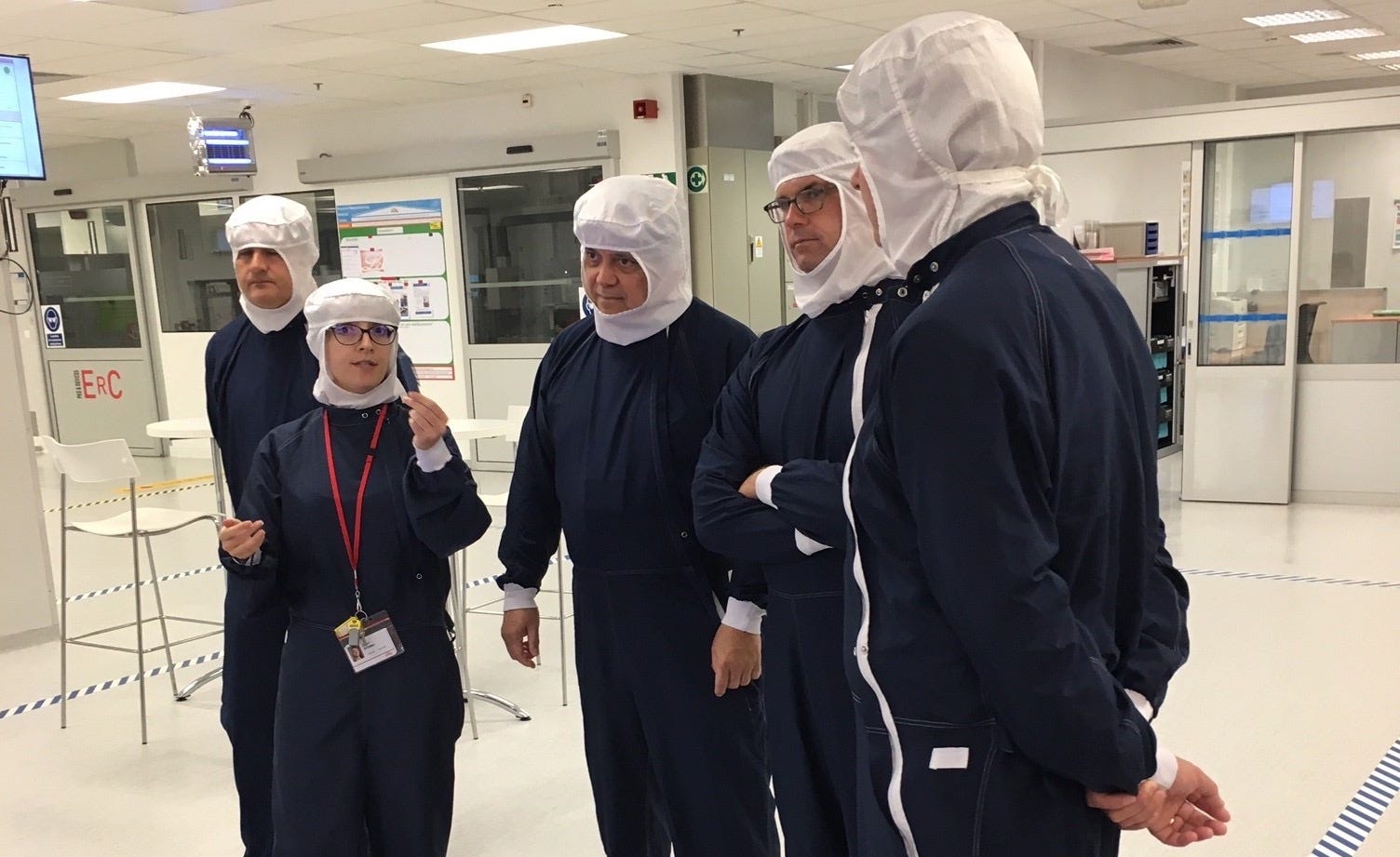
We’re in our 11th year. And in those first ten years, we’ve gotten eight drugs approved in China. We’ve done really well with those drugs once they are approved. Our longest standing, biggest drug today is a drug called Zejula, which is for ovarian cancer, with out partner GSK. But if you look at the ovarian cancer market for PARP inhibitors (the mechanism of this drug), it’s super competitive on a global basis. There’s another drug called Lynparza from AstraZeneca. And I think in every major market around the world, Lynparza has been the market leader in terms of sales and patients. But China, Zejula is number one (through us). you have to deliver results, and we’ve been able to do that.
Now, as we think about the next decade and think about partners, I think we’ve established ourselves as somebody that these global innovators will call when they need a partner. I don’t have to spend a lot of time going out to introduce Zai Lab to biotechs in Cambridge or San Francisco or London. They know of us now. But there are a set of things that we need to look at as well when we’re thinking about the next partner for a China opportunity. And a lot of that comes down to understanding what access looks like in China today, what the concentration of prescribing and best practices and other things are.
There are many cool innovations that we see happening for companies who need a partner in China, but we’re not going to be able to make that work as well as we would like to. We know areas like oncology and immunology that work well for our model, but for other areas, maybe not so much, even though we’re seeing really good drugs and development like cardio and metabolic. We’re seeing so many interesting innovations and developments there, but for uus, we haven’t found the right drug that can check all the boxes to make us a good partner for that company and to make the opportunity viable for China.
7. Effective Partnerships
Ruby: On the drug Zejula, it’s pretty incredible that Zai Lab has delivered so well (as an in-licensing partner), for China to now be the only market in the world to surpass the AstraZeneca competitor. We’ve already talked about some of the reasons that Zai Lab is distinctive, but are there any particular reasons why this happened?
Josh: We do hire really good people and understand well. There’s a piece of that. But AstraZeneca, as you know, is a really good competitor in China. They’re very strong multinationals. But I think that one of the things that we would point to - and we would point to this in future partnerships as well - is the understanding of the local dynamics. We did separate trials in China to look at dosing and safety which provided a really good and differential experience for thought-leading physicians and thought leaders. Then of course, practicing physicians in China where there’s a more China-centric or China-specific dosing regimen that allow patients to get the benefit in a more robust way without some of the safety challenges that come with any kind of oncology drug.
So it was about understanding what the opportunity was in China in doing differential development, generating a data set that is most relevant for Chinese patients as opposed to taking the global stuff and force fitting it into China. And we try to do that in all of our programmes. Of course we want to leverage the broad deep global data set that companies are developing, but finding those unique places where it may be a little bit different in China, or where we can add different information, given the complexities or the differences in China treatment patterns - those kinds of things are particularly important.
8. China’s Policy Paradox - Health Equity vs Biotech Boom
Ruby: The China localisation piece, it’s essential to being able to operate successfully. And we’ve talked a lot before about the policy and the governance, the long term planning versus the refreshers and reforms and the private healthcare sector versus the reimbursement list - which is the pain point of all biopharma industry to access the public health system, and Zai Lab having that internal capability, helping partners to deliver on that. It’s interesting to think about the next few years as China’s health system continues to transform. How have you found operating in that landscape on the ground quite extensively?
Josh: There are two things. First, there are many challenges commercially in China, and it’s related to the same kind of challenges every country faces. There is not enough money to cover all the innovative drugs that have been approved. The reimbursement process the last few years has been challenging - how do you establish a price, get a drug listed on national reimbursement and then how do you maintain that listing over time? Pricing has been challenging for sure.
But I think the competing piece, or the positive piece, is that the underlying longer term trend is good. China’s introduction of a commercial insurance list - that is a really positive development. I’m not sure it’s going have a huge immediate impact, but I think the direction of travel is really good, from systemic changes to things like transparency around reimbursement processes. It’s still very hard to get a drug listed at a good price initially, but once listed, then it’s a lot easier to maintain the price. We’re seeing fewer big price cuts over time, and that makes it easier at least to plan and to be thoughtful around what you do.
And I think there are some recognitions - just like there have been in other public programmes in Europe and the US - that many patients still pay out of pocket, even though there’s national coverage. Depending on the drug and where you live, you could still be paying out of pocket, 20 to 30 % of the drug cost - that can be a pretty considerable expense for patients. There are lots of discussions from a policy perspective around finding ways to make that more moderate, to put a cap on out-of-pocket spending. Again, these are things that have come up in the US with Medicare and otherwise.
So there are longer term trends that will be great for the in market opportunities in China, but day to day, it’s tough, the competition’s fierce. Five years ago, if there was a great global innovation, you could be comfortable in bringing that into China and having some really good runway if you could get it approved and everything else. But now, what we find is that, if there’s an emerging opportunity in a new class or a new target or something, you don’t have a lot of freedom to bring that drug into China and have no competitors. the cycle times, even on the commercial side, are faster and more intense than they were a few years ago.
But I think that the one underlying positive to all this innovation percolating in China and otherwise, one of the policy learnings, and you know this better than I do, it would be if you want to have a great and robust industry of global biotech players in China, you need to reward innovation in your home market, right? I mean, we’ve seen in other countries that when you don’t do this, while the company may still be based domestically, the vast majority of their profits and operations and other things will then tend to migrate outside of the country.
If China wants the next ArgenX to come from Shanghai, then they should be rewarding rare drug innovation in reimbursement processes. That’s moving incrementally positively, but there’s still a lot of room to improve access and pricing for some of these oncology and immunology drugs that are, just by nature, more expensive on a per unit basis than, for example, a cholesterol daily pill.
Ruby: Yes, there’s this paradox within China’s health reforms – the state wants to deliver affordable, accessible health care, like universal health coverage, but in contrast, there is also this booming biotech sector that’s increasingly not supported enough, or rewarded financially enough, to target the domestic market – so biotechs are now looking to the rest of the world and the US in particular (which funds the world’s world’s pharma innovation with up to ten times the drug prices of other countries). I’ve been thinking about whether we will see policy adjustments in the next year, especially in March when it’s the 15th five-year plan, whether there will be support or realignment from China’s government.
Related:

Health and the Two Sessions (Pt 1 of 2): What China’s Top Political Event Really Revealed This Year

9. Translating Across Borders
Ruby: I wanted to also go back to local versus global mindsets. I’d love to hear a bit more about your experiences on the ground operating and leading across teams and across regions. What has that felt like when you were translating outwards versus in?
Josh: There are unique challenges in China. When we look at a drug like Vyvgart, which is an amazing drug for patients with myasthenia gravis, we see the success that it has had in the US and in other markets now, but in China there remain unique barriers and hurdles just in the way patients access care, or if they travel long distances to hospitals to seek care. They have to pay something out-of-pocket even though they’ve got national reimbursement. So the learnings from some of the markets around the world on what works well with physicians and otherwise, doesn’t always translate exactly to China, and that can be frustrating.
We’re off to a really good start with Vyvgart but when we compare it to what’s going on in the US, it’s still a small fraction. So you have that piece of: there should be more patients in China having access and benefiting from the drug, and here are some things that we can do, But with every market, there are different local regulations and ways that you can share data. That’s probably, in many cases, more frustrating than rewarding. You have to work through it.
I’ve worked in China, but most of my sales and marketing experience is in the US. Here, you start with; “OK, if you have a great drug with this kind of data, that’s going translate into good opportunities for patients and physicians.” But there are probably more intermediate hurdles in China, So I have to check myself.
Right now, we’re in the middle of setting our goals and targets for next year. And I have to find that right balance of wanting to say: “hey, this is a drug that we’re not doing our job if a thousand patients don’t get this next month, and here’s why they should”, with the realities of the things that can slow that down or get in the way in China. So the frustrating, or the leadership piece for me, is that I have to be more open and temper my ambition with the realities on the ground, and listen to our team of experts who are dealing with this drug, and with the patients and physicians every day.
But the rewarding piece – and this is less business and more just personally, just having the opportunity to be so immersed in a different environment, in a different culture. I’ve always had a chance to work in and around China, but I’m in China now every month, and just the opportunities beyond the work piece to understand the culture, to eat different food, to go to different cities, learning more about the people I work with and learning more about their backgrounds and things like that. It’s also interesting, just given how important China from a global politics and economics perspective, to see how things getting better or getting worse?
Though, again, the most exciting professional piece of this is just to be at the epicentre of what I think is a real and seismic change, in terms of innovation and medicines for the world. As I said at the beginning, everything I’ve been involved in for many years in biotech is around getting better drugs to patients. Having a whole environment now of of PhDs and scientists and others who are working on cutting-edge medicines - that’s just so exciting and rewarding. Zai Lab is just a tiny bit of that, but the more we can be part of that and the more we can help to bring some of these great scientific innovations out to the rest of the world in an efficient way, that’s really fun and exciting and rewarding.
10. Looking Ahead
Ruby: To wrap up, you mentioned reflections on 2025, and looking forward to 2026. What are you excited about building next?
Josh: We have a couple of really exciting things in front of us. First in China, we’re gonna launch a drug called Cobenfy, which is for schizophrenia. It’s the first new mechanism in Schizophrenia in 70 years. It launched in the US about a year ago, and we did some specific work in China with Chinese patients to demonstrate that it has the same efficacy and safety that it did in Western patients - and it does. There are 8 million patients with schizophrenia in China – a huge patient burden. Today, the standard of care is what’s called an atypical antipsychotic, but Cobenfy is a different mechanism that provides pretty profound safety benefits versus the existing class of medicines.
The two things you’re trying to do with medicines and schizophrenia: one is to knock down the delusions and hallucinations, and Cobenfy works as well as the existing class in that regard, but then secondly, on things like cognitive benefits and negative symptoms, not feeling withdrawn and getting back to interacting with their families and working and things like that, this drug has some real benefits versus the other class there. So we’re really excited to launch it in China this year. it’s going to be a really exciting opportunity for patients and certainly for Zai Lab.
The second thing then is our global pipeline, which we’ve spent a lot of time talking about today - we have a leading programme that has just entered a Phase III study on a global basis, for second line or late line small cell lung cancer. We’re enrolling that trial now, and will start to generate data by the end of the year that we can use for a submission. So an opportunity to have a drug launched outside China by as early as 2028. We’ll start a bunch of other studies with that drug this year, and we’ll move it into a first line setting. We’ll look at other tumours that this mechanism particularly targets. I think 2026 will be the year that we really are seen as a global innovator, not just a great China specialist.
Watch the video podcast here on substack, or subscribe and listen to the audio podcast on Spotify (CHP) & Apple (CHP).


