


🔬Welcome to Part 2 in CHP’s deep dive series into China’s key health ministries.
In Part 1, I covered China's core Ministry of Health, the National Health Commission, and previously, my foundational explainer “Who Actually Runs Health in China?” mapped out the main stakeholders of health policy and power.
Food and drug regulators are among the most powerful institutions in our daily lives. They decide whether the food on our shelves is safe, which trusted drugs reach us when we are sick, and which medical products are used in hospitals and clinics. Their approvals and timelines ripple far beyond the health sector, impacting public trust and influencing the direction of policy, not only in our home countries, but around the world.
The US Food and Drug Administration (FDA) has always been viewed as the global regulatory benchmark - but things are changing fast. For the first time in decades, the FDA’s independence (and by extension, its authority in global health) is under question. Leadership is unstable, and remit is becoming less reliable - the changes are dramatic. Since FDA Commissioner Robert Califf stepped down in early 2025 as Trump came into office, the new Health Secretary, Robert F. Kennedy Jr., overhauled the agency’s leadership and advisory structures: he dissolved the FDA’s entire vaccine advisory committee, and cut funding for mRNA programmes. These interventions have triggered lawsuits and open defiance from physician groups, raising doubts over whether the FDA can still act as a stable and technically trusted global authority.
In contrast, China’s equivalent to the US FDA has been moving in the opposite direction, approving ever-greater numbers of innovative medicines. China’s powerful National Medical Products Administration (NMPA) is responsible for the food and drug safety of a 1.4 billion population, and oversees the world’s second largest pharmaceutical market. Its reforms have been central to China’s biotech rise. Faster reviews, alignment with international trial rules and new priority pathways have allowed drugs to be brought to market in record time. Indeed, Scott Gottlieb, 2017-2019 head of the US FDA (Trump’s first term) recently warned: ‘If we’re not careful, every drug could be made in China.”
I have seen this transformation from up close. During the COVID pandemic, when I was Head of Health for the UK government’s Foreign Office in China, the UK’s regulator, the MHRA (Medicines and Healthcare products Regulatory Agency) had just become the first in the world to approve a COVID vaccine (AstraZeneca). At that point, the regulator was basking in global respect, and our team at the British Embassy in Beijing worked to channel this momentum to design and deliver bilateral programmes with the Chinese counterpart, the NMPA.
Our aim was to work collaboratively across both systems to strengthen responsible and safe regulatory standards for the world’s population, particularly at a time of such urgent health need. Indeed, during the tumultuous times of the pandemic, the UK was the only country to deliver any technical engagement with China on drug regulations, let alone at this scale. My team and I were extremely proud of the significant and timely impact we were able to make.
Our UK–China Regulatory Programme ran multiple sessions and workshops over the course of a year, and it opened with a hybrid leadership ceremony attended by MHRA Chief Executive Dr June Raine and NMPA Vice Commissioner Chen Shifei. At first, the format was predictable: British trainers, Chinese trainees. Our team built detailed agendas on first-in-human trials, post-market surveillance, and other technical domains. Though the technical sessions had to be online, hundreds of senior regulators attended and were trained across both countries. However, as the year progressed, we were surprised by what we found.
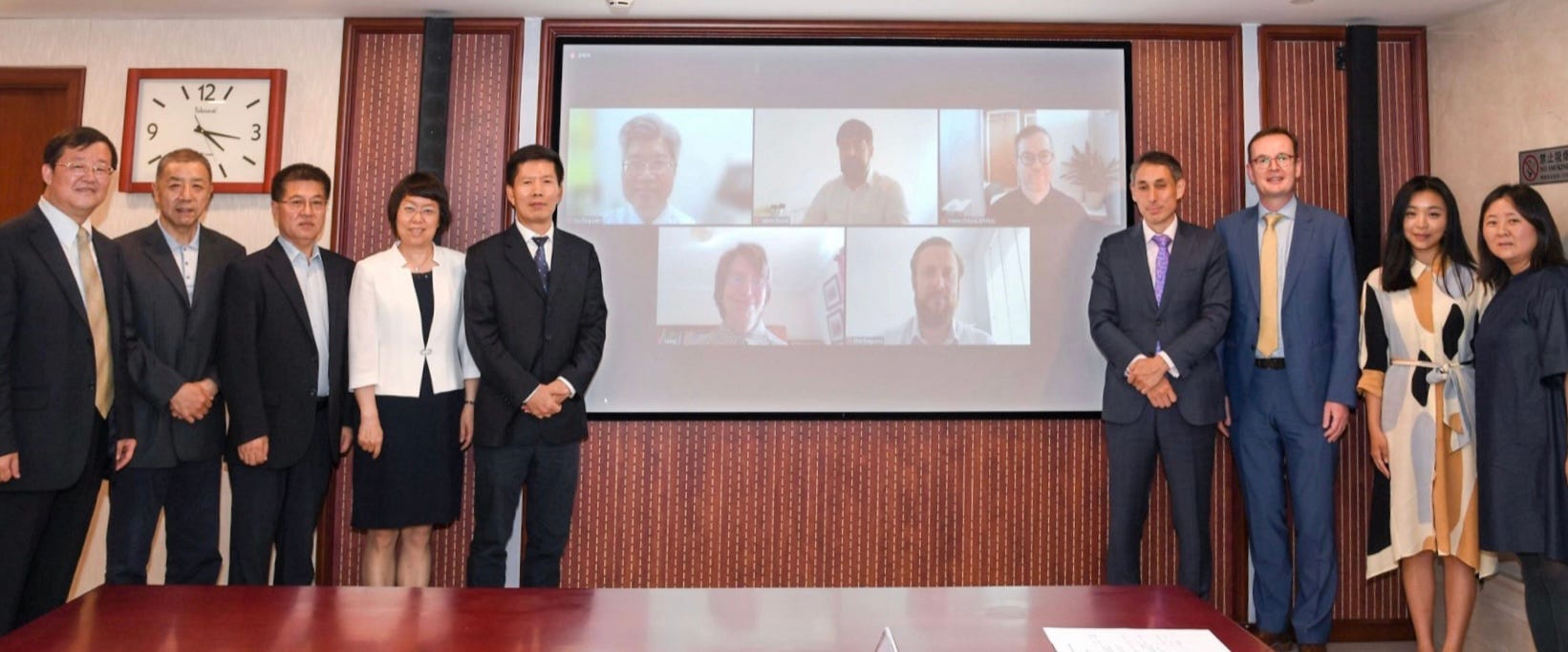
Initially, as expected, the UK MHRA regulators shared lessons honed over decades, offering well-worn case studies for the eager eyes and ears of Chinese counterparts. However, soon enough, I noticed that the dynamic began to change. The Chinese NMPA regulators began to request changes in the schedule, asking for session time to present their own approaches to the UK side. Working intensively with both sides, I could see where their confidence came from. Not only had the Chinese regulators now mastered the systems pioneered by the US and UK, but in many cases, they were already progressing past their Western counterparts, in speed and efficiency, as well as the capacity to deliver results at scale. By the final session, the Chinese side was often leading the stage.
For me, this phenomenon captures a broader and important trajectory. China’s NMPA has undergone significant reforms in past decades. It is now no longer a cautious learner, but an ambitious and confident agency. I’ve written before about China’s ever-accelerating biotech boom, where home-grown, high-quality drug innovations are now being exported and licensed abroad. Far beyond copies and generics, China’s NMPA is now becoming increasingly fluent in reviewing and approving these category-defining assets, and now not only influences the health of Chinese patients, but also the global population - and the trade flow of global medicines.
This is why it’s so important to better understand what China’s regulators do, and where the agency is heading next. This post takes a deep dive into the structure and history (including the scandals that triggered its reforms) of the NMPA, as well as the strengths and limits that define it today.
Let’s get into it.
Related:


What is the NMPA?
The NMPA (国家药品监督管理局) is China’s national regulator for pharmaceuticals and biologics, from Western products to traditional Chinese medicines, as well as medical devices and cosmetics. The NMPA works alongside the National Health Commission (which sets system priorities and public health policy) and the National Healthcare Security Administration (which controls pricing insurance reimbursement) as one of China’s core health ministries, functioning as the key gatekeeper that oversees the entire health product lifecycle, to decide what can and cannot enter China’s health market.
