


🎧 Here on The ChinaHealthPulse Podcast, I chat in depth with the true experts who have dedicated years to working in and with China’s health - across policy, industry, academia and well beyond. Our candid conversations aim to provide you with real insight into how care is delivered, how decisions are made, and why it all matters, far beyond China’s borders.
Watch or listen here on substack, and/or subscribe on Spotify & Apple Podcasts. These newsletter posts provide all links, plus a full text transcript of each episode.
The second episode of the CHP Podcast welcomes a truly distinguished guest: someone who has spent decades at the frontlines of public health diplomacy, from refugee camps and conflict zones, to multilateral negotiations in Beijing.
I am delighted to share this conversation with my long-time mentor, Siddharth Chatterjee, the United Nations Resident Coordinator in China. As the senior-most representative of the UN Secretary-General in China, Sid leads and coordinates the work of over 26 UN agencies to work with the Chinese government in advancing the Sustainable Development Goals, from health and innovation to development and partnerships.
Before taking up this role in 2021, he led as the UN Resident Coordinator in Kenya and earlier as the UNFPA Representative there, spearheading national efforts to reduce maternal mortality and end harmful practices such as child marriage and female genital mutilation. Prior to that, he worked in many regions affected by conflict and crisis across Africa, Asia, Europe and the Middle East, including for UN peacekeeping, UNICEF, UNOPS and the International Federation of the Red Cross.
A Princeton graduate and decorated former Special Forces officer in the Indian Army, Sid is a widely published commentator who speaks and writes regularly on global development and humanitarian issues, as well as on health and wellbeing through his meditation and breath-work practice.
Today, he joins us to talk about what it really takes to build trust, drive impact and keep multilateralism relevant in today’s changing global health landscape.
Watch/listen above on Substack, on Youtube, or subscribe to the audio podcast on Spotify and Apple Podcasts.
Read our Conversation:
(Audio transcript adjusted for clarity and flow)
1. Multilateralism & China today - “The inside view”
Ruby: Sid, you’ve been leading the UN country team in China since 2021, through one of the most complex periods in global health and geopolitics, both during and after the pandemic. We first met over four years ago in China when I was leading the health team at the British Embassy in Beijing during the pandemic years, and I had the privilege of joining your UN office in China as a Health Advisor, where I was very proud to deliver a joint UK-UN health event for International Women’s Day. I saw firsthand just how unique, fascinating, and incredibly fast-paced your work is! Could you share with our listeners what that role looks like day to day, and how it has evolved over the years?
Sid: Let me take this back to January 2021. Coming to China was very consequential. Between Nairobi and Beijing, I had to pause for three weeks in Guangzhou for quarantine in a hotel room with no contact with the outside world. It was an important and gratifying inflection point in my life.
It was the first time I had the opportunity to just stop - my entire career in the UN has been fast-paced. I could think about the journey ahead for me, what I would be doing in China over the next five years. And therefore, I wrote the draft of an article, which was subsequently published in Forbes, about the UN-China relationship and the vision that I had.
I can say that during those three weeks and what I wrote there have actually come to fruition - and for three reasons. This is a government which is forward looking, with astute amounts of political will, and with perhaps amongst the best public policies in the last 30 years that I’ve seen - and China is the 13th country I’m working in.
It’s weaved together a range of partnerships from the state-owned enterprises to the private sector, to the United Nations family. I see as progress in this country is quite remarkable. Let’s look at a few statistics: from 1979, China’s per capita GDP was a mere $180. Most countries in Asia and Africa had higher per capita GDPs than China. 90% of China lived in abject poverty.
From then to now, they’ve brought their per capita GDP to $12,500, they’ve lifted over 800 million people out of poverty, they feed one fifth of the world’s population with 9 % of the world’s arable land, and they’ve managed to ensure they’ve achieved more or less the first five goals of “unfinished business”: ending poverty, ending hunger, universal health coverage (they’ve done really well there), quality education (that you can see from the human capital in this country), and lastly, gender, with the largest number of women in the labor force, close to 65%. So on all counts, it’s pretty remarkable (what China has achieved), at a time when global geopolitics has shifted dramatically.
And today, things have actually become even more complicated, the world is becoming multi-polar. We came out of the pandemic, and that microscopic virus exposed the fragility and the vulnerability of human health and health systems across the world. In the flash of that lightning, we saw the contours of inequality emerge. Inequality within homes, inequality within communities, inequality within countries and between countries.
The statistics were jarring: an economic impact that rivals the Great Depression. It really set back global economy, set back the sustainable development goals. Today, we are just at mere 17 % of implementation, though the SDG timelines are ending by 2030. We are seeing a triple planetary crisis: of climate change, biodiversity loss and of air pollution. We have 80 ongoing conflicts across the world, rising levels of hunger and food insecurity.
Now, in this complicated time, and here in China, we - the United Nations system - have built a relationship of trust, mutual respect and confidence with our host government. This is what was expected of me by the Secretary General as his representative of the ground, that through the period of the pandemic and post pandemic. We worked in lockstep with our Chinese partners, with the broader people of China in order to keep focus, despite the challenges of the COVID, on our work and not lose sight of what was our intention, which is to deliver on the UN Cooperation Framework 2021-2025 and as well as supporting China’s South-South relations.
We were able to build relationships with many member states, we co-convened and co-hosted events, including the one you mentioned with the British Embassy on health, with the embassy of Mexico and Germany on education, with Kenya on climate. We’ve done a range of these sorts of partnerships with member states to look at key critical issues of labour - including one with Brazil in preparation for COP30, where we were joined by the CEO of the COP30 over here in Beijing. So a lot of work has been happening on multiple fronts, multiple partnerships have been forged.
So I feel that when we look at, for example, the Global Development Initiative that China announced in late 2021, they immediately relied on the UN to provide them the best piece of technical guidance and to make sure that we could help them to align the GDI with the global norms and standards, which they did. In 2023, with the Chinese government, the permanent mission of China to the UN, my office and the China International Development Cooperation Agency, we were able to co-convene and co-host an event at the UN headquarters in New York to bring attention to the importance of the Global Development Initiative.
And while it keeps getting caught up in the geopolitical space, I always maintain that any country that helps to give velocity and momentum to the sustainable development goals is most welcome. So I think we made great progress there. In a country like China, one has to, as a UN Resident Coordinator, have conviction and courage. These are two essential attributes. Otherwise, it’s very easy to get blown away by the vagaries of geopolitics.
My job involves a lot of managing the geopolitics, working with the Chinese government on development ambition. That was the 14th Five-Year Plan. The UN just finished the Cooperation Framework 2026-2030 which aligns to China’s 15 Five-Year Plan, from 2026 to 2030, working with the member states, sharing China’s knowledge, sharing China’s experiences, and managing 28 UN agencies coordinating their work here in Beijing.
I’m very privileged to have come here as the UN Resident Coordinator, and privileged to work with a remarkable set of leaders of agencies, funds and programmes here in China.
Related:

Ruby: Where do you see multilateral cooperation working most effectively within China right now, especially in health? What makes partnerships genuine and successful, particularly when styles and priorities can be so diverse?
Sid: We certainly need collaboration. You know, during the height of the Cold War, Russia and the US collaborated on the smallpox vaccine, which led to the ending of smallpox. So I feel that, regardless of the geopolitics, human health must be at the centre of our focus.
As in the words of Hierophilus, the famous Greek philosopher, he said that “when health is absent, art cannot manifest, strength cannot fight, wisdom, intelligence becomes useless and strength cannot be applied”. We have to make sure that health is taken at the very centre-piece.
In fact, when I look at the Sustainable Development Goals now, I emphasise that health is virtually the anchor for the success of the rest of the SDG. If you don’t have health, you have nothing. The economy slows down, everything stalls, and I think COVID exposed that to us.
So I just hope that the world comes together and converges in a multilateral spirit around health - and not just keep saying that “the WHO needs to be strengthened”. The World Health Organization needs to be given the power and the tools to effectively make sure that both non-communicable diseases and communicable diseases are easily managed, because we are not out of the woods here.
Here in China, a lot of progress is being made in the space of non-communicable and communicable diseases. Obesity has been recognised as a major issue in China’s recent Two Sessions (March 2025). We have major rise in diabetes, hypertension and cardiovascular diseases, increasing levels of cancer, so we have to look at this whole thing from an interdisciplinary approach. It is not a one size fits all. We have to really strengthen preventative sites, the primary healthcare systems and at an individual level for people to take responsibility for their own health.
Related:

Health and the Two Sessions (Pt 1 of 2): What China’s Top Political Event Really Revealed This Year

Ruby: I love what you said about health being at the centre. “Good health and well-being”, SDG 3, is at the heart of all of the other SDGs too. You mentioned that one reason China is able to push forward health reforms is because of this massive amount of political will. You work closely - not just with China’s health ministries - but also at the highest political levels. you meet with the State Councilor Wang Yi, you support the UN Secretary General António Guterres when he comes to Beijing to have conversations with President Xi. How do those high level relationships shape what’s possible for the UN’s work on the ground in China?
Sid: I’m doing this interview from an office which was established back in 1979, which was gifted by the Chinese government to the United Nations. That’s when we set up. At that time, the UN was a net aid provider to China. It used to bring in money, it used to bring in food, it used to bring in ideas, it used to give them papers on poverty eradication.
Now, it’s a very different China, and we are not a United Nations of the 1980s and the 90s. Otherwise we would have been redundant here. So we’ve adapted and made ourselves fit for purpose to the current context, to support China’s current realities and its future aspirations.
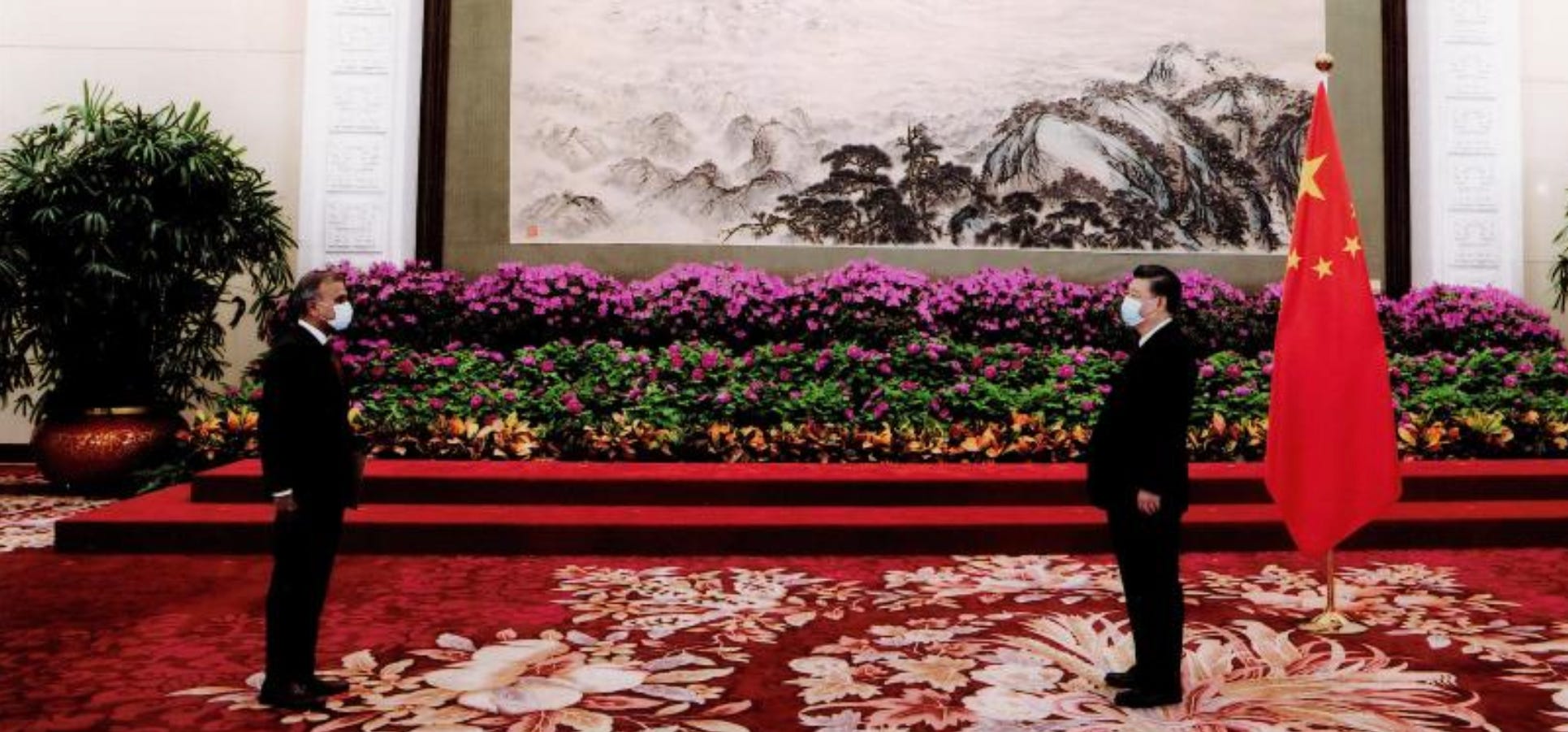
So yes, I joined the UN Secretary General - and I’ve been joining him since 2022 when he came here first time for the Beijing Winter Olympics, subsequently in 2023, 2024, and more recently in 2025 - in the meetings with President Xi Jinping. One thing I’ve observed: all the meetings run over time, simply because of the dynamic and the chemistry that President Xi and António Guterres have.
Really, it’s a dynamic of friendship, but it is also a demonstration of China’s belief in the multi-lateral system. They believe in it with genuineness. In fact, the amount of support I’ve got here in China, I can’t compare that to anywhere else in the world. And those relationships are built. You have to nurture them.
China is an old civilization. You cannot just come here and put an idea out there and think it’s going to work. You have to develop a relationship of trust. Once that is built up, you can then have avenues for open dialogue on multiple areas. China has its share of challenges, chronic diseases, rapidly aging population, the low fertility rates. There are a whole set of challenges, but at the same time, China is a centre for innovation, technology and big data.
In terms of the green transition, look at Beijing! 15, 20 years ago, this was a “gas chamber”. Today, this very city has got one of the cleanest air, better than many of the European countries. Why? Because of a convergence of political will, the right public policy, the right partnerships. They were able to demonstrate that a large city of this sort, you can actually have clean air. It’s quite remarkable.
I have been able to see these engagements and the commitment. China recently launched its National Determined Commitments at COP30. Here is a country which can actually be a good model for many other countries grappling with poverty, grappling with climate issues, grappling with health, grappling with so many of the issues that concern us and which are holding us back in achieving our full human potential.
2. Trust, sovereignty and shared goals - “The global system”
Ruby: In Beijing, you bring together a community of more than 180 ambassadors and international heads of mission. It’s an extraordinary mix of priorities and perspectives. How do you turn that diversity into cohesion around shared agendas like health and development, to keep dialogue constructive and deliver diplomacy in practice?
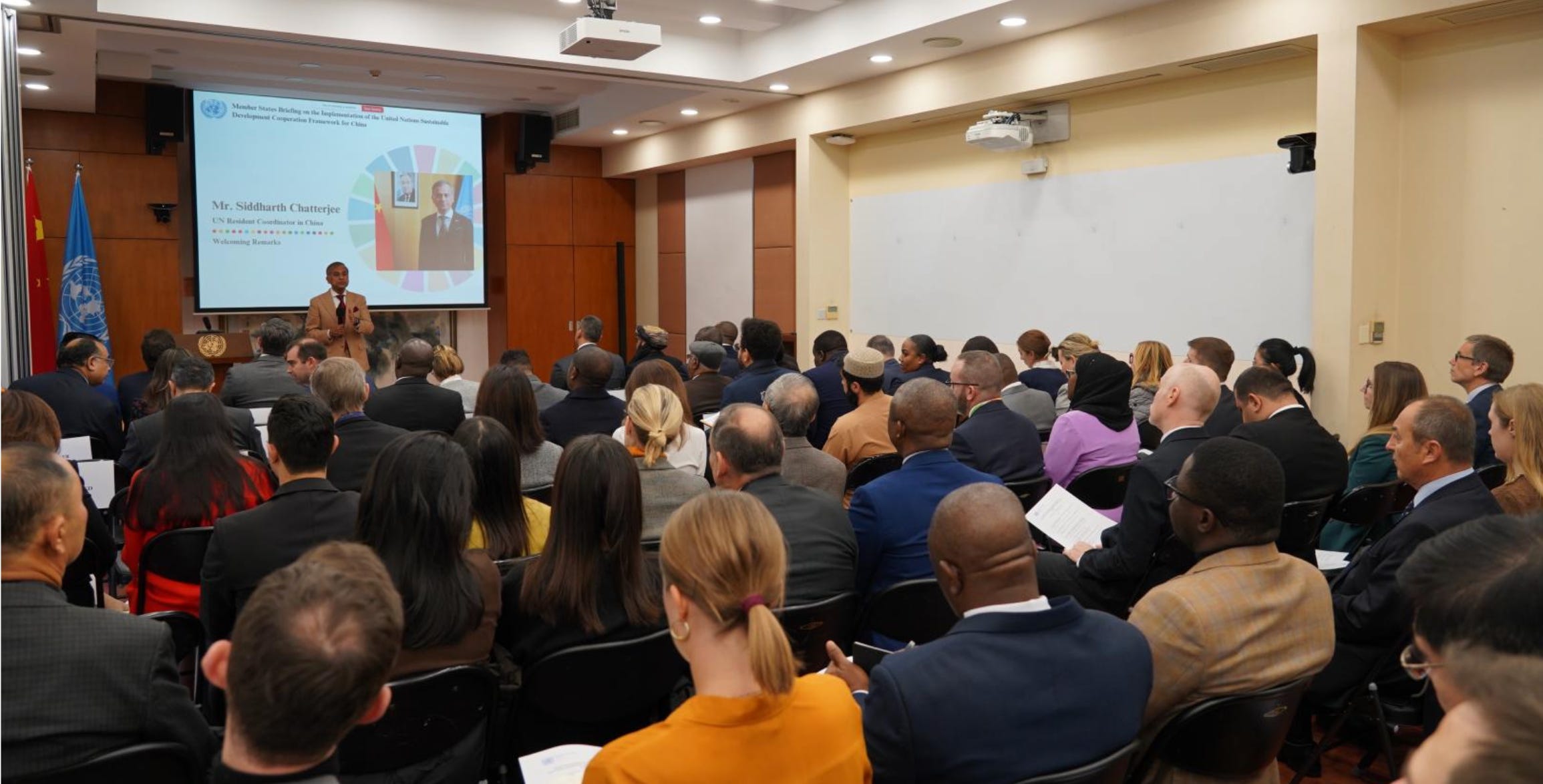
Sid: I engage very regularly with the ambassadors in Beijing. More recently for the cooperation framework for 2026, 2030, but more particularly for the country programme documents of UNICEF, UNDP, UNFK, WFP. We met the executive board members, and there was a lot of reluctance and hesitation. Many of the member states felt that the UN should not be here in China. I had to explain why the UN continues to need to be in China to support support them.
And by and large, you know, despite a lot of opposition and several démarches (a formal diplomatic communication, e.g. protest, suggestion, or request for support, made by one government to another) as well, we were able to convince them how important the country programme documents were. In the end, they all passed seamlessly in New York during the time of the executive board. So I’m very pleased with this relationship that we built with the member states, the confidence that we have with them here. Not just with China, but the broader membership - it has been very, very productive.
Ruby: The UN’s role is evolving throughout the decades; multilateralism itself is changing. And as you speak about trust and shared purpose to build up essential corporations on these areas of climate and health and needs across different countries in the media - especially in English language media, there’s a narrative that as traditional donors like USAID and UK’s DIFID have stepped back, and as China and other partners are becoming more active through new initiatives, whether public, private or both working from Beijing. How do you see this transformation happening from your point of view?
Sid: I think that a mother in Beijing, a mother in New York, a mother in Mali - all have the same aspiration for their child: a better future, more promise. Everyone has that same ambition. This is where our shared purpose and our shared humanity is. This is why the UN is there and this is why the sustainable development goals are there.
The multilateral system is itself in a crisis. The biggest threat is the very existence of the UN right now, as we speak, is the utter fracturing of the multilateral system. Which is why the Secretary General has launched the boldest reforms to resurrect and rewire, to reimagine the new UN, make it fit for purpose - not based on the maps of 1945, but what it should be in the 21st century. The UN has a stark choice, either be dynamic or become dinosaurs. So I think China has taken an important role here in helping that.
President Xi recently announced the “Global Governance Initiative” (on 27th Oct 2025). I see that as an important input towards the reconvergence and reconvening of multilateralism. I was there at the Shanghai Cooperation Organization Summit, which the Secretary General attended, and I saw the commitment and the camaraderie between all the leaders that were present there. Multi-polarity is here, regardless of what the Western media or any other media says, it’s here to stay.
And we are seeing China’s leadership. the leadership of the ASEAN countries. the interaction which is taking place in Asia. I think this is an opportunity for the West, China, all the countries of the P5 (five permanent members of the UN Security Council - China, France, Russia, the United Kingdom, and the United States) to really collaborate. Today we have a UN Security Council which is stuck. We are seeing an acceleration of conflicts, issues remaining unresolved. So we need that shared sense of purpose to come together. Our leaders need to come together, to connect, to catalyse relationships for the global goods, for our humanity, for human development.
Related:

Ruby: Why do you think the narrative is so defensive or anxious about the future? Why is it instinctively when change happens, it’s not optimism?
Sid: There’s the good old saying, you know, when you have a volcano. After the volcano has passed, you actually get fertile soil. This is the inevitable part of life. Crises cause anxiety. Now in that state of crisis, like those Chinese characters, You have the character for a crisis and you have a character opportunity and they blend into each other. It is in the world’s best interest for countries to collaborate, to cooperate for the global good. Geopolitics will be there. Differences will be there. That is why the UN exists. It is a table for everybody, small to big, mighty to weak.
Ruby: As these changes are happening in the international development landscape and China is expanding its role, including in global health, when you’re interacting with China’s counterparts and ministries and leaders in Beijing, what do you think they care about the most?
Sid: I believe that China is doing this out of conviction, just like any other country did - just like the UK has been doing, just like the US has been doing. I don’t see any hidden agenda. This is what global collaboration is all about.
I grew up as a child in India, where the vaccine program was supported by DFID, and my school bag and all that came from grants that came from USAID. These programmes were very, very important at that particular time. So when other countries are withdrawing, with defense budgets of Europe going up and less money going towards the development agenda, you will need countries to come up. And I’m really pleased that China, India, all of them are stepping up in order to want to support other countries.
China has invested in three things. And I think this is a global formula for developing countries, and particularly countries that are wanting to get out of the trap of poverty. Number one is to invest in human capital, that is why this surge of engineers and STEM, why these bridges and those roads get built in record time. Two, China invested in infrastructure, really connecting the country physically and digitally. This is exactly what we need. If Africa wants to achieve a continental free trade area, it will need to be connected. It needs a free movement of goods, services and people. That is how prosperity will come.
And number three, to invest in business. China had a budget surplus year on year. That liquidity that has allowed it to come in support of South-South cooperation in the global development fund. It should not be charity - and this is where having served half my life in Africa, I’ve seen what grants and charitable money does. It makes people dependent.
I mean, look at South Sudan. I started the UNICEF office there in the year 2000. When I look at it 25 years down the line, it’s like watching the movie “Groundhog Day”. Same situation, same planes going up and dropping food and humanitarian aid. What have you done in 25 years? Their population has got completely dependent. We have to invest in development. As the Secretary General has said, “there is no development without peace and no peace without development”. They have to go hand in hand. It’s not one or the other.
3. China-Africa: South-South lessons
Ruby: Your work in Africa started in South Sudan in 2000, and you’ve worked for a long time in Kenya, in particular as the UNRC there and then UNFPA representative as well. This gives you a particularly rare and authentic perspective on the China Africa relationship with regards to health and development. What do you think outsiders tend to misunderstand about that China Africa relationship?
Sid: I came to Kenya in 2014. I was asked by the executive director of UNFPA, the late Dr. Babatunde Osotimehin. He said, “look, you need to deal with the very, very high maternal deaths in Kenya”. Kenya was amongst the 10 most dangerous places for a woman to give birth, three major causes: postpartum hemorrhage, HIV and hypertension, were the causes of death.
I got there and I was wondering, how do I get started? Because so much has been tried by UNICEF and UNFPA over decades. So I took my team to the University of Nairobi and we stayed there for about three days to look at the data county by county. And three days later, I was able to send some of these results to my professor at Princeton University. And they came back and I had this 3 a.m. call to say, “listen, of the 47 counties, 19 counties contribute to 98% of the maternal deaths, and of that 19, 6 contributed to 50% of the deaths.”
Now, suddenly, we had real data. Then we said, let’s focus on these 6 and see how we can change that. And when you’ve got your mind made up, events start to unfold. I get a phone call from the head of Huawei - the Chinese communications company - in Kenya, to discuss setting up a maternal health centre. And immediately after that, from Merck, and then Philips, and then GlaxoSmithKline, and then SafariCom. A constellation of companies came together. And there was a lot of reluctance within the UN - that pharmaceutical companies and UN should not be working together.
I said, “but we need to try something different”. Leadership came from the government of Kenya, and we were able to galvanise these six companies. We went into these six very, difficult counties on the Somali border, and in a matter of two and a half years, we were able to reduce the maternal deaths by an investment of about $15 million from a trust fund by one third - which under normal circumstances would have taken 10 to 15 years. This was the power of partnerships. And one of the things that enabled the movement of these people, was the infrastructure that existed, thanks to the Belt and Road Initiative.
So I’ve seen real development that can happen, real change that can happen - firsthand. In 2017, we got invited to the World Economic Forum in Davos to speak about this. It really gave the (local) government the confidence that they could actually push towards universal health coverage. Today, that same programme which we started then has become a $150 million telemedicine enterprise in Kenya.
We are limited by our imagination of what is possible. Regardless of the geopolitics, companies can collaborate. They need to sustain. So it is not an act of charity - we need sustainability. This is where public-private partnerships can have huge effect. Blended financing can have a huge effect. We need to reimagine the architecture of development financing, bring in more of the private sector, look at it as an investment opportunity. I see immense possibilities there.
China, Africa and hopefully others would join in. Africa needs a Marshall Plan 2.0. If you invest in infrastructure, human capital and businesses. Africa, whose population will be 2.5 billion by 2050, with about 800 million young people, will become the future of consumption and production given the young profile it has. But you have to make those investments now. And with the rapid aging of societies in Asia, in Europe, in the US. This is a great opportunity to make those investments. As the UN, we can bring member states together to advance the development agenda. More development, less discord, more camaraderie and dialogue.
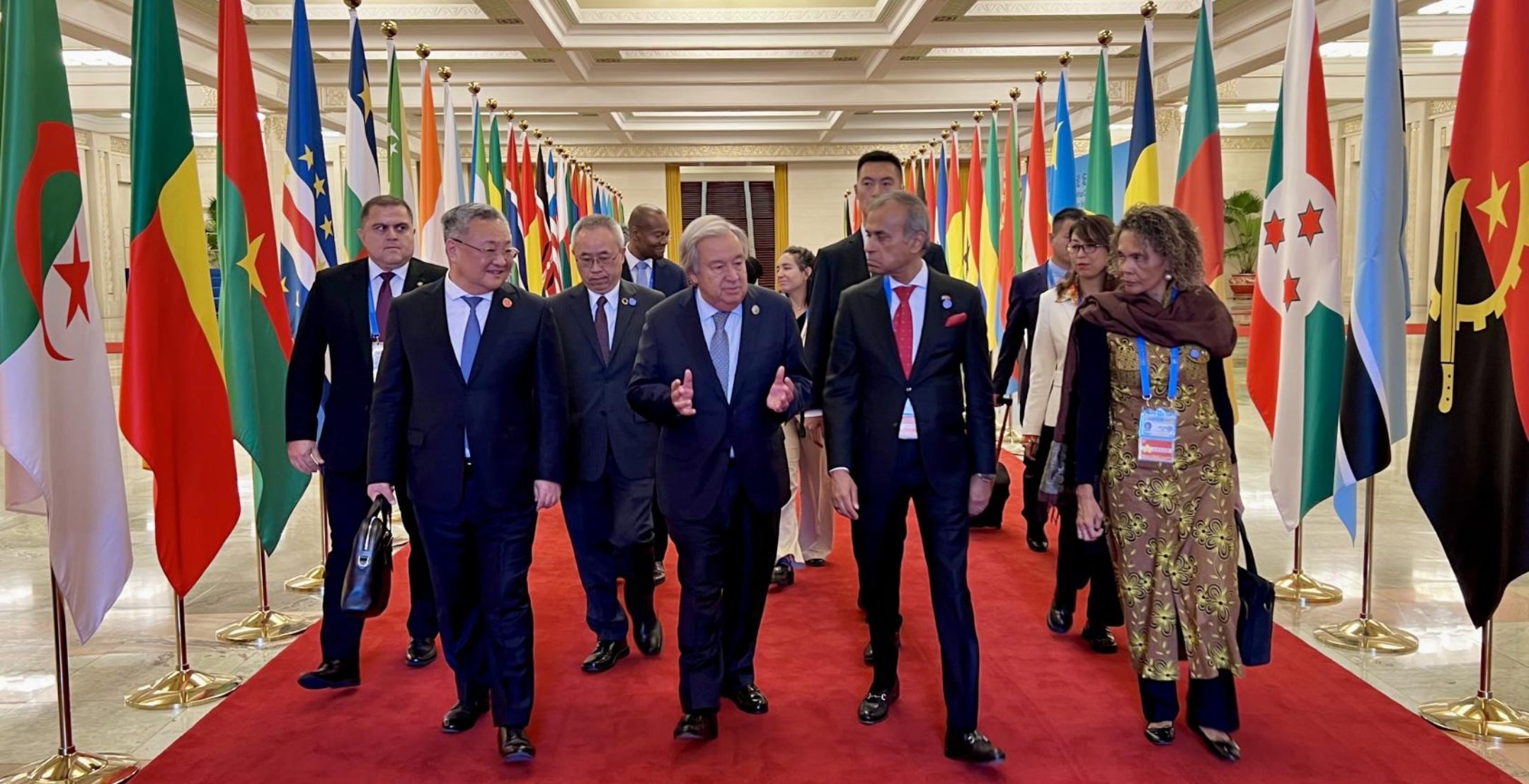
Ruby: When I was working from your office in Beijing, I had a chance to be in these rooms where you regularly convene African ambassadors, coordinate their objectives and coordinate with senior Chinese counterparts to have forward-looking conversations on cooperation. And to me, it was very clear how much trust and respect you would earn from all sides, within the UN system, with China, with the African partners, because of this track record you have of working for this many years in Africa. So from your perspective, especially for the global health sector, What do you think defines the next years in the China Africa relationship and where can it go further in the years ahead?
Sid: It’s immense. the sky is no longer the limit of what can happen, the possibilities that emerge. The African ambassadors here are amongst the brightest and the smartest I’ve seen anywhere in the world. The progress that the Forum for China-Africa Cooperation (FOCAC) has been making, I can see that the African ambassadors are very united with a shared purpose, shared commitment, and with a vision for the 2030 agenda, for what happens by 2063.
Everybody is really consolidated, and for me, it’s been a privilege to be working with both sides. We have become a trusted partner. The FOCAC process is very much a bilateral process, but the Chinese government and the Africa group have seen the value proposition that the UN can bring. We don’t bring money to the table, but we bring intellectual capital. We bring ideas and we try and see how best to give them the momentum and our UN country teams in the African countries working with their governments in how to implement the best of the forecast.
But today we can’t be the UN of the past, working on 20 schools and building 20 borewells. No, that is done by many others. We need to be looking at what kind of scale we can achieve. Millions of people to be covered, working with the governments from a regional perspective through a cross border perspective and to really make sure that in our united purpose as the UN, we are able to help our member states align with the best practices that are available there, help them to achieve the scale that is necessary.
Ruby: When you’re engaging with the African ambassadors, what do they tell you that they want to work with China on? What, from their perspective, is important?
Sid: The FOCAC has clearly outlined, from agriculture to health to education to infrastructure to the green transition. The possibilities are endless (for working with China). I’ve gone with a few ambassadors to visit the Kubuchi Desert, which is the seventh largest desert in China. You need to visit that desert to understand what China has done. An entire desert, which looks like the Sahara Desert has been tamed. It’s a sea of photovoltaic cells and wind energy. they have produced 3.2 gigawatts of electricity, it powers up three million homes. And under that, they’ve been able to grow some of the best luscious vegetables. The per capita GDP there is higher than the national average. It’s very interesting to see the possibilities of the green transition and what it can do. This convergence of big data technology and innovation. I’m hopeful that there is more collaboration in this space.
4. Close
Ruby: You’ve worked in such high stakes environments for most of your career all around the world. what continues to give you hope and where’s next for you too in your career?
Sid: Perhaps to dial this back to my childhood. I came from a refugee family, lived next to Chinatown in Calcutta. Circumstances were quite tough, and the only thing that I had was not academic competency or sporting prowess. All I had was hope. And that hope has carried me into different areas. I never thought one day I’d be a UN staff member.
I joined in 1997, standing as a security officer in a gate in Bosnia and Herzegovina, in Sarajevo. And here I am today as the head of the United Nations of China. The unseen hand of destiny has certainly played its role - and so did luck. But perhaps it was a passion for change that propelled me forward. It was a passion to make a difference that propelled me forward.
And so when I look forward, I would say that China has very much been a highlight of my career in every way, professionally, personally. My son has been growing up here for the last five years, very attached to this country. My wife has just moved here to work for UNICEF. It has been most gratifying on all comes. What next? Well, God and the Secretary General know.
But, you know, the most important thing is that I feel the sense of deep satisfaction that over the last five years, I’ve been able to work in a fabulous country with phenomenal government partners, phenomenal civil society partners, phenomenal colleagues, who keep this office with the energy and enterprise and great leaders of the UN country team. Wherever I go, I know that I have been working in a country which has been fundamentally very transformational to me, both personally and professionally.


