


🔬This is a 2-part deep dive on Alibaba’s role in China’s digital health landscape, in the CHP Real Diagnosis series.
Here, in Part 1: I cover my visit to Alibaba HQ this week in Hangzhou, reflecting on how the company’s history, mission and vision has changed since I last worked at Alihealth.
Next time, in Part 2: A deeper look at Alibaba’s healthtech ambition, breaking down the good and the bad in its structure and scope — as well as the implications for patients, providers, competitors and industry partners.
Alibaba needs no introduction. It is one of China’s biggest tech and internet giants, born in Hangzhou (the city now also known as the origin of DeepSeek) in 1999, and well known around the globe.
The last time I was here on “campus” (as employees call it) in 2019 at HQ, I wore a badge and owned a desk in Building 9, working as a Medical Advisor at AliHealth, its health subsidiary. This week, I returned as a guest.
Alibaba’s story of transformation has become the stuff of tech legend. In 26 years, the company has grown from a B2B marketplace into much more than an e-commerce powerhouse, pushing founder and former English teacher Jack Ma, to global prominence as a shining symbol of the China dream: hundreds of biographies and self-help books have been written about his life story and the endless possibilities inspired by hard work and ambition.
Unlike Amazon, which has maintained an arguably tighter focus on e-commerce, Alibaba has built a broad, horizontal infrastructure, in order to become a holistic operating system for digital China. Today, it is a sprawling tech conglomerate with multiple IPO’s, which already has and continues to transform the way people interact with technology in their everyday, from digital wallets, logistics and deliveries, to cloud computing, as well as healthtech.
When I was working here six years ago (which, equates to several past lifetimes in China’s ever-accelerating tech landscape), Alibaba’s health strategy was still tentatively building from its natural strengths in e-commerce, with primary focus on drug deliveries and digital pharmacies.
Things look quite different now.
In this 2-part series, I want to share some highlight snapshots and reflections from my recent visit. I believe that understanding the structure and history of the company provides essential context in order to better analyse its wider incentives, mission and vision, and to predict how these influence health and care in turn.
My Alibaba Journey
In 2019, I joined AliHealth for a stint as a Medical Advisor, working from Alibaba’s headquarters in Hangzhou, and occasionally its high-rise offices in the Northeast of Beijing.
The experience was fascinating, and at times, dystopian, in the way that only big tech can be — particularly as I had spent the majority of my career thus far as a doctor on UK hospital wards. This was my first time working and speaking at length in professional Mandarin for a Chinese company, let alone the biggest name around in tech. From extended screen-time to back-to-back meetings, each day felt fresh and novel for me, even the most seemingly monotonous routines.
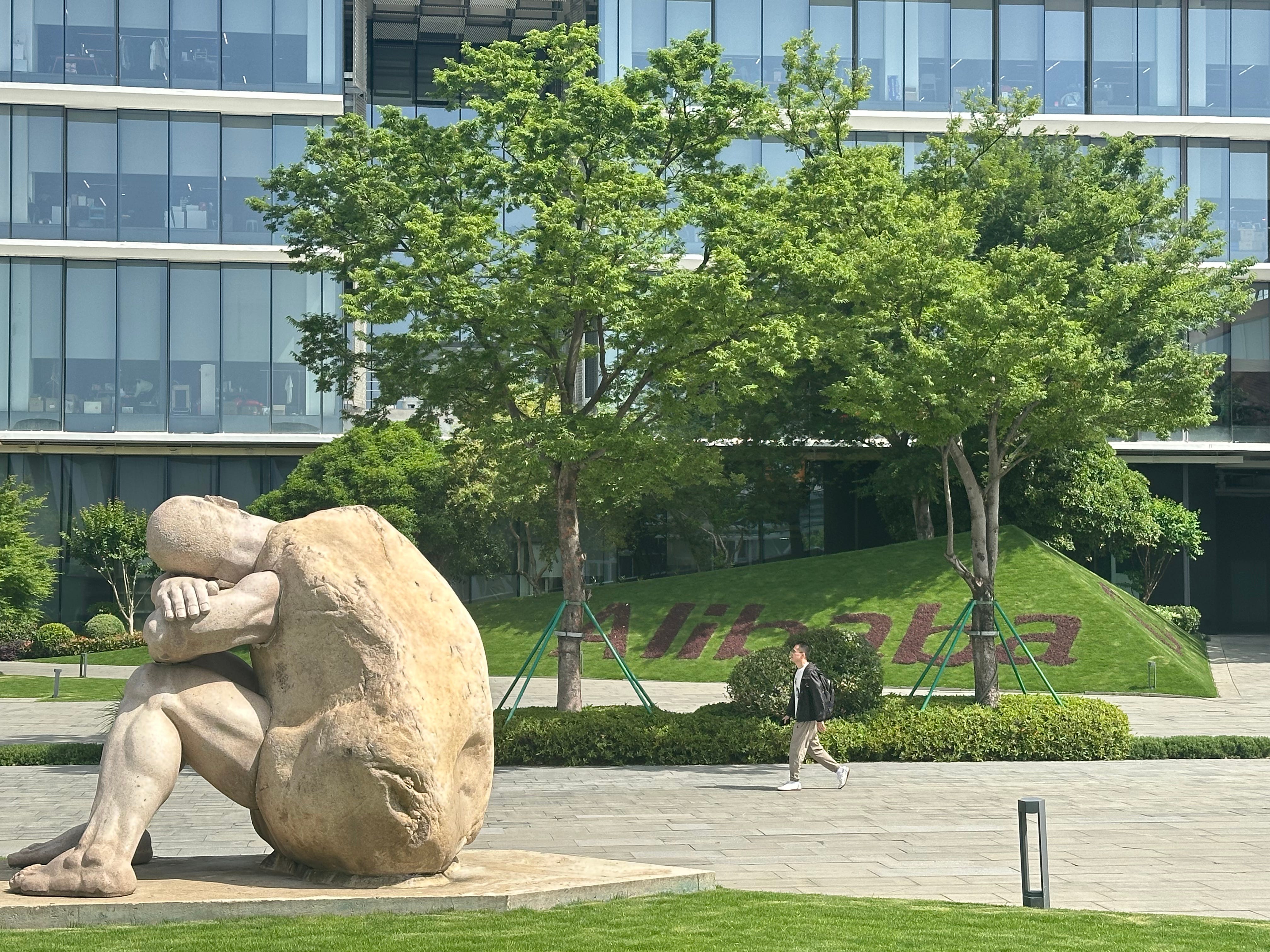
Alibaba had absorbed elements of Silicon Valley culture: a vast, beautiful campus built around a landscaped lake, glass towers encircling manicured gardens, and employees doing laps around the water on their breaks. Nested within each very tall, very square building, canteens served everything from regional Chinese dishes to burgers and pizza, and convenience stores sold branded Ali-notebooks and pens that employees could buy as gifts for outside friends and family. There were often company festivals on-site, with themed gifts and interactive games, and regular pop-ups where staff queued for prizes and snacks.
Alibaba also proudly maintained its own culturally Chinese imprint. When I joined, I had been bemused to discover that employee is asked to choose a 花名 (huaming, or nickname), by which they are exclusively known by. This meant that colleagues rarely knew of each other’s real names, even after years of working together. The names were often whimsical, sometimes aspirational, and I wasted days picking out pretentiously obscure Chinese characters from Tang Dynasty poetry in order to impress colleagues with my sophisticated taste.
I was also fascinated by the long-service awards: stamped gold rings, jade pendants and carved seals given at 1, 3, 5, and 10-year marks. These emblems were proudly displayed in security-monitored cases at the centre of the lobby entrance where my colleagues and I beeped in and out everyday, glowing and calling out to us as the symbolic rewards of long term loyalty.
