


Hello from London… finally! I have returned from another packed trip across China, overfed, invigorated and full of thoughts.
I always try to plan one longer trip each year for deeper research and insight-building (see last year’s post), and this time, I travelled to multiple cities across six provinces (including Beijing, Shanghai, Hangzhou, Shenzhen, Chengdu and Yangshuo), through a dizzying mix of factory floors, policy rooms, healthy-ageing meetings, public-health conferences, product demos, industry catch-ups, client conversations and family-style meals that somehow always ended with one more dish arriving.
This is one of the reasons I started this newsletter/podcast: China’s health story is hard to understand from reports, press releases or policy documents alone. Those matter, of course, but the real value more often comes from moving between layers on the ground: talking to officials, visiting companies, listening to industry partners, comparing notes with clients, asking taxi drivers what they think, and noticing what appears on the side of a bus.
That is also the work we do through LINTRIS Health consultancy: helping people make sense of health systems across borders, especially when China and the West are watching each other with an ever greater mix of curiosity, caution, competition and commercial urgency.
As my upcoming book “China Cure: The Rise of a Biotech, AI Medicine and Global Health Superpower” (out this October, more details to come!) sets out, these distinctions matter more each year. China’s impact on the world’s health now inevitably consequential for all of us, whether we are professionals working in this space, or simply as patients and health consumers living anywhere in the world. But while headlines still often position China as “ahead” or “behind” the West, in reality, it is moving very differently, as its health system tries to manage ageing, AI, biotech, medical devices, digital infrastructure, reimbursement pressure and cross-border partnerships - and all of it under very different political, commercial and social conditions.
Today’s post aims to be a Vital Signs check-in: five rooms from across China’s health ecosystem that I think reveal a lot about where the landscape is moving, and what is most strategically important:
The street: AI and robots in public view
The factory floor: health with a price tag
The home and community: ageing as the demand signal
The policy room: less one-way than before
The deal room: biotech has moved from credibility to scramble
All photos taken by me, unless otherwise stated.
(I will write about China’s hardware evolution separately - that is a fascinating and layered topic, spanning medical devices and robotics that deserves a deeper Real Diagnosis piece, and one which I believe is becoming ever more salient as time progresses.)

1. The street: AI and robots in public view
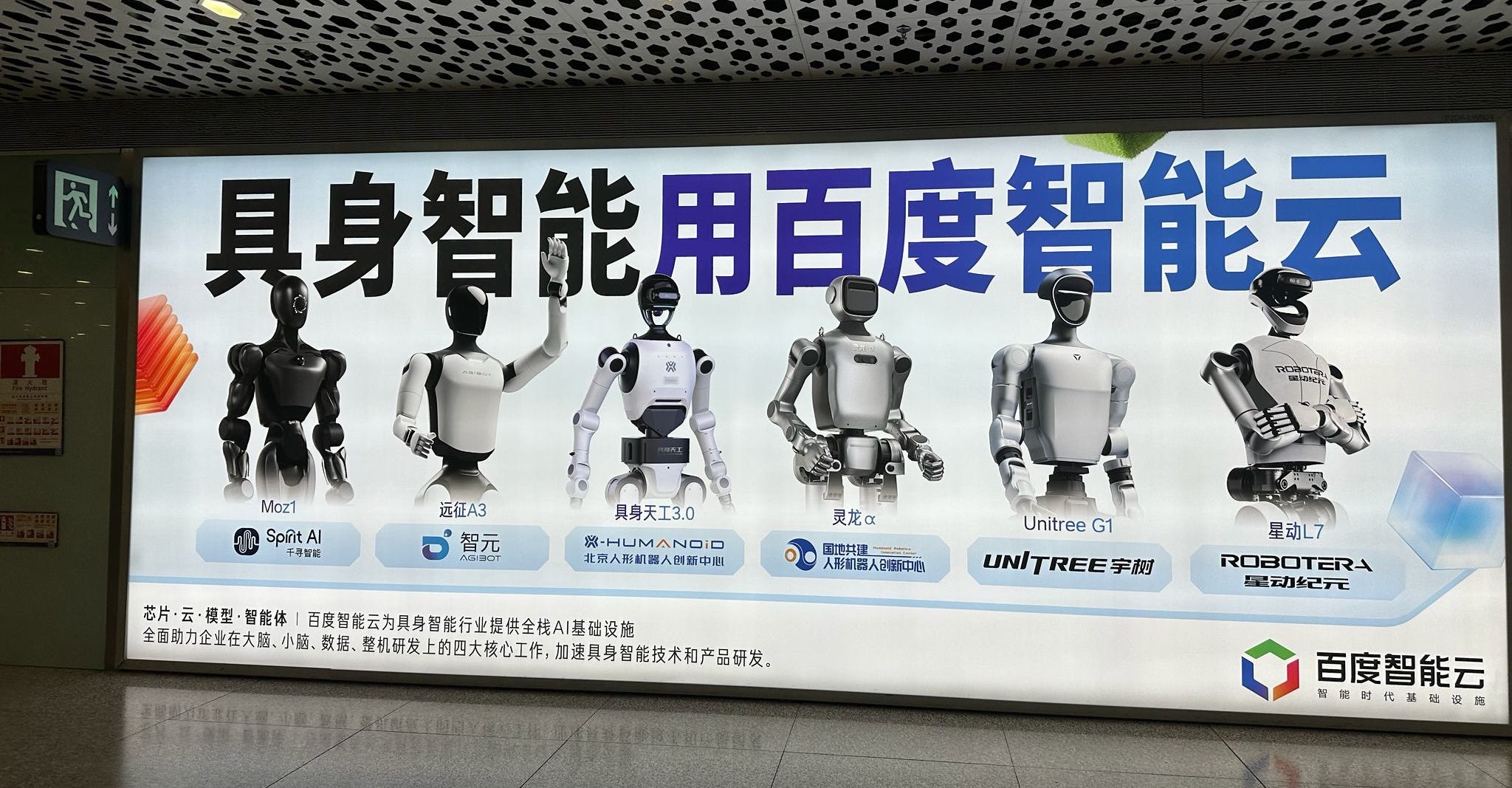
When I landed in Beijing Capital Airport this time, I noticed how almost every other advert seemed to be about AI – whether Doubao, Deepseek, Qwen or AliCloud. Airport advertising can be a useful map of aspiration that tells you what a country wants to project as powerful, premium and socially relevant, and here, the spaces where you might expect images of luxury handbags or jewellery were instead bought by AI and technology.
I headed downstairs to find my Didi (China’s version of Uber) and found a robot coffee machine sitting at the entrance of the car park, where there had not been one when I was last here. Of course, I had to try it! It was fascinating to watch the robotic arm swivel and turn, performing its choreography of moving the cup from coffee to milk, and finally even snap a plastic lid onto my latte before it was ready for me to take from the window. My review: it tasted neither better nor worse than a human-made equivalent, but that may have been to do with the beans rather than the method.
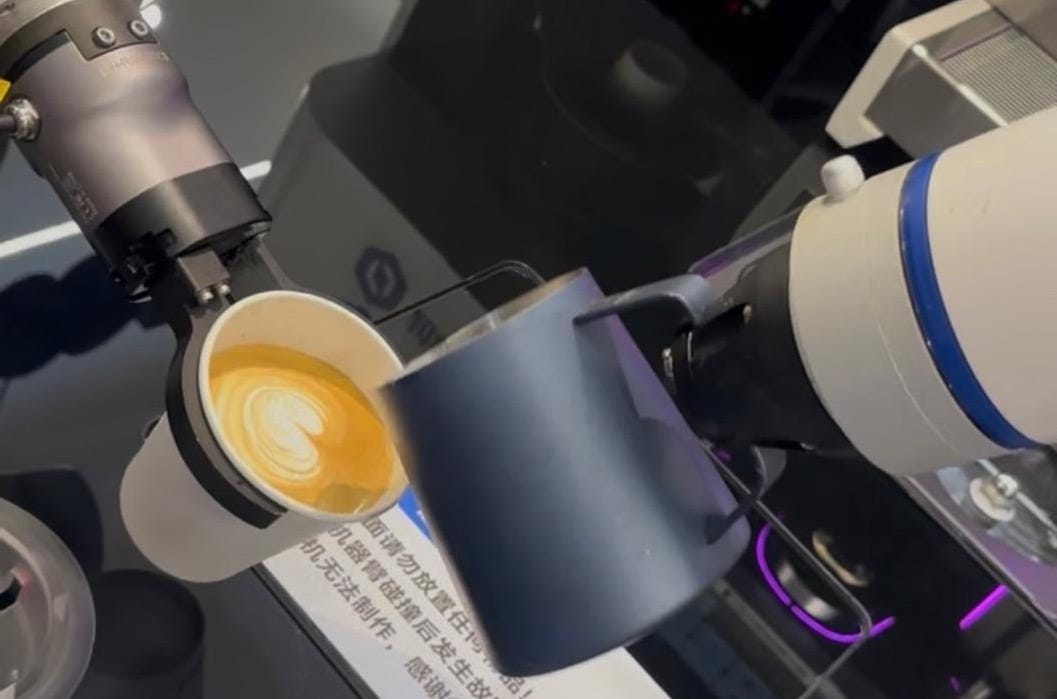
But the curious thing about human nature (whether for better or for worse) is that we tend towards fickleness and can become accustomed to things quickly, so that even dystopian levels of novelty wear out fast and disappear into every day. In the following weeks, as I saw more robot coffee machines in many places, on the street corners, in shopping centres and office lobbies, my initial curiosity predictably began to fade.
Similarly, when I first arrived in Shenzhen, I had been astonished at first by Meituan’s delivery drones that flew across the skies overhead. Their whirring buzz sounds like a noisier, more machine-like mosquito, especially when they lowered to land, and I couldn’t help but pause mid-conversation to snap photos and videos excitedly every time I heard the sound overhead.
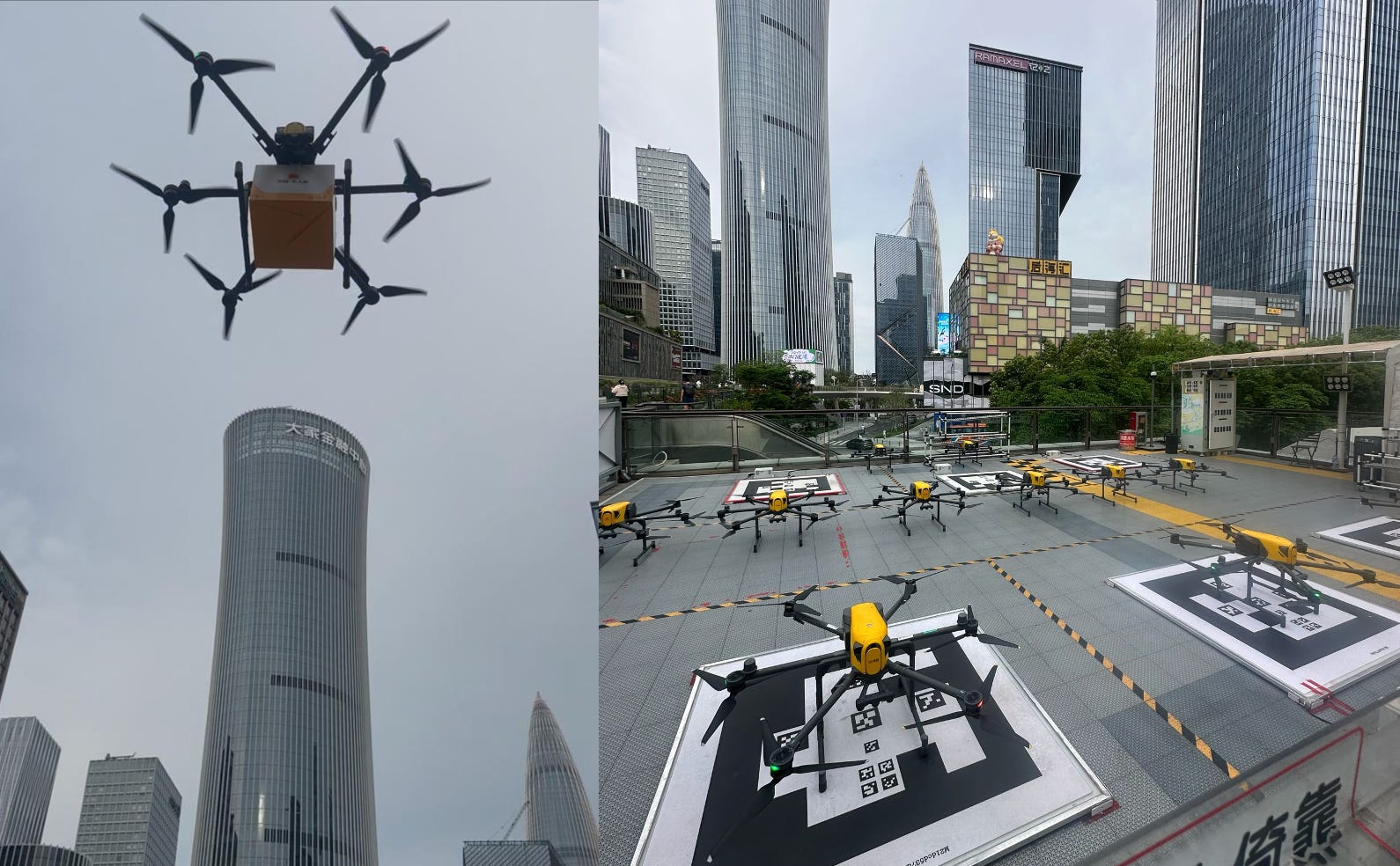
Though the streets around were still filled with human motorcycle drivers that delivered food, drink and medicines to city residents, Shenzhen’s drone army now reportedly delivers over 50,000 orders a day. I even went to visit one of the “nests” of Meituan, to watch as a yellow-jacketed worker who loaded and unloaded each drone with battery packs and carrier boxes. But by day two, that buzzing noise had grown to become increasingly unremarkable, one of many sounds in the background noise of the city, and like the locals, I kept walking, scrolling and chatting as another buzzing drone carrying bubble tea flew overhead.
Technology is becoming ordinary in China in ways it is yet to be in most of the rest of the world, accelerated not only by repetition and familiarity, but also active intentional integration into public life and society through advertising, entertainment, street-level services and consumer interfaces. I previously wrote about the comedy sketches at the New Year TV extravaganza, the annual Spring Festival Gala, where AI health apps and robot carers were presented to China’s billion-strong audience as positive phenomena to get used to. Innovative progress everywhere is necessarily and ultimately dependent upon regulatory standards and governance management (and in the health context, hospital procurement committees, clinical evidence, reimbursement rules and professional trust alongside all of it), but before that, the way that technology is received, trusted and welcomed by consumers and customers that determines uptake and momentum.
I was in town for Beijing’s E-Town robot Half-marathon, where humanoid robots run on a separate track to human runners. Last year saw around 21 robots join in, many of which stumbled, overheated, needed battery changes or required anxiously hovering handlers to rescue them, and the fastest robot finished in 2 hours 40 minutes. This year, over 300 humanoid robots competed, and though there were still crashes and humorous wobbles and general chaos, the winner finished in 50 minutes, faster than the human half-marathon world record. Huge crowds of Beijingers and tourists alike turned up to cheer, and these scenes of spectacle, soft power and public excitement travelled far beyond China to go viral online on global social media.
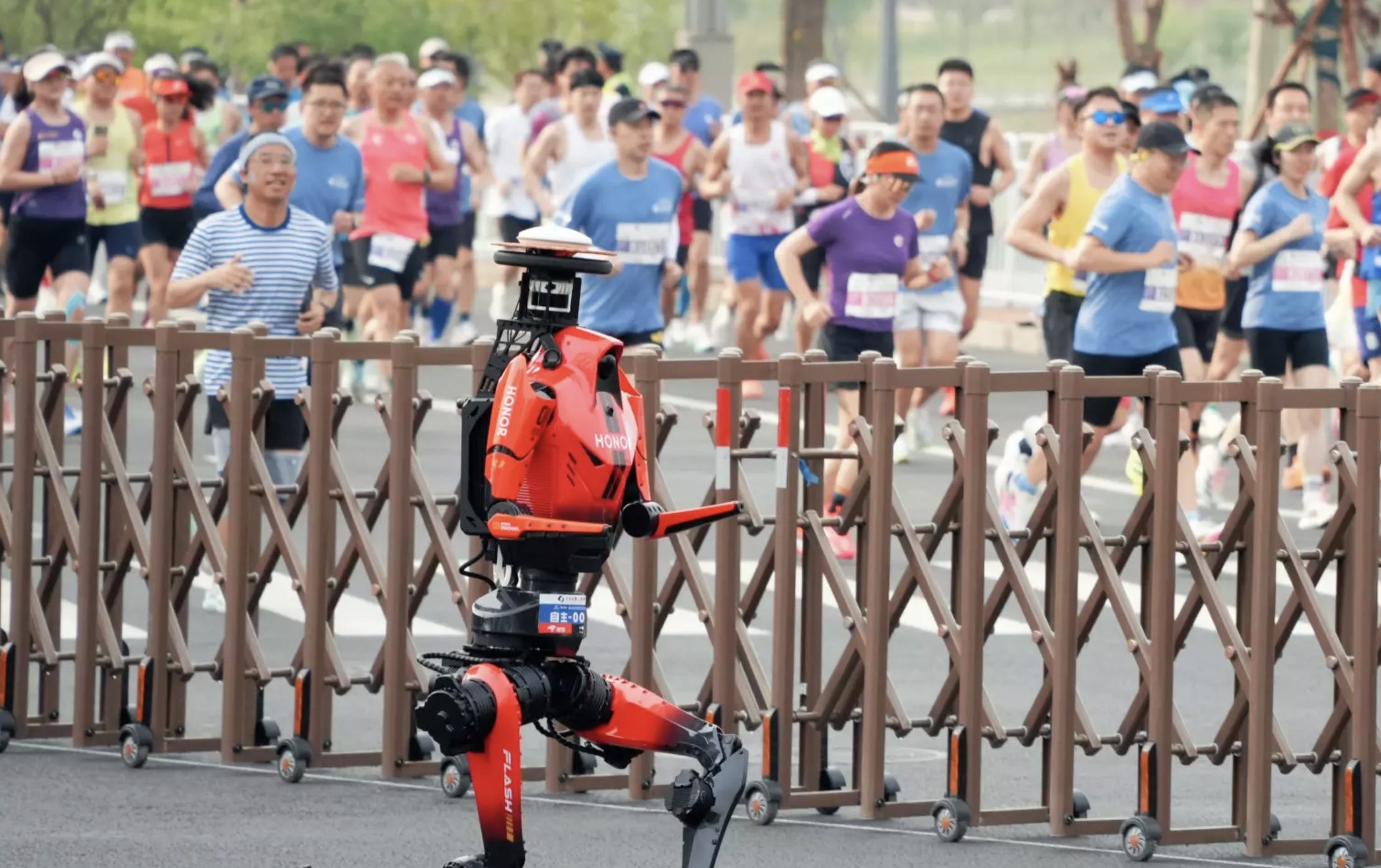
We cannot read too much the direct significance of China’s tech advancement, let alone with regards to healthcare innovation, via Spring Galas or robot marathons. A humanoid that can stagger through 21 kilometres is still a long way from safely helping an elderly person out of bed, assisting a nurse or working reliably in a messy domestic environment. But those spectacles do suggest how robotics and exploratory innovations are being made visible as a national technology category. The public is meeting humanoids first through a race, a viral clip, a joke, a fall, a cheer, and a sense that this awkward machine may one day become useful, and this recognition can build acceptance where in other countries and contexts, the first instinct might still be hesitation, or even fear.
China’s public story of AI and robotics also came through to me through my informal conversations with the ordinary people already living inside this technology-heavy environment, particularly my chats with taxi drivers, who spend their working hours interacting with all levels of society, whether that’s locals or visitors. While their views may not be representative in a scientific sense, I often think that they can tell you something about how a city is thinking.
My Didi driver in Chengdu proudly told me how he used AI every day, for “everything,” and used a staggering 110-120 GB of mobile data a month, mostly from social media scrolling and watching videos. He laughed at my genuinely shocked expression, but then it became his turn to be shocked when I told him I only used a measly 5GB a month myself. He seemed unable to imagine a life with so little technology.
But the spread and use of tech across China can remains unevenly paradoxical, even at an individual level. As we chatted, I noticed a bus drive past us with an advertisement for Ant Afu, the hot digital health app (I’ve written about it here, and spoke to Bloomberg here) taking over China. He had never heard of it, declaring that he did not like using mobile apps to access healthcare. When prompted why, this AI-fluent, short-video-addicted driver told me that he “preferred booking doctor appointments in person and seeing a real human face rather than a chatbot” – and seemingly did not notice the contradiction of what he had just said!
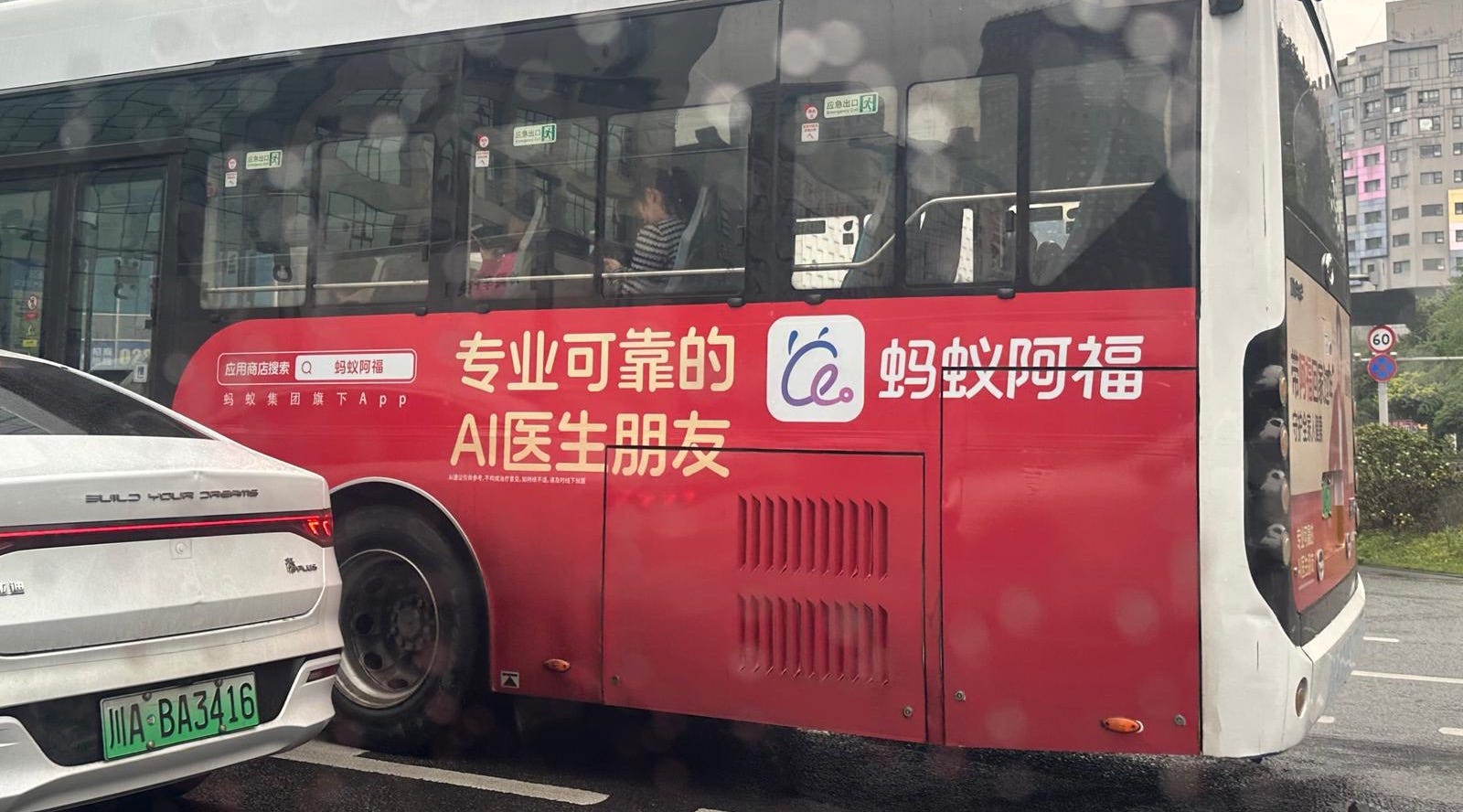
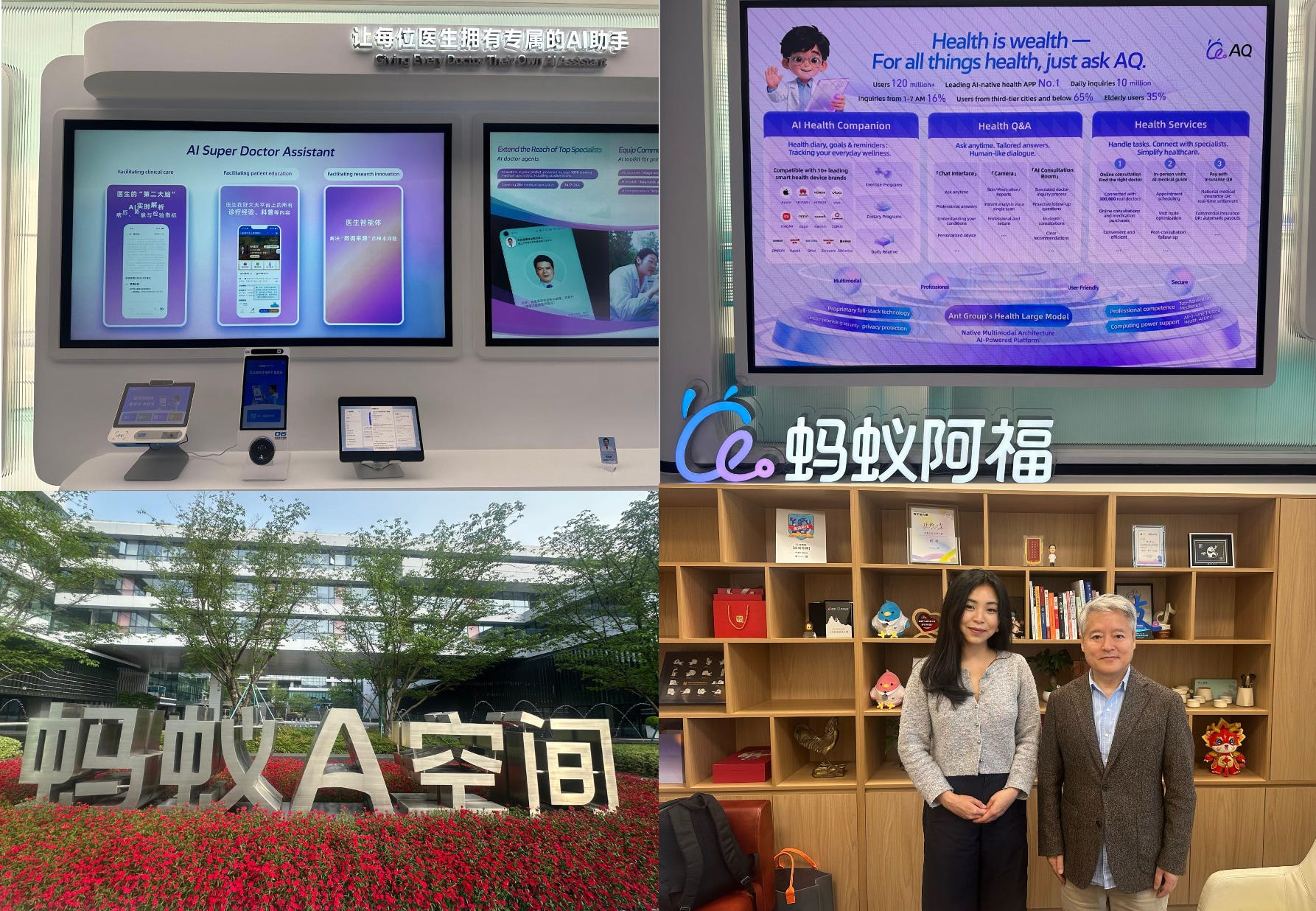
From my research, and from anecdotes across family and friends in China, I had assumed that Ant Afu had taken over the country. Indeed, the week before Chengdu, I had been in Hangzhou visiting Ant Group’s headquarters. I had interviewed the CMO of Ant Afu, spoken with members of the communications and strategy teams, and been shown both the ambition and the limitations of what the company and platform were trying to build. I also spoke with some of the celebrity doctors and hospital department chiefs who had lent their names, medical licences and anonymised hospital records to create LLM-powered AI avatars in their name. There in Hangzhou, the home of Alibaba and Ant, Afu already felt familiar and present, and in Beijing and Shanghai, it was already well- integrated too. But here in Chengdu, it was still in the beginning stages of bus-advertisements, and still had work to do in convincing taxi drivers and local Sichuanese, and I was travelling alongside its national expansion in real time.
My Didi driver’s car was an Electric Vehicle, as almost all of the taxis I took were across the provinces I visited. It is not an exaggeration to say that every car seemed to have its own interior logic, and even here, my initial curiosity turned intobemusement and then exasperation, as I had to work increasingly hard to exit each car: a button here, a hidden handle there, a different lever in the next vehicle. The variation in aesthetics, which seemingly trumped function every time, felt to me like a representation of how each Chinese EV company was attempting to compete in this space at once, with varying levels of success.
I experienced the rough edges of this later, back in Beijing, when one EV Didi I was travelling in, on the way to a meeting, broke down in the middle of a five-lane road. The LED screen behind the wheel had turned blank white, with a loading circle, and the driver grew increasingly anxious as the car began to slowly roll slowly forward, apparently out of his control, while the accelerator and brake seemed to have stopped responding. This situation had never happened to him before, but with no better option, the helpless driver told me to climb out in the middle of the road and call another car. The next EV had no problems, and I arrived at my meeting fine enough, though late. I wondered later whether that particular domestic EV brand had anything to do with it (in the chaos, had forgotten to note the brand), and while one dysfunctional car does not represent a whole sector, it was a reminder of how China’s tech-forward life can be forceful and impressive yet remain uneven. That same tension runs through the health sector, where consumer familiarity can arrive before clinical maturity, excitement can move faster than regulation, and demand can form before the system has decided how a product should be governed, paid for, trusted or used.
Related:


2. The factory floor — health with a price tag
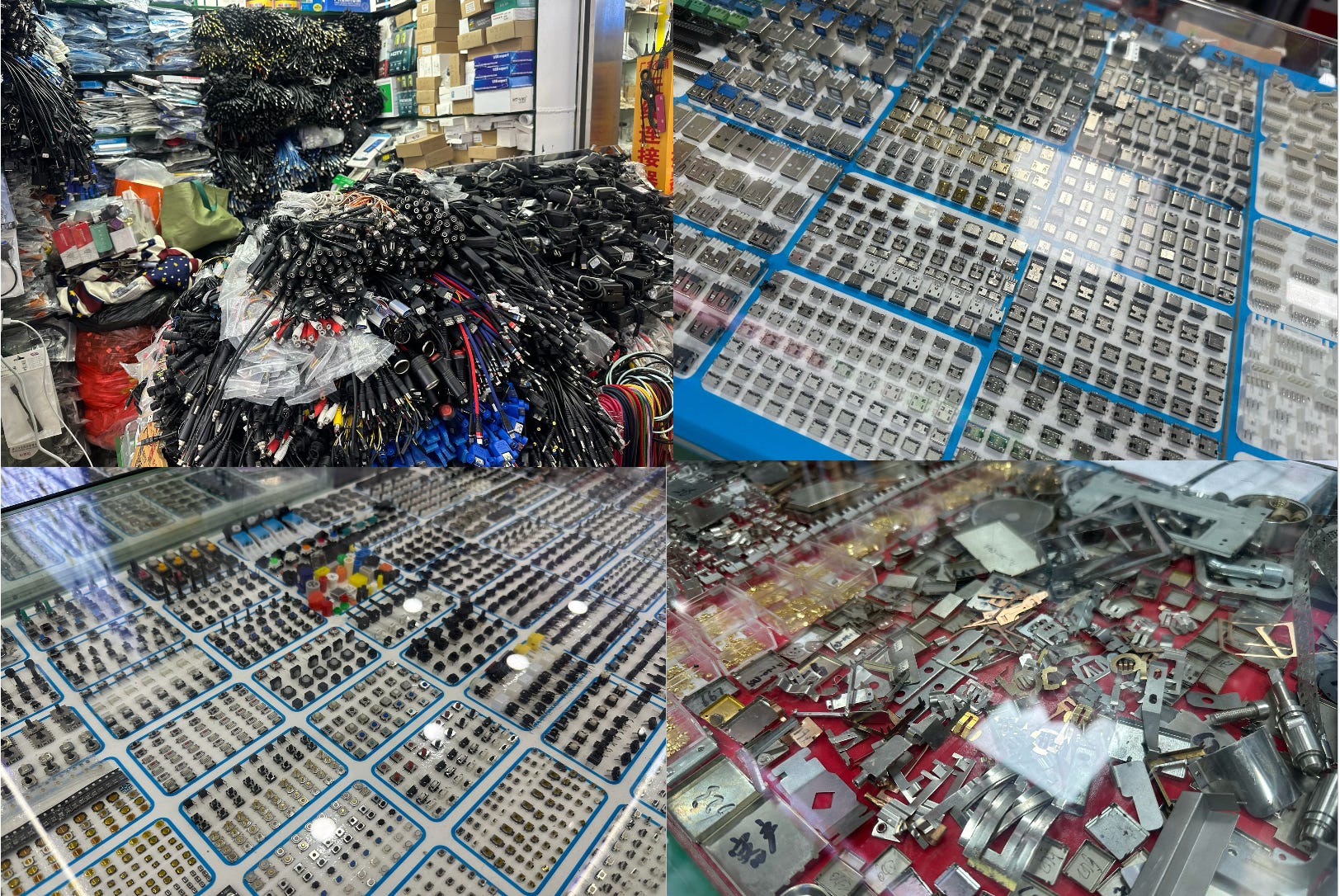
On this trip, I was excited to not only visit labs and headquarters, but even more so – to learn on the ground from the factory floor. In Shenzhen, China’s hardware capital, I joined a manufacturing deep dive with a group of start-up founders, investors, consultants and policy advisers working across tech and robotics. The city felt like a living supply chain. At the labyrinthine Huaqiangbei market in Futian district, sensors, casings, screens, batteries, chips, cables, plastics and circuit boards were piled together at stalls that sat side by side along dense corridors - a physical representation of how the proximity of ideas can accelerate into components, and then in turn, how experimentation to transform into products.
On the factory floor, we visited battery pack manufacturers, as well as a wearable ring producer, which supplied Europe and the US, as well as China, with relevant CE, FCC and CCC markings where applicable. The factory itself was simple and functional: workers assembled tiny parts by hand, clipping wires and chips into place along a belt; and the jolly factory owner showed us metallic smart rings that rivalled the globally popular Oura ring, as well as a new type of ring with an LED screen on the band.
The clincher was the price: the “Oura-lite” plain ring cost around 40 RMB at manufacturing price was sold at approximately 50 Euros on European Amazon - an almost ten-fold mark-up! The screen version cost around 88 RMB – still very much a bargain, especially when compared with Oura’s roughly 300–400 USD premium pricing, depending on model and subscription.
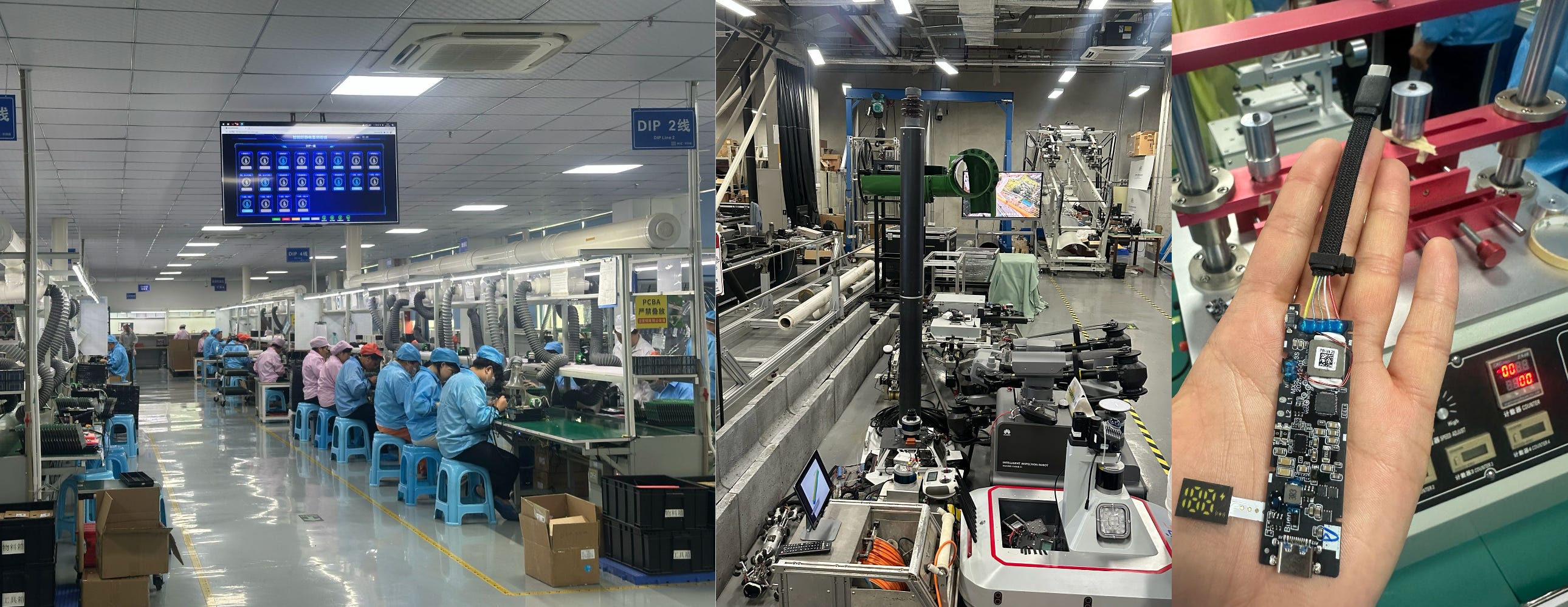
Thes Chinese rings came with a downloadable app, available through Apple’s App Store and Android / Google Play. The interface was basic, but functional enough. Sleep, heart rate, step count, activity, oxygen saturation, blood pressure, a small dashboard of biometric reassurance. I had obvious questions about data accuracy, especially when a loose metal ring claimed to record oxygen saturation and blood pressure. But I realised that it was probably partly the point. These Shenzhen rings did not need to have Oura’s polished interface, validated data claims, defensible brand, subscription revenue or years of accumulated user trust (which took years, and hundreds of millions). They just needed to be good-looking enough, app-connected enough and priced low enough to tempt a different consumer base. This is the Made-in-China model the world already knows well: copy, simplify, reprice, export, improve, repeat.
But some of our other company visits that week were representative of the other end of the spectrum. Shenzhen is home to DJI, Huawei and other huge, global Chinese hardware brands that are building original products at global standards of quality, with significant international market share. We visited Shokz, the bone-conduction headphone brand popular with sports enthusiasts, and Dobot, the HKEX-listed robotics company, which boasts hundreds of partnerships with global universities and institutions, including MIT and Harvard.
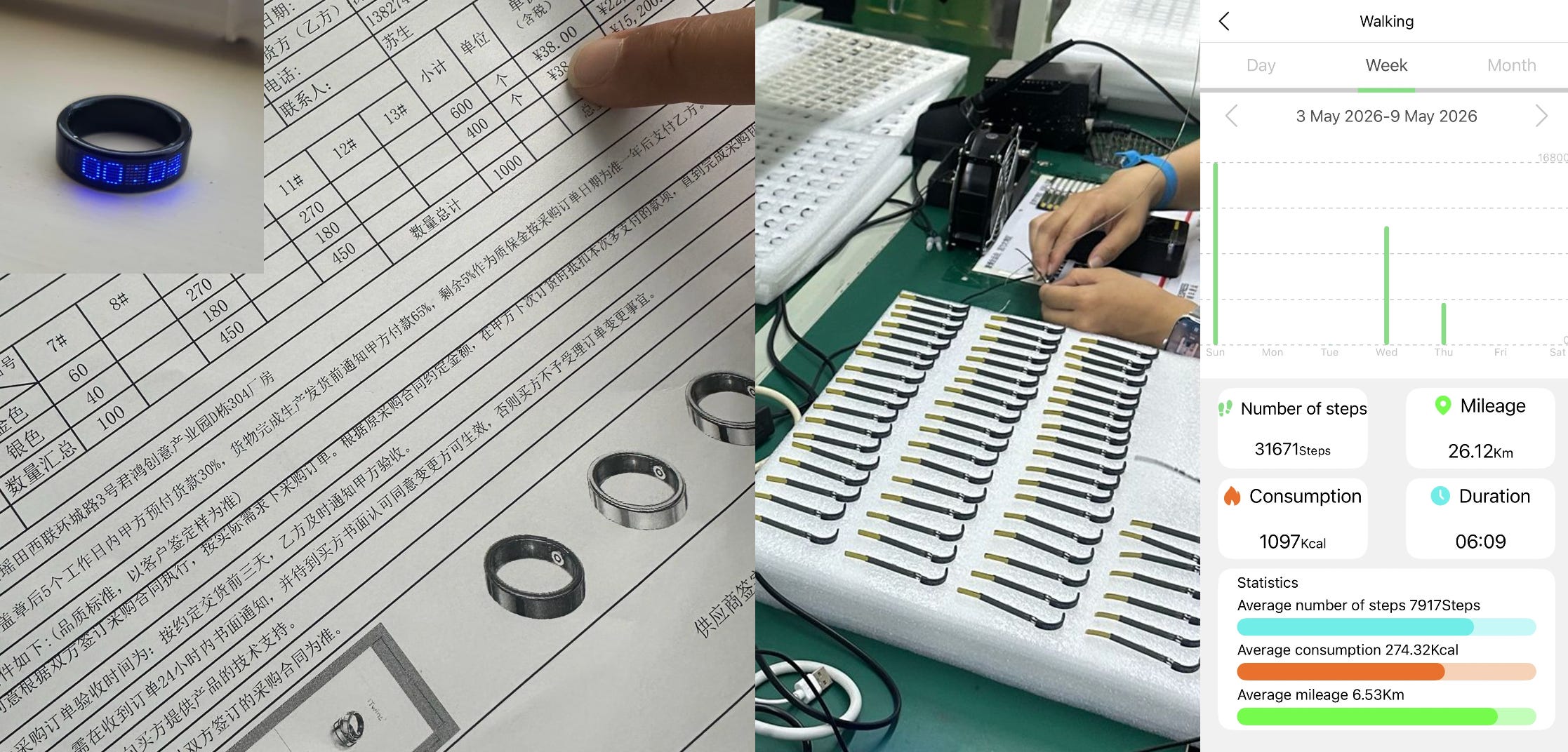
My trip made me reflect on how China’s health hardware is becoming a possible mirror to China’s current biotech wave, and an increasingly promising part of the global China health story. For years, foreign observers dismissed Chinese biotech as copycat, low-cost or “me-too” – and then the science improved, the assets became more differentiated and the world now has finally started paying attention. But in China, copying can quickly become market education, manufacturing practice and product iteration, and so, similar to biotech, China’s hardware, and indeed, its health hardware may now be still developing in terms of copycats, fast followers and component suppliers, but there are also examples of increasingly credible, global-standard medical devices as well.
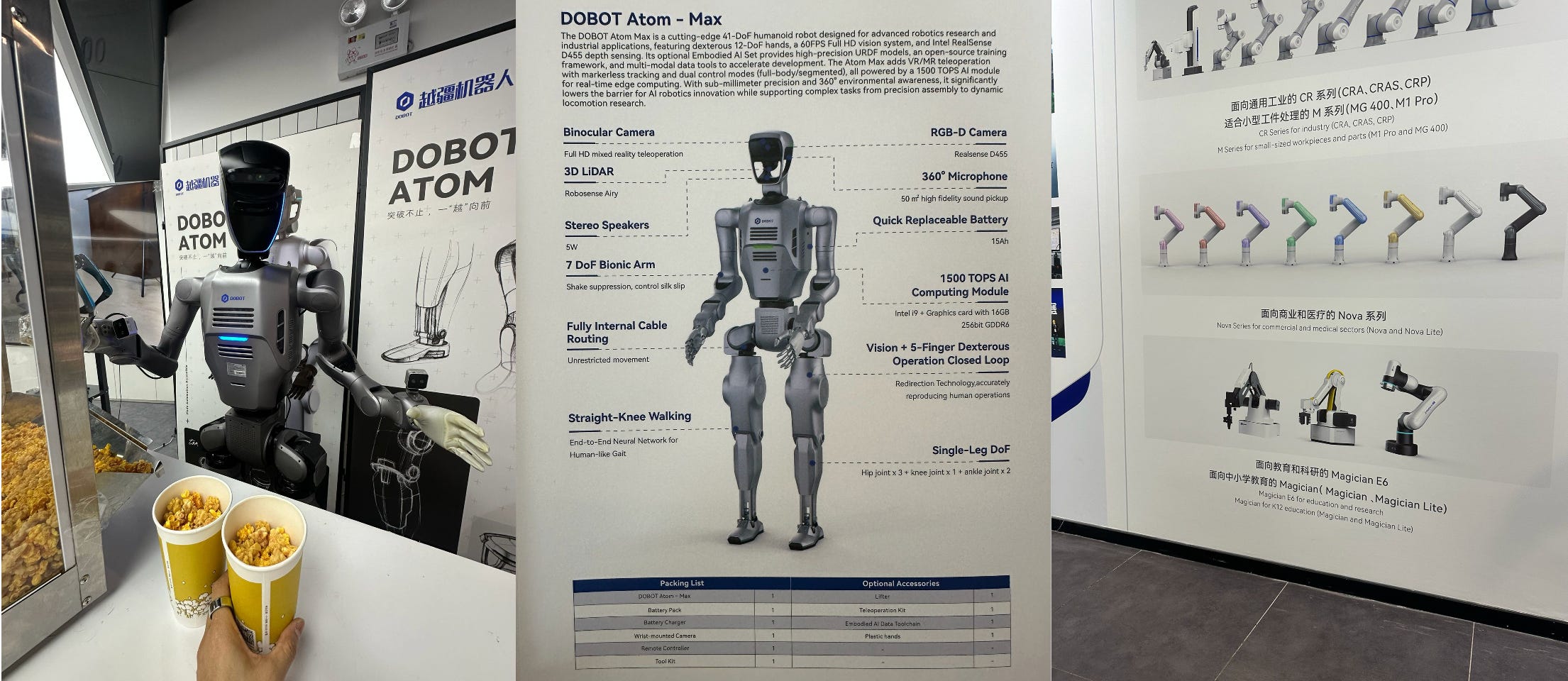
The wild-west market of price, speed and iteration can allow products to travel widely before regulators, premium competitors or health systems have worked out how to respond. Whether rings or sensors, rehab and mobility equipment, or robotics and diagnostics, some of these products may stay in the less regulated spaces of wellness or consumer electronics, but some will move into eldercare, and others will enter clinical pathways.
Regardless, this hardware layer, particularly in the realm of medicine and medical devices, is worth watching, and I will come back to this story separately in another post, including on China’s surgical robots, brain-computer interfaces and regulated clinical hardware. The crucial piece here is that, unlike in medicines, where the West held decades of advantage, expertise and foresight, here in hardware and medical devices, no country has first-mover expertise, and China’s volume, manufacturing depth and pace of iteration can create its own unique learning advantage.
Related:


3: The home and community — lessons from China’s ageing demands
In China, ageing is now far beyond a demographic problem or a hospital-capacity problem: it is increasingly a family, civil-affairs, community, home-support and consumer-market question.
Moving from the factory floor, I saw signals everywhere of the ageing population burden: public health posters, exercise machines in parks, and on the streets of Yangshuo town, in Guilin province, between noodle shops, fruit stalls and pharmacies, there were many ordinary homeware shops selling medical devices directly to consumers. Cluttered boxes of home-use devices and rehabilitation products, various types of wheelchairs, massage equipment, monitoring tools and AI-enabled devices, or at least devices labelled that way, sat somewhere between medical care, eldercare and domestic support.
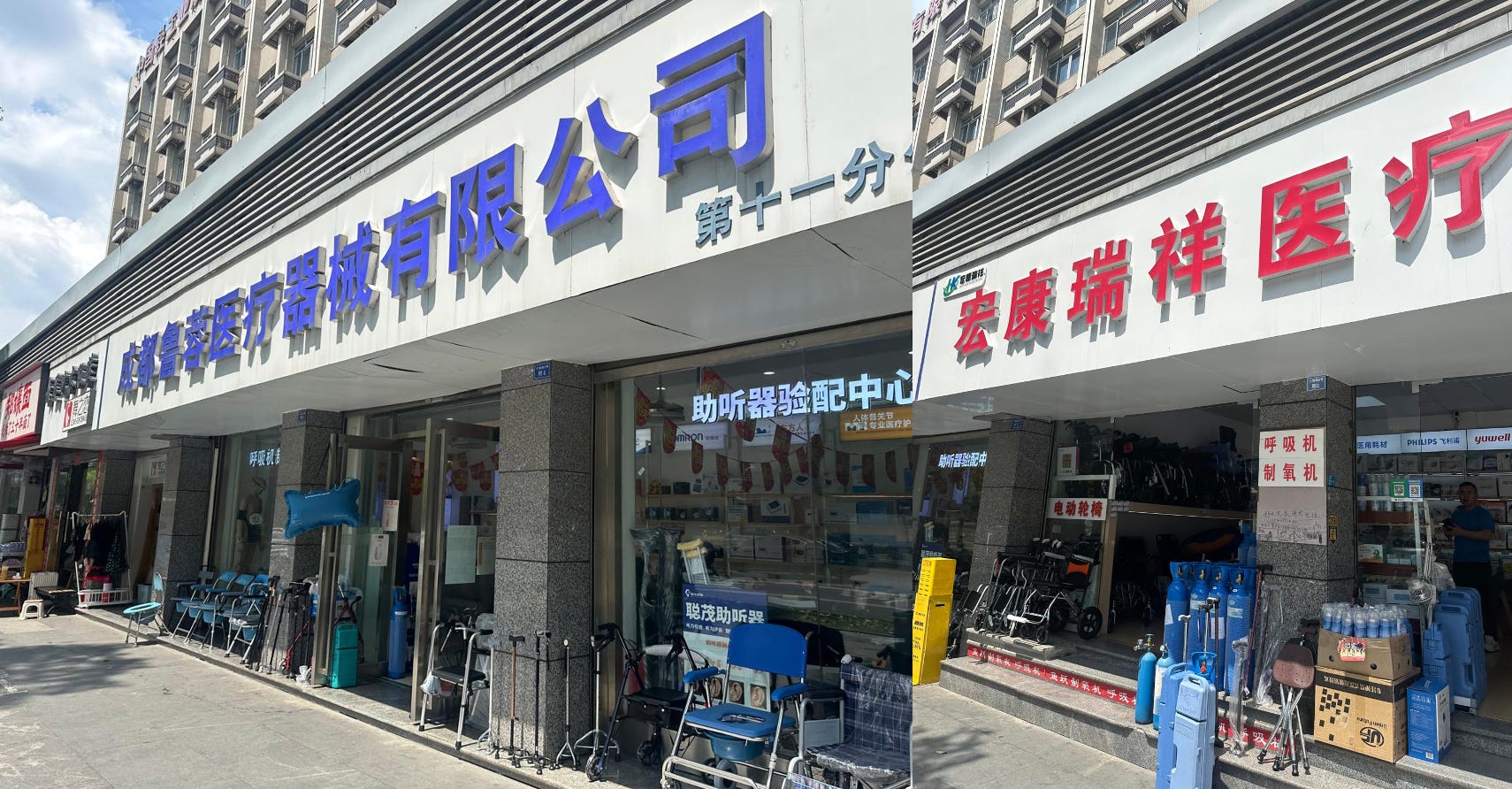
Those shops represent China’s demand in its plainest form. Families now need wheelchairs for ageing parents. To monitor blood pressure at home, recover after hospital discharge. It was a very different version of health innovation from the factory floor or the AI adverts I have mentioned already, but actually likely to be closer to where much of the ageing market will actually be felt.
Every country’s population is growing older, but China’s demographic pressure is especially urgent because of its sheer population size and the inverted family structure accelerated by the previous One-Child Policy. The practical questions are now undeniable: who provides the care, who pays, who monitors risk, who fills labour gaps, who supports families, and how much responsibility can keep being pushed into the home.
I found it interesting that, this year, at a healthy ageing conference I spoke at, the Chinese ministry present was not the National Health Commission, as it usually tends to be, which is the coordinating health ministry, and the organ responsible for delivering on Healthy China 2030, the country’s 10 year policy blueprint, but actually the Ministry of Civil Affairs. That institutional switch said a lot about how ageing may still be a health issue in China, but now also, increasingly question of family support, community services, social care, welfare, housing, local implementation and the everyday logistics of looking after people.
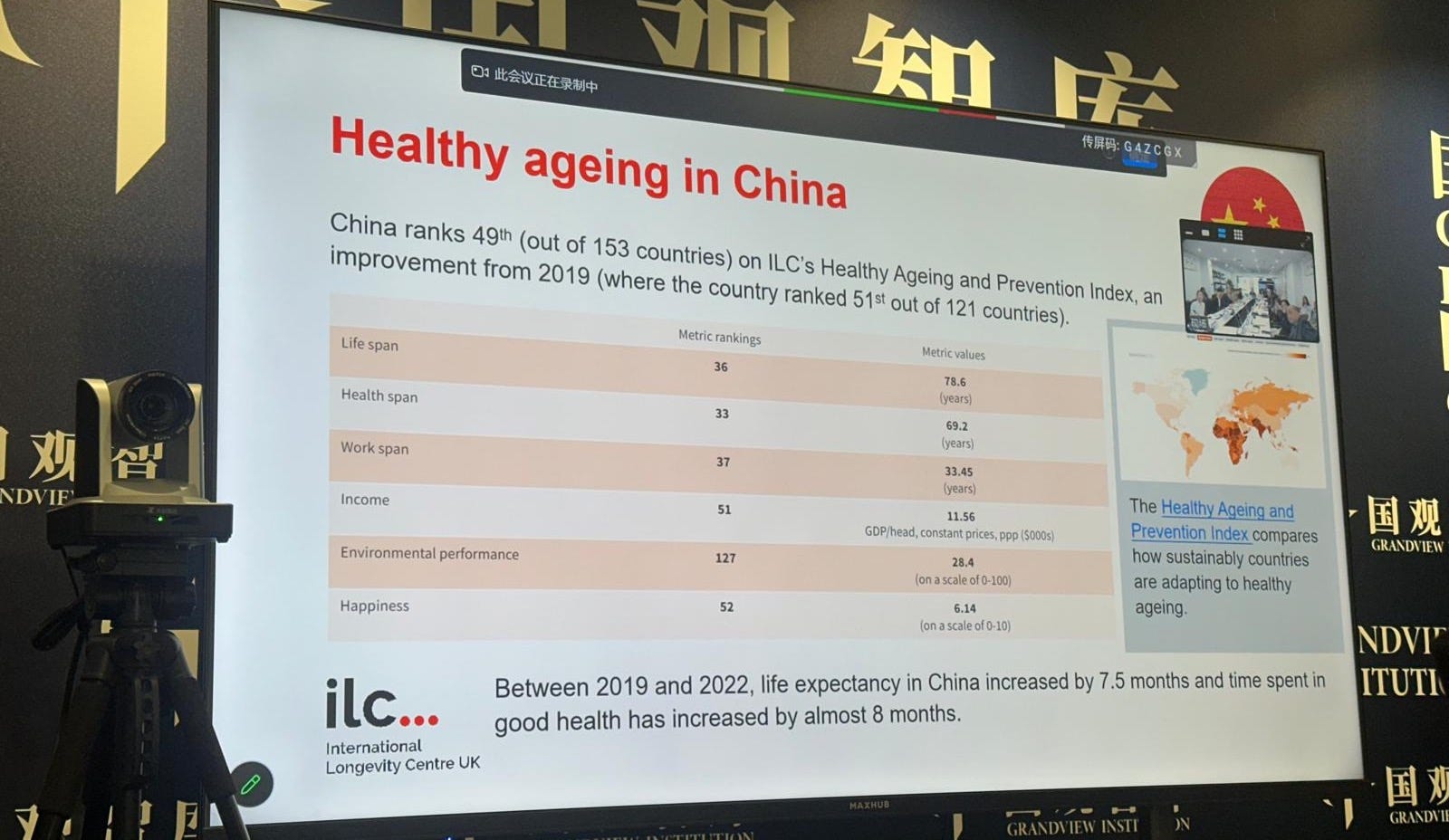
My conversations with municipal governments made this even clearer. Beijing’s NHC deputy party secretary told me that he and his team are now concerned about delivery on ageing policy: what communities can actually provide, how families are being supported, where digital tools might (and are needed to) help, and which responsibilities sit where - whether local government, district government, hospitals or community centres depending on service capacity.
My visit to Ant Group’s headquarters in Hangzhou added an industry perspective on all of this. At Ant Afu, I was curious to learn how the product and commercial strategy were being designed around the way Chinese families actually manage care. The CMO and strategy teams told me how companies like Ant are aware of the country’s ageing burden, cost pressure, reimbursement constraints, uneven access, hospital crowding and the fact that many older people will not become confident digital-health users overnight, and are actively designing their products and platforms to address those needs first and with commercial foresight second – not because they altruistically want to, but because this is where the demand, and therefore the only way to succeed, can be. In my previous post on Ant Afu, I wrote about features such as family health-management tools, where relatives can help keep track of an older family member’s health records, appointments or care needs through the platform. Particularly in the context of China’s distinctive importance of the family unit and more collective-oriented cultural norms, the adult child often becomes the consenting signature, navigator, translator, scheduler, payer, reminder system and monitor. Care has become less about one patient interacting with one doctor and more about a network of people trying to coordinate decisions, records, appointments, payments and reassurance. This is the kind of practical design that recognises China’s demographic context, and that the elderly user cannot always be assumed to be the primary user.
This is where I think the China story is essential to understand, far beyond China. Developed and developing countries alike are facing the same impossible ageing pressures: stretched families, workforce shortages, hospital bottlenecks, social-care gaps and rising costs. Yet China faces them at an even greater scale. It is important to keep watching what China tries, even when the experiments are messy. Some lessons may come from policy, some may come from service design, and many more may come from companies building tools that other countries and contexts may either balk at, or want to try out for themselves.
Related:


Health and the Two Sessions (Pt 1 of 2): What China’s Top Political Event Really Revealed This Year
4: The policy room — less one-way than before
As always, I caught up formally as well as candidly with old colleagues and new friends working in policy, diplomacy, multilateral institutions and foundations. This included bilateral and multilateral health meetings, health-system discussions, healthy-ageing events, science and technology conversations, and meetings with officials from health, civil affairs and science-facing institutions.
I had conversations with senior Beijing health officials, municipal leaders, technical experts and people working closer to implementation. I also heard from industry insiders and diplomats, including those who had been involved in the force around the recent UK prime ministerial visit to China, where the practical question beyond what governments could announce, was more about companies, universities, scientific institutions and sector specialists could carry forward collaboratively afterwards.
In sectors like biopharma, medtech and health technology, governments can open doors, set tone, announce cooperation and create permission for engagement, but the real work often sits with companies trying to maintain access to Chinese patients, hospitals deciding what they will use, universities building research links, regulators managing risk and industry teams working out how to keep collaboration alive when geopolitics remains difficult.
In one bilateral technical roundtable, again I recognised how the dynamic felt ever more equal than it did in earlier phases of UK-China health engagement, including when I worked at the British Embassy in Beijing. Countries like the UK still has deep and globally relevant clinical expertise, regulatory experience, primary-care history and a long tradition of thinking about professional standards and clinical governance, and China is still eager to learn from that - but the flow of learning is now firmly in both directions.
Particularly on the technology side, China increasingly has knowledge and skill it can teach: scale, speed, implementation, digital infrastructure, consumer adoption, manufacturing depth and the ability to test new service models quickly. In chronic disease management, that could mean digital family-management tools, community-level service experiments, home-support products, AI-enabled triage, local-government coordination and commercial responses to care demand.
That shift felt worthy of note for me, because from my experience, government and policy rooms are unfortunately often slower to absorb changes that industry already knows. Companies usually sense market movement first because see where demand is forming, where patients are going, where hospitals are buying, where costs are biting, where competitors are moving and where policy language has started to lag behind commercial reality.
This time, I found that official conversations felt closer to the ground, and while there was still plenty of formality, of course, underneath it all was an ever growing Chinese confidence, even more so than in years prior, in its own technical health expertise. Western governments and companies alike are increasingly keen to understand what China is doing, how quickly it can scale, and which parts may become relevant elsewhere – if not to build better together, then to protect own populations, borders and interests – but importantly, without knee-jerk alarmism or assumption. It should evolve into practical negotiations over what each side still needs from the other, and what each side is now able to offer, all the while maintaining necessary respect, transparency and pragmatism.
Related:


5: The biotech deal room — from curiosity to credibility… to scramble
My biotech conversations, mostly in Shanghai, had a different sort of energy to all of the above. A few years ago, most conversations about Chinese biotech still meandered around: is this real? Is the science good enough? Are the assets differentiated enough? Can Chinese companies move beyond me-too and me-better?
These questions now feel dated. Much of the work I am increasingly pulled have now moved onto now become about defining where the risk sits, where the opportunity is greatest and which parts of the market foreign biopharma teams should take seriously. As I shared this with one contact who is based in China, he in turn described how his teams were now running between labs in Suzhou and Wuxi, trying to identify assets as fast as possible for foreign clients who all want a slice of the China biotech pie. Meanwhile, foreign big pharma are plugging ever greater amounts of funding into building R&D centres and venture funds, each trying to source and get at the best assets as early as possible, before anyone else finds and takes them first. We reflected on how the old scepticism towards Chinese quality has not disappeared, and is unlikely to disappear completely. But that, regardless of how complete the credibility has, or can become, the fear of missing out is now very real for the rest of the world.
Things are certainly more interesting. The mood, though, is less breathless excitement than nervousness about execution. China’s now recognised excellence in drug development does not equate to success when it then comes to commercialisation. Chinese companies may now have stronger assets, better science and more global ambition, but actual global uptake still depends on clinical evidence, regulatory pathways, payer logic, physician confidence, local partners, political perception as well as market timing. This is important for Chinese companies themselves to bear in mind, too. As China’s domestic market becomes increasingly difficult, many are fast switching towards looking outwards to the seemingly more lucrative global landscape, as if it can solve the question of sustainability – particularly the American market. But things are always relative, and globalising Chinese assets is far from easy either, and may well be harder.
And for foreign firms that are eagerly scouting, beyond the science of which Chinese assets are genuinely worth pursuing, it is now increasingly important to think about which Chinese companies are worthy partners, who can actually execute after the data readouts and out-licensing announcements, to be able to globalise and practically land. Yet these are even harder questions, because there are no numbers or trial evidence or science visible in a paper to rely on. The commercial realities are multifold, sitting in the vaguer, overlapping spaces of strategy, timing and even intuition. But for those of us working in this space, it is also where the China opportunity becomes most interesting.
Related:


Investing in East-West Biotech: The 2026 State of Play - with China Biotech Dealmaker, Dr Leon Tang
Closing
Whether through Chengdu’s bus ads, Shenzhen’s factory floors, Guilin’s homeware shops, Hangzhou’s big tech headquarters, Beijing’s policy rooms or Shanghai’s biotech conversations, I hope the above account of my travels, experiences and perspectives gave you even just a flavour of China’s health story as it looks on the ground today.
China is producing more health innovation that the rest of the world will need to understand, source, partner with, learn from or compete against. This trip made me even more committed to sharing those observations here at China Health Pulse. But beyond reading what I write here, or indeed, what anyone is writing, sharing or speaking about, I hope some of you will go to China and experience it for yourselves.
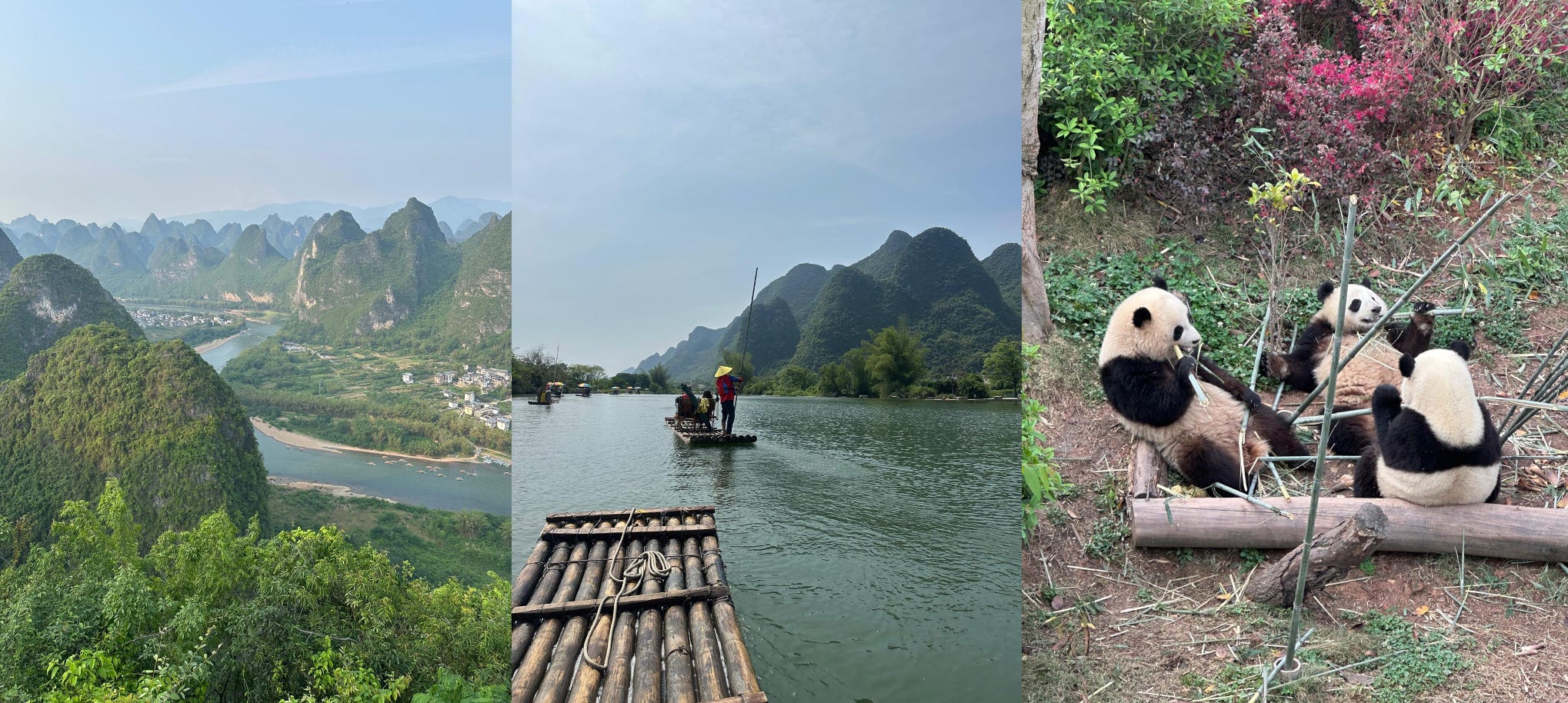
Nothing is better than learning with your own eyes - not only on healthcare, but on everything else too. And if China’s astounding health system does not persuade you, perhaps my photos below of the mountains of Yangshuo and the pandas of Chengdu will.
The Ministry of Civil Affairs replacing the National Health Commission at the ageing conference says everything about where the problem has moved. Once ageing stops being a health system question and becomes a family coordination question, the whole design changes. It's no longer about what the hospital can provide but about who in the family is managing the appointments, the records, the payments, the reminders.
The adult child as the actual primary user of elder health platforms is something Western health tech keeps designing around rather than for.
I think the AI healthcare trend in China has its uniqueness and may not be easily replicated elsewhere. It's driven by both the aging demographic and the massive demand for efficiency. People are used to having no wait time at the ER and not having to make appointments two months in advance (I'm looking at you, UK). We just expect things to move fast. But that hyper-efficiency takes a toll on all the dedicated doctors and nurses, especially when their wages are not that high compared to those of their Western counterparts. AI could be a way to lift some of the burden off healthcare workers without compromising that fast-paced expectation.
Thank you for this nice write up.