



🎧This is a special collaboration between Ruby Wang at ChinaHealthPulse and 何流|Liu He at Peking Hotel, to mark World AIDS Day, on 1st December 2025.
Watch the video podcast here on substack, or subscribe and listen to the audio podcast on Spotify (CHP/PH) & Apple (CHP/PH). This post provides all links, plus a full text transcript.
Today, we are thrilled to welcome Professor Joan Kaufman, one of the world’s leading experts on HIV and China. Joan has spent her career at the intersection of public health, policy and social justice, working across the United Nations, philanthropy and academia. Her work has profoundly shaped how the world understands health, rights, and China’s role in both.
Joan first moved to China in 1980, working with the United Nations in Beijing during a pivotal moment when China’s health system was just beginning to reopen to the world. In the 1990s in the Ford Foundation’s Beijing office, she pioneered work on women’s rights, reproductive health and HIV prevention. From 2002 to 2012, she led China programmes for the International AIDS Vaccine Initiative, building bridges between Chinese scientists and global vaccine efforts.
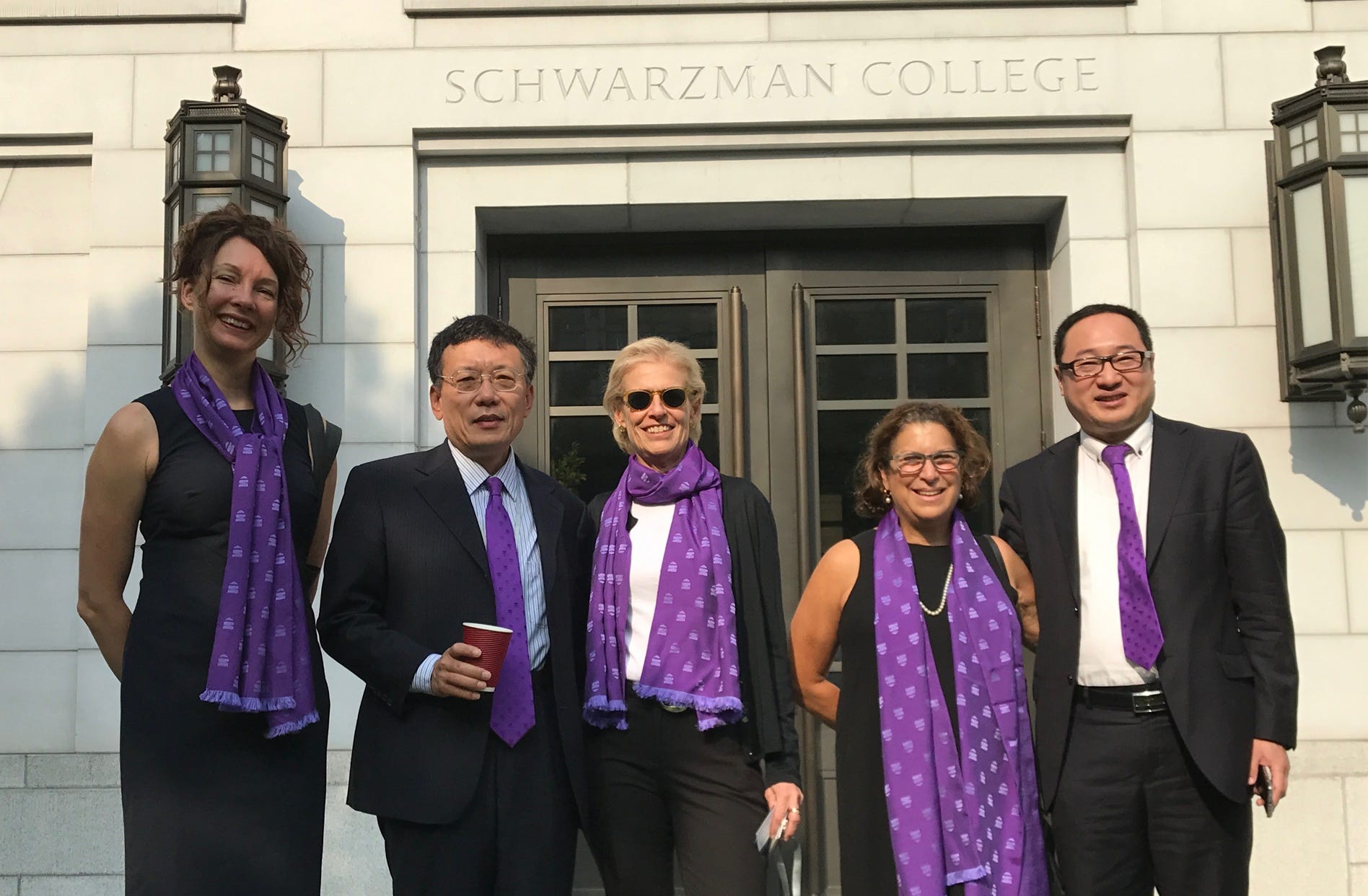
In academia, Joan has held senior roles at Harvard, Columbia, Brandeis and Tsinghua University. She founded Harvard’s AIDS Public Policy Project, directed Columbia’s Global Center in Beijing, and taught global health and social medicine at Harvard for may years. Today, she serves as Senior Director for Academic Programmes at Schwarzman Scholars, where she mentors emerging global leaders to think critically about China, global health and the world.
In today’s special episode, Joan joins us to reflect on the arc of China’s HIV response over the decades, and her life’s work at its heart.
Watch the podcast above on Substack, on Youtube, or subscribe and listen on Spotify (CHP, PH) & Apple (CHP, PH).
Read our Conversation:
(Audio transcript adjusted for clarity and flow)
Liu: Joan, first question to get us started, what’s up with the poster behind you? (see video)
Joan: Well, first of all, thank you both so much for inviting me to do this podcast. I’m really honoured and two of my favourite alums out of our, what, 1,200 alums so far, all, in my opinion, future global leaders in one way or another, including by your podcast series and your efforts to really help digest China and the world, at this particular pivotal moment in history.
So let me start by saying a little bit about this poster. I began my career in China in 1980 to 84, as Ruby mentioned, working for the UN Population Fund (UNFPA), and one of our big projects - and a big reason that Deng Xiaoping invited the UNFPA into China in 1979/80 - was to do a scientific census in the years following the Cultural Revolution, to really get a proper count of the Chinese population. Because one of the goals in the early 80s at the beginning of the reform and opening up period was to quadruple the GDP by the year 2000, but.
In order to do that, you really needed to know the denominator, which was the total population size, to help China in the early days, train demographers and get organised. At that point the one child policy hadn’t launched, it was really more about manufacturing modern contraceptives, counting the population, training demographers and a variety of other programmes.
1980 to 84 was a really interesting time to be in China, right after the end of the Cultural Revolution, and the very beginning of the reform and opening up period. I really divided that first year into two periods: pre-trial of the “Gang of Four” and post-trial of the “Gang of Four”. It was a very traumatised time in China for many people, with huge distrust of foreigners - especially Americans. There were two Americans working in the UN system (in total), which was tiny. I don’t think we were more than 20 people (overall), for all the UN agencies in China. We worked closely with the Chinese government, but Americans were particularly suspect, I would say. It was a pretty isolating time in those early days.
Post-trial of the “Gang of Four”, there was sort of a collective “opening up” - both emotionally, and in terms of more people coming in, more activities happening, and people being more relaxed, I wasn’t working on HIV AIDS then (yet). And in fact, there was very little discussion or even acknowledgement. Those were still very, very early years of the HIV epidemic globally. And China just said - “we don’t have any HIV/AIDS” for the longest period of time, until the epidemic really started exploding in the late 80s and early 90s in Southwest China, in the Golden Triangle area in Yunnan and bordering Laos and Myanmar, among injecting drug users.
I had lot of intervening experience after leaving UNFPA in 1984 to do my doctorate at the Harvard School of Public Health. I became very involved in the global HIV/AIDS response, managing a project on sex workers and HIV Prevention in Thailand, Mexico and Ethiopia with the AIDS and Reproductive Health Network at the Harvard School of Public Health. That was a collection of epidemiologists and social scientists from around the world. I was also consulting to the WHO Global AIDS programme in Africa.
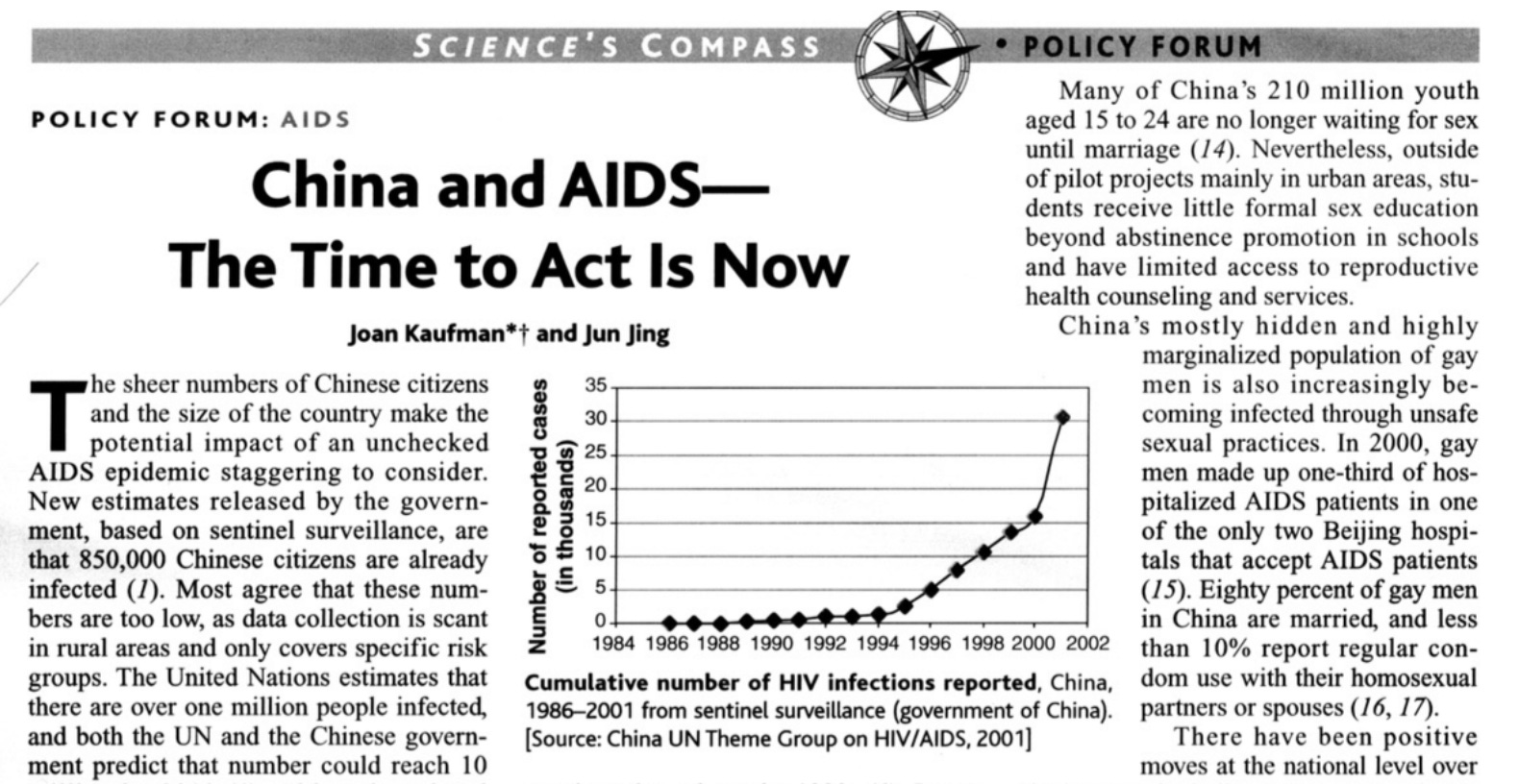
And then by the time I went back to China for the Ford Foundation in 1996, I was really aware of the exploding AIDS epidemic in China and the need to really get organised quickly in order for it not to really get out of control, even though China was in full denial. I started working with the donor community there, with UNAIDS, and with several of the other donors like DFID that were meeting together as a donor group, to try to mobilise the Chinese on what was going on with AIDS and put in place some effective prevention programmes.
Ruby: As one of the few on the ground in the 80s and 90s, Could you share with us what was it like? What kinds of partnerships and conversations were possible? What particular challenges?
Joan: Well, the 1980s was really early days for the reform and opening up period. The donor community was pretty small, it was mainly the diplomatic community, There were very few, UN agencies represented in China. So we had a very special relationship, I would say, one that the UN maintains today. And our relationship with the Department of Foreign Economic Relations and Trade, our counterpart agency there, and with our colleagues who were assigned to us from there to the UN Office as our national program officers.
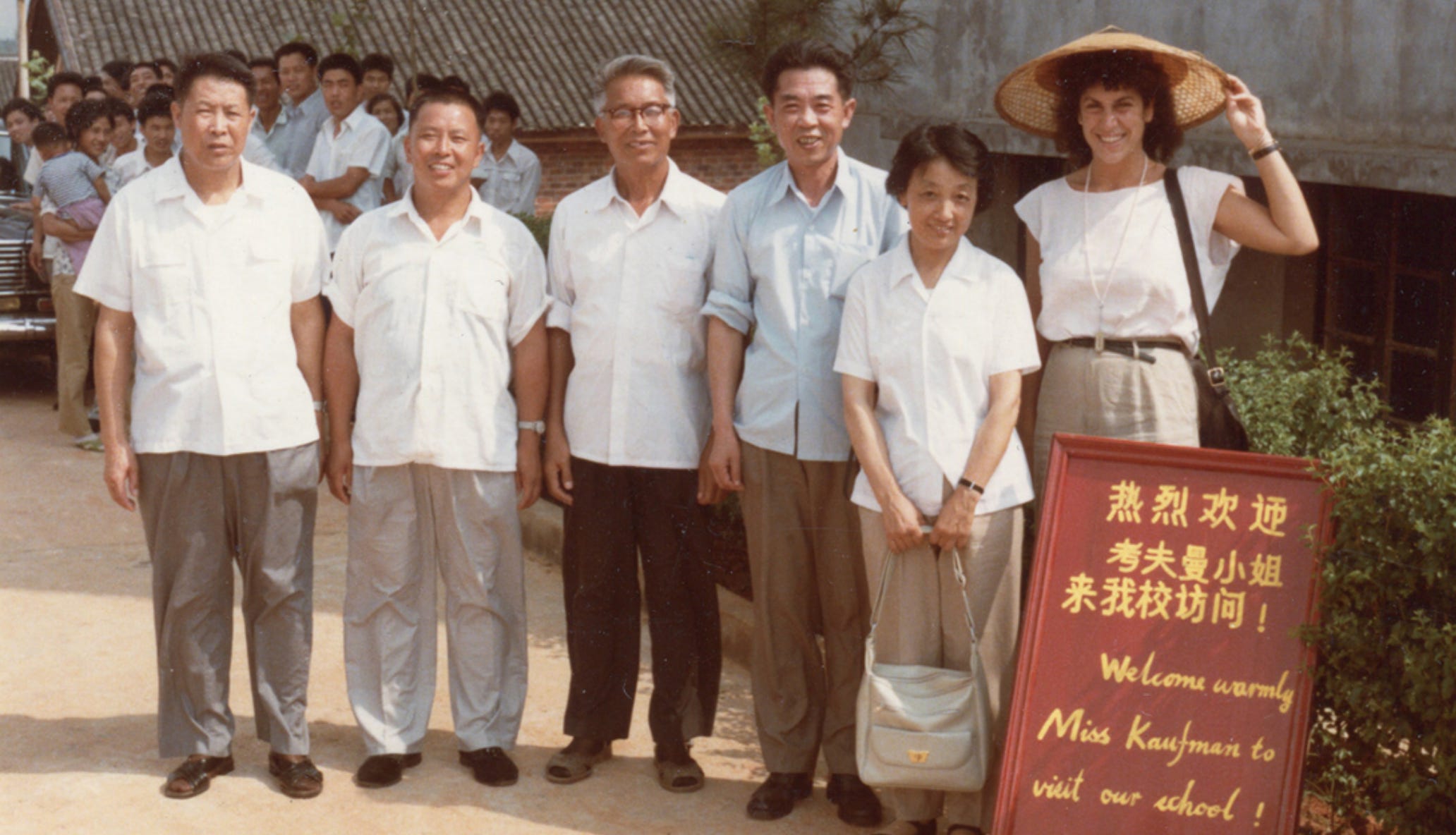
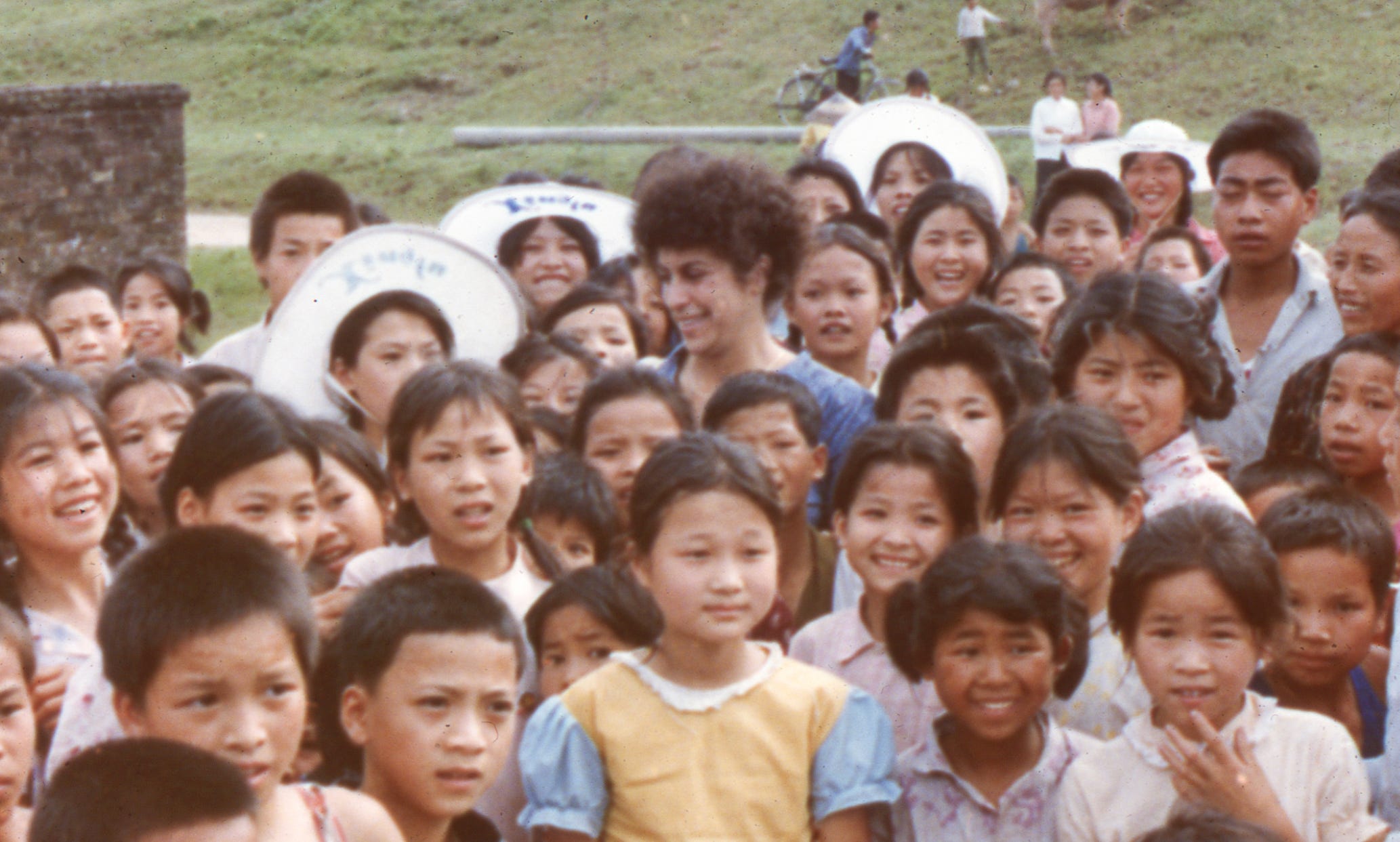
I traveled a lot for UNFPA in the early 80s. We had about twenty projects. It was myself, the UNFPA coordinator and the international programme officer and the two national programme officers. We had a project with UNESCO on sex education in middle schools. I traveled to 10 middle schools in really rural counties around China: Hunan and Shandong and Hubei - many, many places. And often, (I was) the first foreigner anybody had seen in a very long time. I had a very interesting experience.
We did a lot of really good work, and I made many, many good friends at the ministry level, with people who went on in their own careers into more senior roles - and many of whom I reconnected with when I came back for the Ford Foundation in 1996, which allowed me to really, start with trusted relationships. For example, with the Ministry of Health, the Ministry of the State Family Planning Commission and other places, Ministry of Education - on some of the Ford Foundation projects that really helped move China forward in many ways.
It was a different period of time, and China was very, very receptive at that point to development assistance. (Maybe) not true for the Ford Foundation today, but certainly at that time we were warmly welcomed. I made many grants, small grants, $20,000 or less, that were highly impactful in China. A small amount of money went a long way, and I had a very large budget - probably two, three million dollars a year, you know, and able to bid on more. It was a rich time for the Ford Foundation as well.
Ruby: When you say the China side was receptive, can you describe what that was like? How did they speak with you? What kinds of partnerships were you building?
Joan: I came in as the second programme officer for my portfolio at the Ford Foundation. The reproductive health programme was gaining steam globally. There was a big New York part of it and 14 field offices, many of which had reproductive health programmes. It was in the years leading up to the International Conference on Population and Development in Cairo (ICPD) in 1994, which was a very significant every-ten-year global population and development conference.
The (Ford’s) China Office opened in 1988, The reproductive health portfolio began in the early 1990’s because of the one child policy and the need to really look at reproductive health and rights within the population policy. That was a lot of what my portfolio was about. But I also began the work on HIV AIDS.
Ruby: So after working for the UN agencies, you then left China and you came back to work for the Ford Foundation, an American philanthropy organisation. What were the differences between those two organisations, and how did China counterparts receive you differently as a result of who you represented?
Joan: At Ford Foundation in those years, we had lot of independence. Nobody really questioned the judgment of the programme officers who were selected for their expertise in different areas where they had their portfolios. It was a great job, actually. We had a lot of independence to decide how to move our issues based on our own programme strategy: who to fund, and those were only really rejected for legal issues or other issues.
Of course, you needed your Representative’s approval - the office approval - but we were a very independent set of program officers with a lot of discretion to move the issues however we felt the grants programme could do so. But that’s not true anymore. It has changed a lot over the subsequent years, I was probably in the golden period of the Ford Foundation in China in that way, as opposed to now, where it’s much more centralised and organised, with different approval process. But the UN was nothing like that - the UN is a big bureaucracy and works directly with government a government counterpart for every project - it’s all consensus-driven with government directly.
Liu: As I hear this, I can’t help but hear echoes from history. There is a long tradition of Americans doing health related work in China from 19th century Peter Parker building the eye hospital in Guangzhou, and Yale in China doing the Yali/Xiangya medical school and hospital, and obviously the Rockefeller family founding the Peking Union Medical College. So, jumping into the 80s and the 90s with the HIV/AIDS epidemic, how do you see yourself in this historical lineage? did you think of that much? Did you know much about it when you first in?
Joan: I did know a lot about it, because I’m really a “China wonk” first and foremost, before (being a) global health person. I did my two degrees in Chinese studies and then I did a doctorate in public health. But the Chinese health system and medical history - I’ve written quite a bit about that, including the Rockefeller Foundation, who incidentally funded my PhD research. So I felt like I was evolving in a tradition.
But Ford was really the first foundation to establish a field office in China in the late 80s - pre-Gates Foundation by a long time, probably by 12 years or more. Gates opened around 2000. And so I think we played a really interesting role in that evolution of health assistance, because Ford was really focused on community-based approaches, including the development of civil society and an NGO community. And my programme and the other portfolios in the office were deeply involved.
And (it was) a very open period. The 1990s allowed the development of civil society in China in a really unique and important way. We were explicitly building - and with government support - a set of real, genuine civil society actors on women’s rights. There were many women’s NGOs that were established with the support and assistance of the Ford Foundation, in preparation for the Beijing Women’s Conference in 1995. That became some of the leading women’s rights organisations in China. And similarly in the HIV AIDS field, my portfolio played a very important role in building groups like the China Association of People Living with HIV/AIDS, the Positive People’s Network, that were patients: HIV infected people that were playing a role according to UN/AIDS GIPA Principle, the “greater involvement of people living with AIDS”, so that they were at the table for discussion - the affected communities. And then connecting that group in China with the global network of people living with HIV/AIDS.
So a lot of the forward work over the years was connecting up the transnational civil society networks, sending Chinese organisations to the regional AIDS or women’s conferences, preparation for the larger conferences, and then connecting up those global civil society actors with the new organisations in China for strategy, for networking - that still exists even while many of those organisations, are no longer in China post-NGO law which began in 2016.
We were also working with the academic researchers to fund important research on behavioural research on HIV/AIDS: what was happening with the more public emergence of a gay men’s community, and the risk there for HIV/AIDS with sex worker risk. We’re funded a lot of the behavioural research at Renmin University, the Institute for Research on Gender and Sexuality, Pan Sui Ming’s group (China’s leading sociologist and sexologist), the fabulous set of studies that came out of that which were very influential in shaping the HIV response in China. And then working directly with government - with the Ministry of Health, we worked in partnership with UNAIDS and other organisations on the Global Fund for HIV/AIDS and TB.
We’d sit at a table: the donor community with the National Center for and Control, China’s CDC and draft the Global Fund proposals. It was a joint effort - a collaborative effort - to get more money into China, to address the AIDS epidemic in the early 2000s.
And of course the policy changed in 2003 after SARS, and that was, largely a result of the donors working with the National Center for AIDS Prevention and Control at the China CDC, to take advantage of the post-SARS environment, so that China need not be in denial about the AIDS epidemic and urgently put in place a prevention and treatment programme after 2003.
When the (AIDS) epidemic moved from Southwest China into Central China, Henan and the surrounding provinces in the 1990s through this paid blood donation scheme, a lot of rural villagers in Central China were infected with AIDS and passed it on to their kids. It left a lot of AIDS orphans. It was a time of denial when (all) people were getting infected with HIV AIDS, not (only) stigmatised drug users or gay men. So it exploded into the open, and became a catalyst for the policy change in 2003.
Ruby: Joan, you mentioned HIV as a catalyst. Could you share a bit more about that? Because HIV/AIDS has been framed as a kind of “pivot point” for China’s health system reform, forcing it to confront civil society and transparency and rights in new ways. Whether the stigma or the disease itself, what has made AIDS different from other health crises in China?
Joan: I think it forced the government not to just treat it as a medical issue. And that was the story of AIDS globally - you had UNAIDS come into being and coordinating all the other UN development agencies around the social determinants of health, and creating an enabling environment for the AIDS response.
So many people were dying in Africa. There were debates about access to essential medicine that were resolved around the late 90s by the global actors and the pharmaceutical companies, about allowing antiretroviral life-saving drugs to the people who are actually dying of AIDS in Africa. It was a huge set of global debates, echoing with the COVID vaccines, I would say, in terms of access to essential medicine - how do you get those drugs to the people who need them?
The whole enabling environment issue - the way in which stigma affects people self-identifying and coming forward for testing and treatment - many, many aspects of that got on the global screen for the first time. And then you had this very active agency, UNAIDS, that really did put AIDS on the map and keep it on the map. Along with UN General Assembly meetings and the creation of the Global Fund for HIV, AIDS, TB - many things that happened in the early 90s. And I think it shaped the way people think about responding to health crises.
We saw echoes that, of course, in the pandemic, right? There should have been some more lessons learned from the AIDS epidemic that we didn’t take forward, but many other things shifted the discussion of “you can’t just treat this as a medical or a tech fix”, you’ve got to really look at how to create an enabling environment.
And so, back to the civil society piece of that. For example, sex workers, gay men, drug users - you need these peer groups. You need people who are representatives of those groups to be able to actually reach their constituency. You need community-based organisations made up of like people to reach and access those communities with HIV prevention, messaging and technologies, getting people to get into testing and treating.
HIV is a chronic disease these days, especially now that there’s once-a-month or once-a-year injectables. We’re moving so quickly towards making it a manageable chronic disease, but the first step there is getting people to test and treat, to get stigmatised and marginalised communities to reach out through peer messaging and peer approaches.
So that’s why civil society was so important in the AIDS response and remains so. I mean, we see that the new wave in China is young gay men, who are not being reached with HIV prevention messaging. Which is tragic, because treatment is free and available. How do you get the International Labour Organization to work to protect labour rights for people with HIV and hepatitis? Those efforts through other sectors didn’t really happen until the AIDS epidemic. Why do people not self-identify? It’s because they don’t want to lose their job.
I left China in 2001, and I really felt my “unfinished business” was to work on getting all those international best practices in place in China. So the AIDS Public Policy Training Project (back in the US) was very much that. I had a team of ten faculty at Harvard, working with a counterpart faculty in China, where we were doing training at the municipal and provincial level for government officials and multi-sectoral groups, about these policies and practices for the HIV response.
Leo: The longstanding suspicion against foreign NGOs and foreign actors - they’re certainly often not looked upon as likely friends with the bureaucracy likely partners. It’s astonishing looking back and realising how much of it worked, right? How many NGOs operated in China, for however long the government welcomed and allowed foreign NGOs in China. Eventually the Global Fund did exit from China, specifically on the point about civil society. The Chinese government’s Foreign NGO Law around 2016 was probably the end to this period of opening which lasted for two decades. So, Joan, if we’re trying to get into the minds of your Chinese counterparts, especially those in government, why did they come to allow this whole field of uncontrolled foreign actors working with activists and civic-minded Chinese who are not necessarily the most obedient to the state? What’s the logic there? How come this whole field got to take off for as long as they did?
Joan: Well, during that early period of 2000 to 2010 - and speaking specifically about HIV/AIDS - there was a recognition by the government of two things.
One, that they needed the peer groups and the NGOs, to reach the affected groups. Once the AIDS program was put in place starting in 2003, they couldn’t do it without access to the communities that were at the most at risk for HIV AIDS. AThat required engaging with these civil society groups, no matter how much they didn’t like them, to reach those folks, right? It was a pragmatic recognition, that the only way they were really going to get on the right side of the AIDS epidemic in China, was to engage with a set of civil society actors that could reach the affected people that needed to be reached. So that was the pragmatic side of it - and that’s the story of the AIDS epidemic everywhere, not just in China.
And the other part of it, which is I think more important, was to get the money from the donors and the development assistance. They had to do it. The Global Fund had a requirement for civil society representation, coordinating the country, coordinating mechanisms. And so, even if they had to fake it, they had to do it in order to get the money.
But I think it was a genuine understanding - by certainly the bodies that were developed during that period of time, the State Council AIDS Working Group, the SCAWCO - it was a very progressive organisation made up of people who really knew what the global experience was, and knew what they needed to do, in order to really get on the right side of the AIDS epidemic. The only USAID money in China was for AIDS in Southwest China and three provinces. And it required civil society representation, which was a huge amount of money.
I can’t remember how many rounds of Global Fund money came into China, but it all had an explicit requirement for civil society. And the China Society for AIDS Prevention and Control - or whatever the para-statal NGO was - acted as the umbrella agency to receive the money, and then distributed it to the smaller, “real” NGOs. It worked to some degree.
There were also other organisations I worked very closely with, including a group called Friends Exchange started by a a doctor in Shandong province in Qingdao. It was a magazine for gay men that was handed around, mimeographed and distributed before the AIDS epidemic. It was the only kind of organising body for gay men in China, and it had a lot of HIV prevention information in it.
An outside organisation that funded a lot of work on HIV for men who had sex with men, called the Barry and Martin’s Trust, also came into China and started supporting the Friends Exchange Network. Then Ford Foundation took it up and it became an official publication, and became an enormously important way to reach the gay community for prevention work. And it was embraced in a way by the government, because it became an important access point for an important community that needed to be reached.
I would say that it was a golden period there, before the NGO law came. And I would say that what happened since with the current government and political leadership started evolving around 2012 or so. There was much more of a reflective process of the role and risk of civil society and funding the colour revolutions in Eastern Europe.
I think the current leadership in China really reasserted the distrust factor At Ford Foundation in those years for civil society and its potential for for peaceful evolution, and came out with a set of “don’ts”, which included civil society and rule of law and many other buzzwords that closed down the space for the kinds of rich activity that happened with the HIV/AIDS organisations during the late 90s and the early 2000s.
Ruby: I wanted to build on that - this changing global health/international development landscape. In my last podcast episode, I spoke with Sid Chatterjee, who’s the UNRCO for China. He talked about how the UN engages with China today, which is very different from when you started with UNFPA, or later with the Ford Foundation. How do you reflect on your past and think about this current engagement?
Joan: I do think that the China of 1980s that I arrived in - working for the UNFPA is a completely different country than the China of, 2025, right? Certainly it’s no longer the case that you could do any of the stuff that we did It’s very much a changed political environment. Many of those organisations still exist, but they don’t have the foreign partners. and they certainly don’t have foreign funding. Many of the donors exited China - felt that Africa or other places needed donor assistance more than China did.
China’s really come up. It is middle income for sure, with lots of cash reserves and a development donor itself, right? China has adequate resources to fund its own health and development programmes. But it doesn’t mean China doesn’t need technical assistance to improve what it’s doing, and how that money is delivered.
I regretted what I saw happen starting in the early 2000s, where all the donors either reframed their programmes as “China for the world” - the UN agencies, the Gates Foundation, the Ford Foundation, all reframed their own portfolios so that it wasn’t about “China for China”, but what could China do for the world - or how could China help engage with the world. Yet there are a lot of unfinished agendas in China to say the least. Many, many, including in the HIV/AIDS world.
China is an active global donor through the Belt and Road, especially during the the COVID pandemic, making its vaccines available to many countries in the world. It has a lot of really educated public health professionals who’ve been educated abroad, educated in China - Tsinghua, Beida, Fudan - who’ve worked at global agencies like the WHO and come back. So China’s got a lot of its own health expertise, and and is extending its own power out there in the world, especially to Africa.
But I do think there are continuing challenges, and the NGO law has made it very, very difficult. Plus the weakening of the UN system in this current geopolitical moment that we’re in. The UN is very engaged with China, but the global system have changed so much in these last ten years. It’s harder to collaborate on global issues.
To some degree, the UN and the multilateral system are engaged with China, but the US certainly isn’t, and Europe less so as well, as the world aligns around the big powers and the new conflicts. It’s harder to get the collaboration we need globally for pandemics or anything else.
You know, I worry deeply about a resurgent HIV age epidemic, with the demise of USAID and all the money that many of the foundations and big donors have stepped up to try to fill some of the gaps on the most important issues like immunisation and parts of the PEPFAR program and things like that.
USAID was the biggest donor. It provided $12 billion of global development assistance for health. And the next biggest donor was the Gates Foundation with $1.2 billion - it’s an order of ten at least, right? The absence of that money in the global space is hugely impactful.
I worry about what this means in sub-Saharan Africa, where many of the organisations have been dismantled, that are the front line of providing HIV/AIDS care, prevention of mother-to-child transmission and antiretroviral treatment, working with young women who are really at risk of AIDS because of the social determinants of health and the lack of an enabling environment that supports them refusing risky sex. So I just worry about the world right now.
Leo: You mentioned about the dismantling of the American aid system in the current administration. Trump complains that it hasn’t been very good for American soft power - and so we might as well just dismantle aid because it’s not bringing in political perks. And so as China looks at this, I can see them thinking: given all that’s happened, maybe it’s not a good idea to do humanitarian aid, but just to focus on the soft power piece. The US is stepping away, but is China going to step in and take the same role as was once filled by Western development aid and development professionals? What’s your view on this? If China is this rising power, what would a China-led global development landscape look like?
Joan: So in the global space, I don’t think China is going to fill the void. It’s transactional to some degree. The term “soft power”, you know, has many meanings. I think people look at the PEPFAR program, in particular, as an extension of American soft power because it was providing a huge amount of money for AIDS relief for sub-Saharan Africa - that you could say was in the US’s interest to prevent the explosion of AIDS in Africa in terms of global stability. But that was kind of a secondary issue - it was still much more of a humanitarian effort.
I think global health assistance is maybe unlike other soft power like Hollywood or the transmission of ideas and values through the media. Global health assistance is humanitarian aid first and foremost, and I come to it in my career very much as a health social justice person, working on humanitarian aid with health as a global public good, providing health assistance to poor people who need it primarily as a human right. So I come at it as a real do-gooder, you know, and I’m not an international relations realist person who’s looking at “what do you get for giving global aid? What do you get in return from the geopolitical point of view?”
But I do think that (all of this) does shape the way governments approach, to some degree. Certainly, Trump doesn’t see any value in it. That’s the end of USAID, right?But that’s wrong, because I do think China is playing a role on the humanitarian side, but also to build up its own credibility and importance in the global space - especially as the US recedes, providing money to especially the UN agencies like the WHO. Not making up for the US shortfall, but making a significant contribution, and also trying to play a role in bilateral development assistance on key issues like Africa CDC or malaria always with the interest of China in the first place.
We’re in a complicated world, right? there’s a lot of pressure on governments to take up more of their own health budgets. A lot of development assistance money has gone into defense because of the potential for war in Europe. So many of the big donors: the British government, France, other places, all shifting funding from health education, charity programmes or humanitarian programmes into defense budgets.
USAID has gone away, and the UN system is taxed in terms of its donations, so there’s just a lot less money available for development assistance. The golden age of global health is over. There’s no question about it.
I watched not enough money going into global health for much of my career. And then the HIV/AIDS epidemic shifted the donor space in a massive way so that much more attention was paid to global health and it spilled over into things like immunisation programmes and maternal and child health.
Those days are over, and that money is going to have to come from somewhere else. The foundations are stepping up to some degree to fund GAVI - the Global Alliance for Vaccines and Immunisations - and putting money into some of the other key assistance programmes and things like that. But the money that we saw over the last decades is never going to be the same, in my opinion. And governments are being pressured to fund more of that out of their own domestic health budgets. So it’s a changed world.
Related:

Ruby: You mentioned that you’re worrying deeply about the resurgence of a new HIV epidemic. Can you share a bit more about HIV in China today? Because it’s not solved. What parts of the issues are enduring, whether that’s stigma, financing, data? and what parts of the response and the solutions have also endured successfully? And then because diseases have no borders, for the rest of the world too?
Joan: The HIV/AIDS response in China is a success story in many ways, because once the policy changed in 2003 in the post-SARS period, you had these advocates waiting in the wing to make the case for the need for transparency and direct action - and it happened. The government put in place a free treatment testing treatment programme and included a certain amount of poverty alleviation and care for orphans that has endured.
The treatment is not optimal. It’s not the most advanced medication, or the easiest to tolerate, but it is life-saving. China can do that. They can negotiate with the drug companies and get better medicines and medications.
But where’s the new wave of the epidemic coming from? It’s the young gay men. Everywhere in the world, there’s a certain complacency among young gay men about HIV/AIDS, because they’ve grown up in a world where there is treatment, and they can say they don’t think they’re going to die of AIDS. But you don’t want people getting infected with AIDS (in the first place).
There are things that China should be doing: rolling out full scale to prevent people getting infected, but this isn’t really happening effectively. There’s been a loss of attention away from HIV. China has the resources and the capacity and is providing the drugs, but they need more people need to get into tested and into treatment.
Globally, we’re looking at the possibility of a resurgence, especially in Africa, because of the weakening of the organisations there with the loss of development aid. And the probably the reluctance of African countries to put the resources into it that they should be doing themselves through their own national health budgets.
Ruby: You’ve worked in the field in China in multiple periods, and then you’ve also gone back home to the US, teaching as well as running programmes. How did people back in the US view your work in China? Was it different perspectives, different biases? What was that like?
Joan: I think the moment for me was post-COVID, when I was planning to go back (to China) after three years of Zoom life with my Chinese colleagues at Tsinghua in April 2023. The geopolitics of the relationship with China and the US. had changed so much that people said (to me): “aren’t you scared to go back? Aren’t you worried?”
I have had a whole career since 1980 where I’ve lived in China for probably fifteen-plus years and gone back probably two, three, four, five times a year - every year, pretty much since 1980, right? It’s like my second home in a way. Beijing is so familiar to me.
I wasn’t the least bit scared! I was really looking forward to it. And it was so normal when I got there, right? But I think that whole environment has changed. Whereas (before) it was kind of cool that I was working on China for so long, now it’s weird, because there’s so much anti-China sentiment in the United States. The view of China has changed so dramatically, now much more suspicion and distrust.
Ruby: Yes, suspicion, even on global health technical collaborations.
Joan: I think colleagues are more reluctant to engage with China, because they feel the risks that it brings to their institutions in the United States - or potentially to their professional career in terms of being able to work with the U.S. government, for example, right? That’s less so, I would say, since Trump came to office than it was during the Biden administration a couple of years ago. And I think things are softening a little bit now, but there is (still) a certain amount of reluctance to engage with China in any area of science and technology, because the security overlay is so intense and they feel that the risk to future funding might result from that.
Leo: As we look at China today, it looks a lot like America. Even though the one party state is there, it is a market based system. China’s CDC is modelled after the American CDC. China’s National Medical Product Administration is modeled after the FDA. The lawyers are trained in the American legal tradition. Tsinghua was founded by Americans, and obviously the stock market comes from the New York Stock Exchange. And so this process of transformation that turns China from a Soviet model to American model has really happened throughout your career, essentially one step at a time, one grant at a time, one project at a time. For a long time, China did play that willing role in terms of “we’re trying to learn from the West”, trying to reform. Now the Chinese government is trying to redefine the term “reform”, which is very telling of where we’re heading. So living inside that whole period of transformation, Joan, I really wonder about your view on how much of China today is really the product of American effort? It’s still very much Chinese and the roles that your Chinese colleagues, partners, grantees counterparts - the role that they played in shaping the system as we know today. And how do we also divide the blame - to be fair to both sides?
Joan: I have to say that the US, especially in the health area - the CDC, the NIH - trained up the Chinese health science side of things to an enormous degree. A lot of collaborative research grants, a lot of CDC-supported programmes, the US CDC GAP (Global AIDS programme) was there for many many years, working in concert with the China CDC. We trained up the China CDC and the EIS programme (Epidemic Intelligence Service). The Chinese system looks a lot like the American health agencies in important and good ways, and the US has been at the apex of health and medical research for decades - and China has really benefited from that.
We partnered with China to make China’s global health system better, and they’re probably going to just leave us in the dust because of all the science and technology funding that China provides now, and which we’re not providing at the moment. We’re giving up our lead position, if the lack of funding continues.
Related:

Leo: Earlier you mentioned that there is an “unfinished agenda” that many of the global health professionals feel out of China over the past ten to fifteen years. What do you think is the unfinished agenda - the parts where China is still not getting, and it would actually be in their own interest to get that part?
Joan: I think it’s the civil society piece. I really feel that the contributions of the community groups and voice in the governance process it’s not optional. It’s a requirement for doing better, more targeted work, and for getting support by the communities that you need to reach. So that part of it is gonna play out. We saw it already with the COVID response: the protests, the pushback from the Shanghai lockdowns and things like that. That piece needs to be part and parcel of the way we approach global health, and I think a real acknowledgement of the enabling environment issues, which comes from more multi-sectoral engagement. Those are instrumental for effective health interventions that are lasting. The important role of NGOs in civil society, I truly have seen it in my work, especially in the HIV/AIDS space. And I think the other part of it is just the global collaboration agenda, especially between the US and China.
You can have a certain amount of global collaboration without the US, but the two biggest actors in the world, with the biggest influence and reach at this point, need to be working together on the next pandemic, for example, or really dealing with other types of risks that are going to spill over into the health area.
We need to find a way to get back to the table on these key humanitarian issues for which the whole world is potentially at risk. COVID was the prime example of why we need to be working together on emerging infectious diseases. We need to be working together with China, with the leading virologists in the world, on the One Health agenda. We have to find a way to get past the geopolitical tension. So my hope for the future is that we can move to.a more collaboration on global health risks between the US, China and the rest of the world.
Ruby: One final question for the 1st of December 2025. The first ever World AIDS Day was in 1987 - 38 years ago. Joan, you’ve worked through many World AIDS Day’s! Can you share any memories of how you celebrated this day with your HIV colleagues or in your research, wherever you’ve been? Whether in China, the US, or somewhere else in the world.
Joan: It’s always been a big deal. In my professional career, I’ve participated in many programmes on World AIDS Day, with lots of different people at different tables. in China, in the heyday of donor collaborations on AIDS in probably the early 2000s, everybody would convene. We would have a huge public event Zhongshan Park or someplace like that, with posters and activities, which everybody participated in. And I feel that these days it has way less visibility and prominence than it used to.
It’s become more routine, it’s become more just like any other disease. That “exceptionalism” of AIDS - it’s good that it’s not exceptional anymore, and more mainstreamed. But I feel that within the public consciousness, even if it’s not global calamity or global disaster, we (still) have to pay attention to it and be aware of it.
Ruby: The paradox of public health, when you’re healthy and well, it’s silent. But when you’re ill and there’s noise, so that is the difficulty with prevention in health care.
Joan: In my earliest days working with the UNAIDS office in China in the late 1990s, I was very close with the two people who were fabulous conveners of the donor community in China: Emile Fox and Sun Gang. We would regularly go off for beers and unpack the AIDS response in China - all the different actors, missteps and things that weren’t happening before the AIDS response really took off in 2003. I think my most memorable recollections are of the sitting around a table with those beers, really just trying to spitball what needed to happen. And to the credit of them and to others, many of those things mobilised over the next 10 years to put in place an effective AIDS response in China.
I would like to finish by saying that what I’m doing now - which is educating the next generation - that, for me is just as important, or more important than anything I’ve done in my life, because I feel that I’m going to exit the scene, but it’s people like you, Ruby and Liu, you’re going to take forward this important work in global health and U.S.-China relations in China and the world, including through our programme, the Schwarzman Scholars Programme. And we need to build up the next generation of activists who understand history and can engage, on your own social justice paths.
🎧This is a special collaboration between Ruby Wang at ChinaHealthPulse and 何流|Liu He at Peking Hotel, to mark World AIDS Day, on 1st December 2025.
Watch the video podcast here on substack, or subscribe and listen to the audio podcast on Spotify (CHP/PH) & Apple (CHP/PH).


