


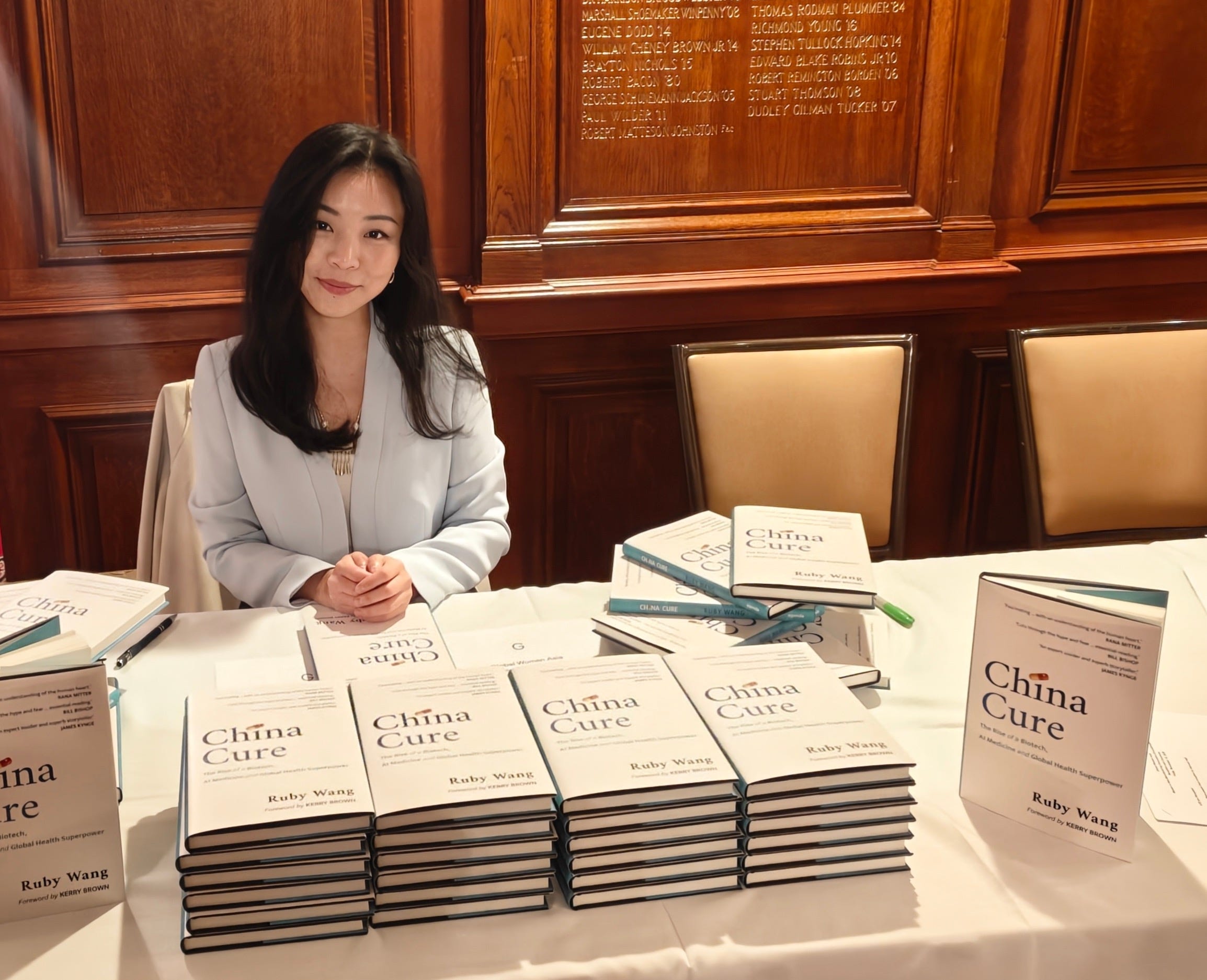
When I was a child, my family went to extraordinary lengths to obtain a life-saving medicine for my grandmother’s rare, late-stage cancer in China. That medicine was Gleevec (imatinib), a pioneering targeted cancer therapy that few, if any Chinese patients could access at the time.
Readers of Chapter 2: Biotech Superpower in China Cure will be familiar with my grandmother’s arduous journey through the Chinese healthcare system, and my parents’ adventures across continents, from England to Switzerland, to finally secure the treatment that saved her life. It is no small miracle that she is still alive today, and it was this that led me, aged nine, to decide to become a doctor.
And so it was an extraordinary full-circle moment last week, during the Boston leg of my US book tour, when I finally met Professor George Q. Daley, Dean of Harvard Medical School and one of the scientists whose pioneering research helped make that very medicine possible.
In a landmark paper published in Science in 1990, Dean Daley and his colleagues demonstrated that BCR-ABL could induce chronic myeloid leukaemia, helping lay the scientific foundations for the subsequent development of Gleevec. More than two decades after my family had struggled to obtain this medicine, I was able to hand him a copy of my first book and tell him what his research had meant for my family and for my own career.
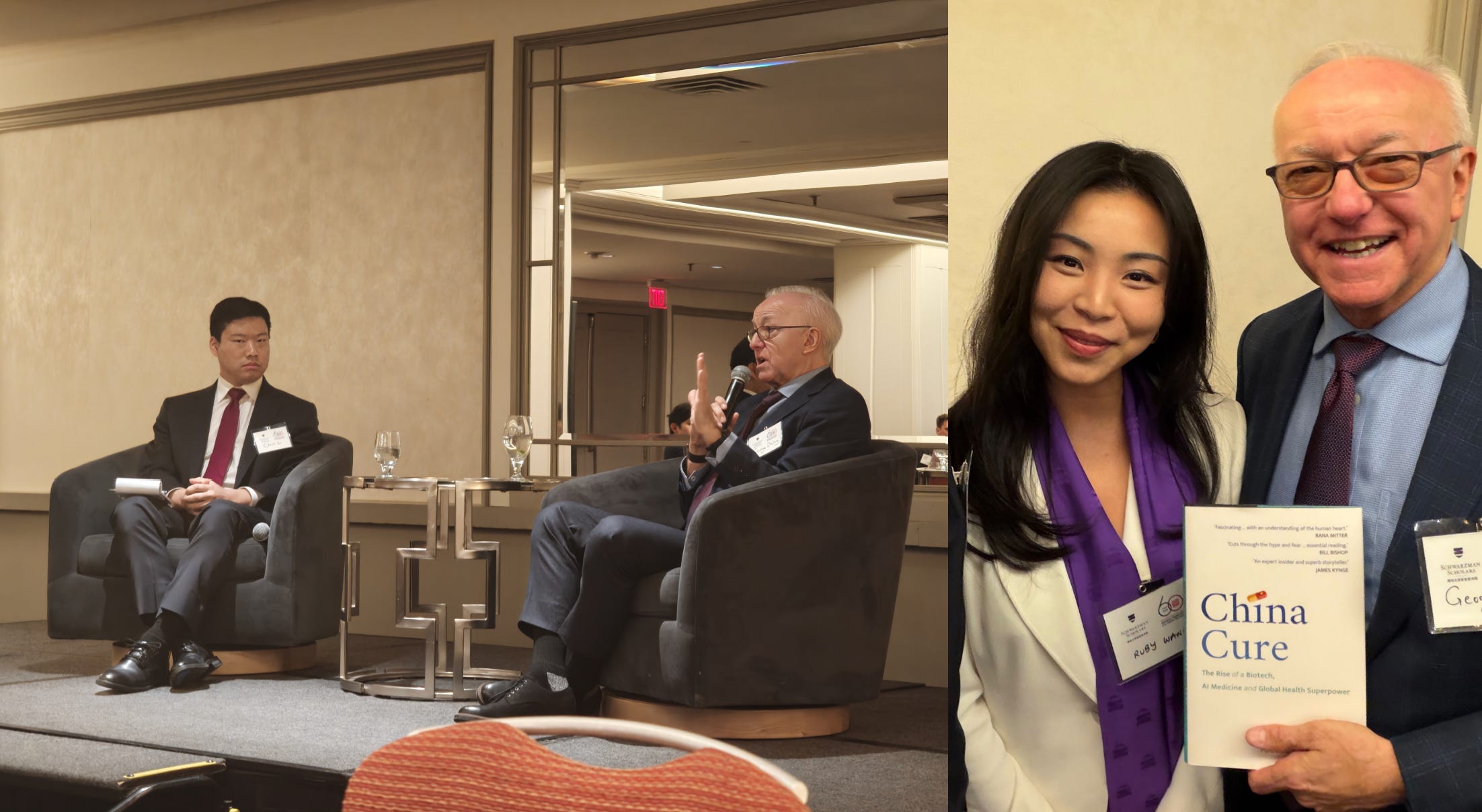
I chose to tell my grandmother’s story in China Cure because her experience captures the remarkable transformation of China’s pharmaceutical industry within a single generation.
When I was a child, my parents searched across continents to obtain a breakthrough cancer medicine developed in the West. Today, some of the world’s largest pharmaceutical companies are turning to China for the next generation of such medicines. As I wrote in Chapter 2, in the years ahead, it may be British and American grandmothers whose lives are saved by discoveries made in China. Understanding how this reversal came about, and what it means for patients and healthcare systems around the world, was one of my principal motivations for writing China Cure.
Over the past few weeks, it’s been so brilliant to bring the book to universities, policy institutions, business communities and friends across London, Oxford, Boston and New York. The conversations along the way have given me much to think about, both as an author and in my wider work on global healthcare.
So, in this edition of China Health Pulse, I’m sharing a photo diary from the tour, alongside some more recent international media coverage of China Cure.
PS. there’s one more state-side book event this year!
I’ll be in New York on the morning of Wednesday 2nd December for a private roundtable with the Asia Society, where I am Honorary Fellow on Global Public Health. I’ll be speaking alongside Managing Director and Co-Founder of the Asia Society Policy Institute Center for China Analysis, Jing Qian. We will talk about the book as well as more widely discuss China’s rise in biotech, AI medicine and global health.
If you’re interested in attending the event at Asia Society HQ on the Upper East Side in NYC, please send me a DM for details about requesting an invitation.
PHOTO DIARY
London
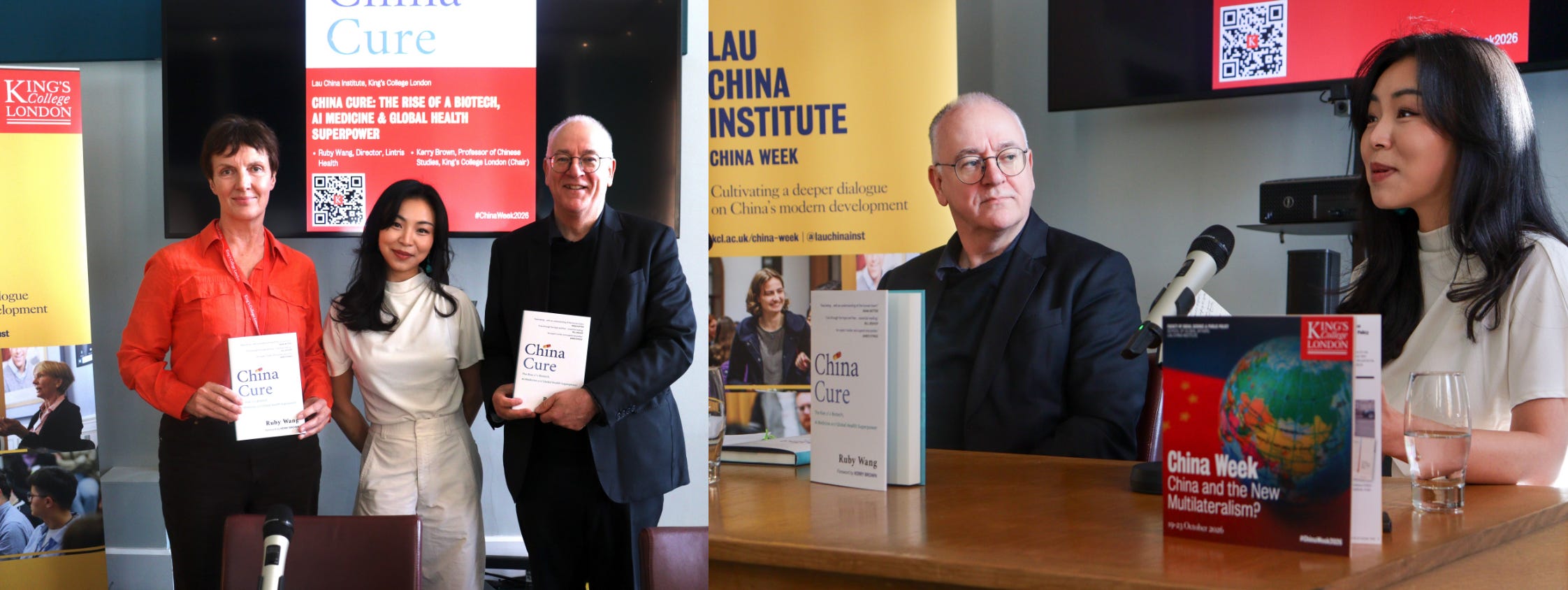
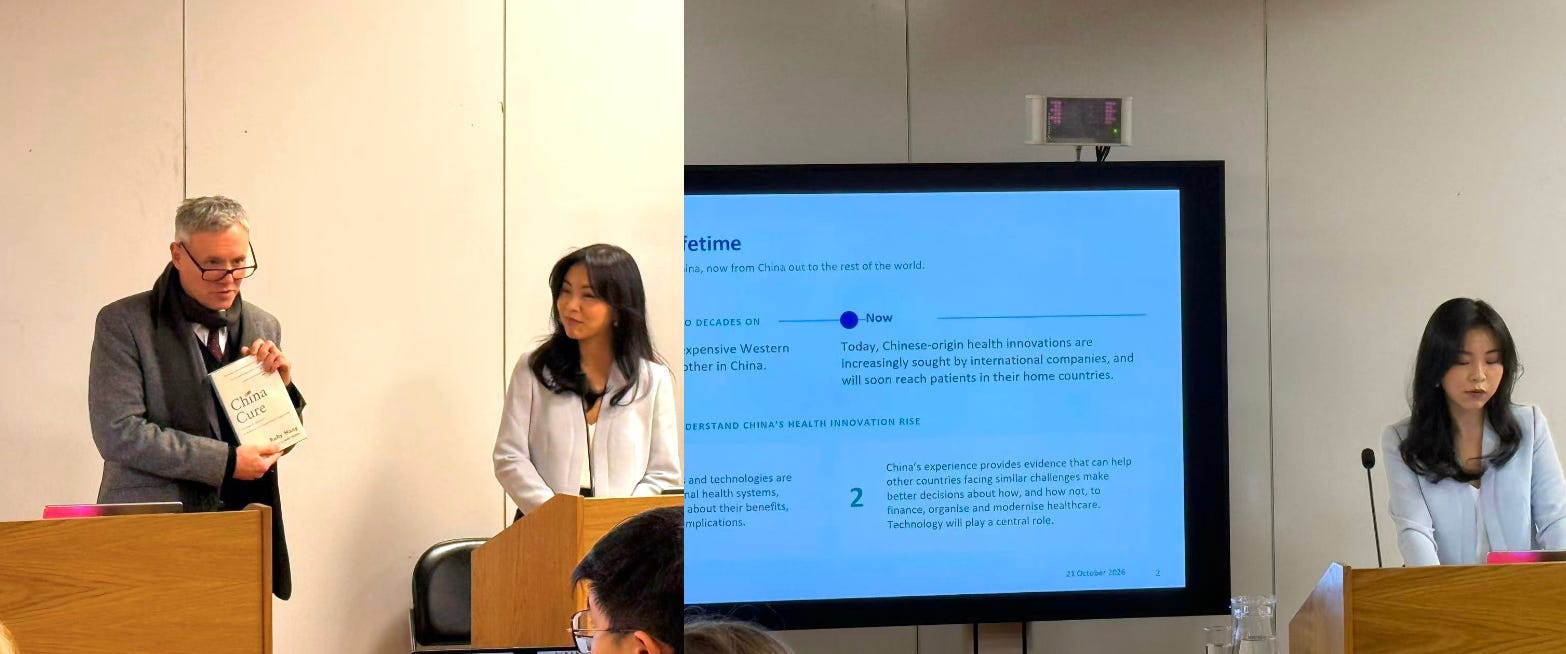
The UK leg of the book tour began at King’s College London, hosted by Professor Kerry Brown, Director of the Lau China Institute, with the support of Professor Rachel Mills, KCL’s Deputy Vice-Chancellor. I am especially grateful to Prof Brown for his mentorship and encouragement throughout my writing journey, and for kindly contributing his words for the foreword of the book.
Much of our discussion centred on a particularly timely policy question: the future of UK–China scientific collaboration. How can Britain, and Europe too, benefit from China’s advances in science and medicine while safeguarding its own research capabilities and interests? Prof Brown has written extensively on this subject, including for Nature, Times Higher Education, and the Financial Times (as well as his episode feature on the CHP Podcast).
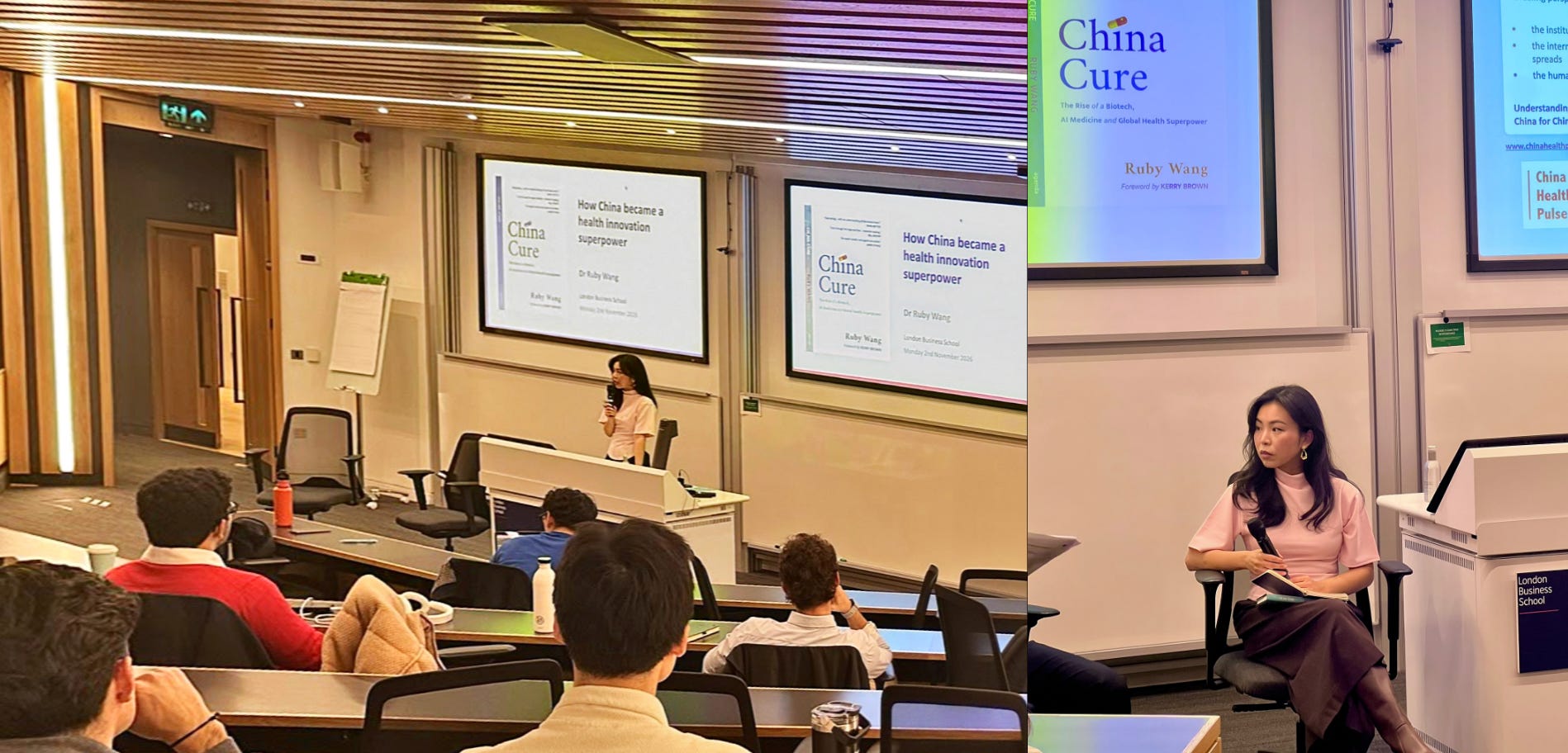
I was invited to speak at London Business School by the LBS China Club, focusing on the commercial and strategic implications of China’s health innovation rise. The discussion with LBS students and faculty explored how China’s advantages in development speed, cost and scale are changing the competitive dynamics of the pharmaceutical industry, creating new investment opportunities and prompting multinational companies to rethink their R&D, licensing and partnership strategies.
With thanks to Chengkai Xie and Laura Darnley and the Schwarzman Scholars community, I spoke at the Oxford & Cambridge Club in London alongside Professor Joan Kaufman, whose own extensive work in Chinese public health made this a particularly meaningful discussion (see her episode feature on the CHP podcast). As a 2019 alum, my time at Schwarzman College in Tsinghua University was formative in bringing together my interests across medicine, China and international affairs, all of which eventually found their way into China Cure. It was lovely to bring the book back to a community that had been part of its intellectual beginnings.
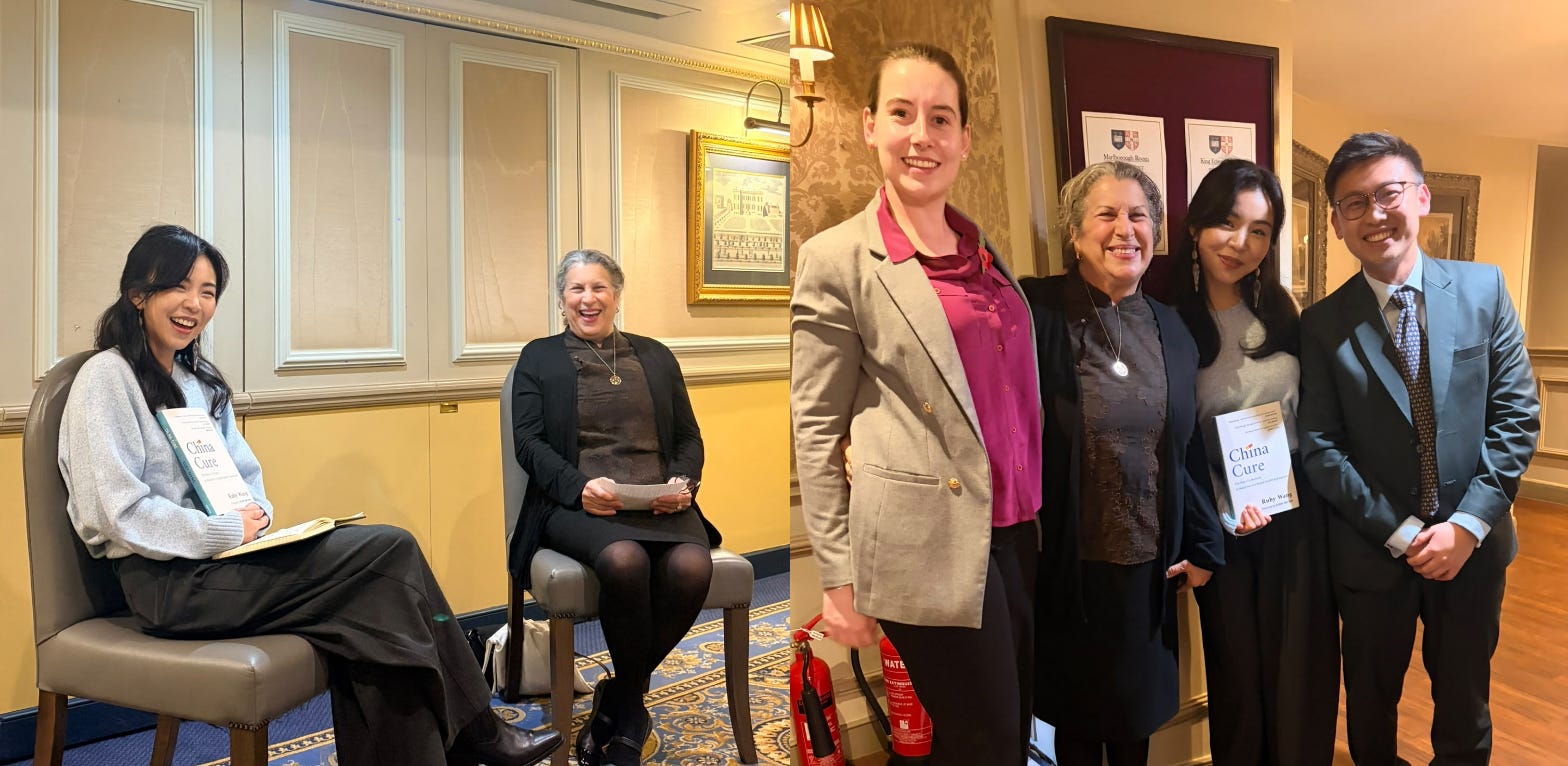
In London, I also had the opportunity to speak about China Cure with Global Women Asia, hosted by Baroness Mary Goudie alongside GWA Founder, the brilliant Wenchi Yu. As a 2025 GWA Health Innovation Fellow, I have particularly valued being part of this international network of women across business, policy and academia.
Oxford
At Oxford University, where I am Alistair Horne Fellow at St Antony’s College, I gave a book talk at the Dickson Poon University of Oxford China Centre with Professor Todd Hall, Director of the Centre.
Our discussion situated China’s healthcare transformation within the broader context of Chinese domestic politics, international relations and economic development. China’s emergence as a source of pharmaceutical innovation raises important questions about its future economic relationships with other countries, the role of healthcare in its international engagement, and the implications for developing economies.
Cambridge | Harvard
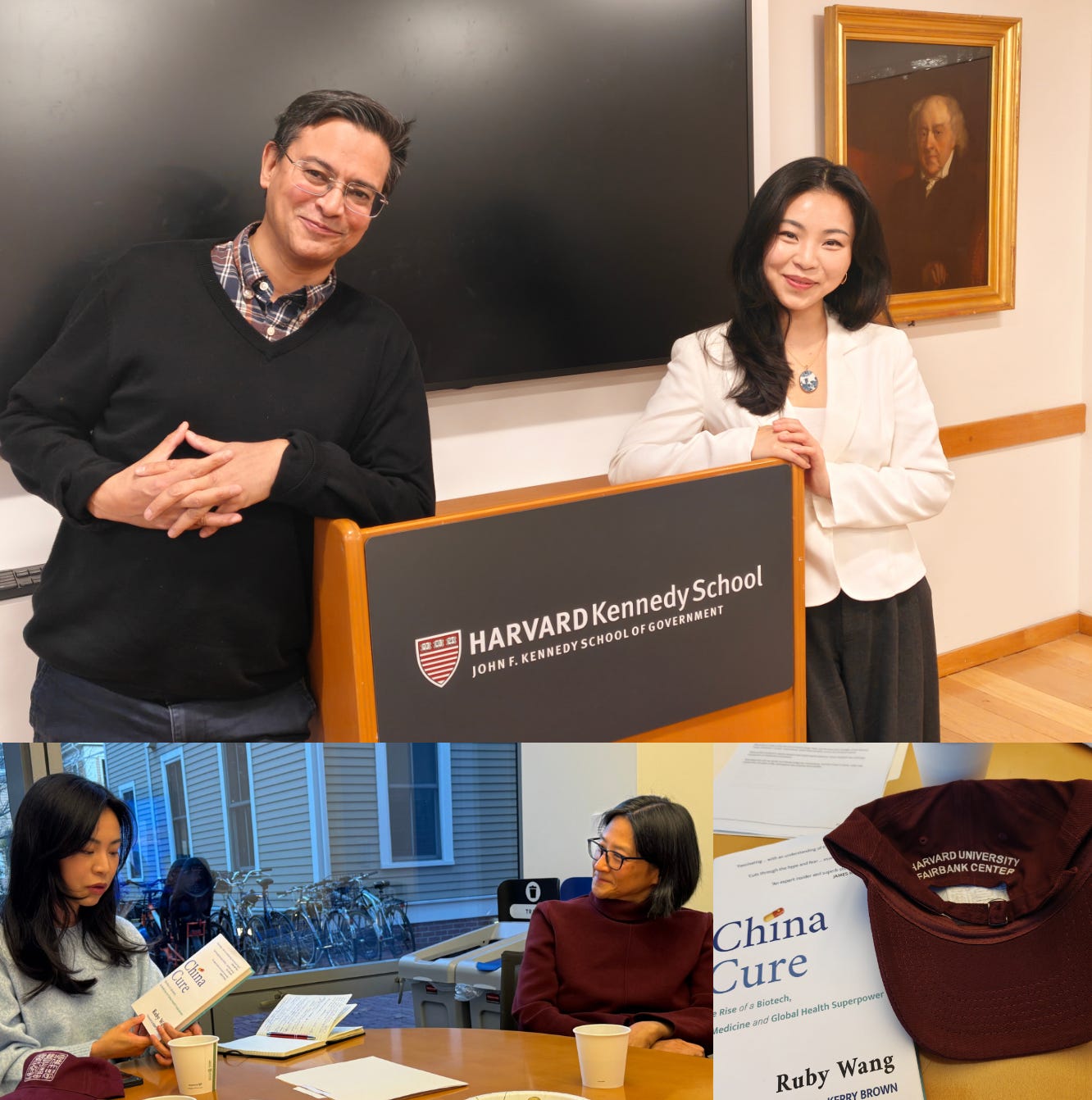
Across the Atlantic, a highlight of my week in Boston and Cambridge US book tour was bringing China Cure to Harvard University. I gave a book talk with Professor Rana Mitter at Harvard Kennedy School’s Rajawali Foundation Institute for Asia, as well as a tea discussion with Prof Winnie Yip at the Fairbank Center for Chinese Studies with the support of the Director of the Centre, Professor Mark Wu, Professor Arnold M. Howitt and colleagues.
These discussions brought together perspectives from international relations, health economics and health systems research, reflecting the different disciplines that informed the writing of China Cure - and I was delighted to receive the Fairbank speaker’s cap!
I am also especially grateful to Prof Mitter for his generous endorsement of the book, which appears on both the front and back covers:
“In a world of AI, changing demographics and increasing healthcare costs, how can societies adapt? Few Westerners think to look at the immense changes in healthcare happening in China, but Ruby Wang’s fascinating book brings together news from the Chinese tech, policy and clinical frontlines with an understanding of the human heart that makes this a must-read for all those who want to address one of the world’s most challenging issues.”
— Professor Rana Mitter, ST Lee Chair in US-China Relations, Harvard Kennedy School.
Boston
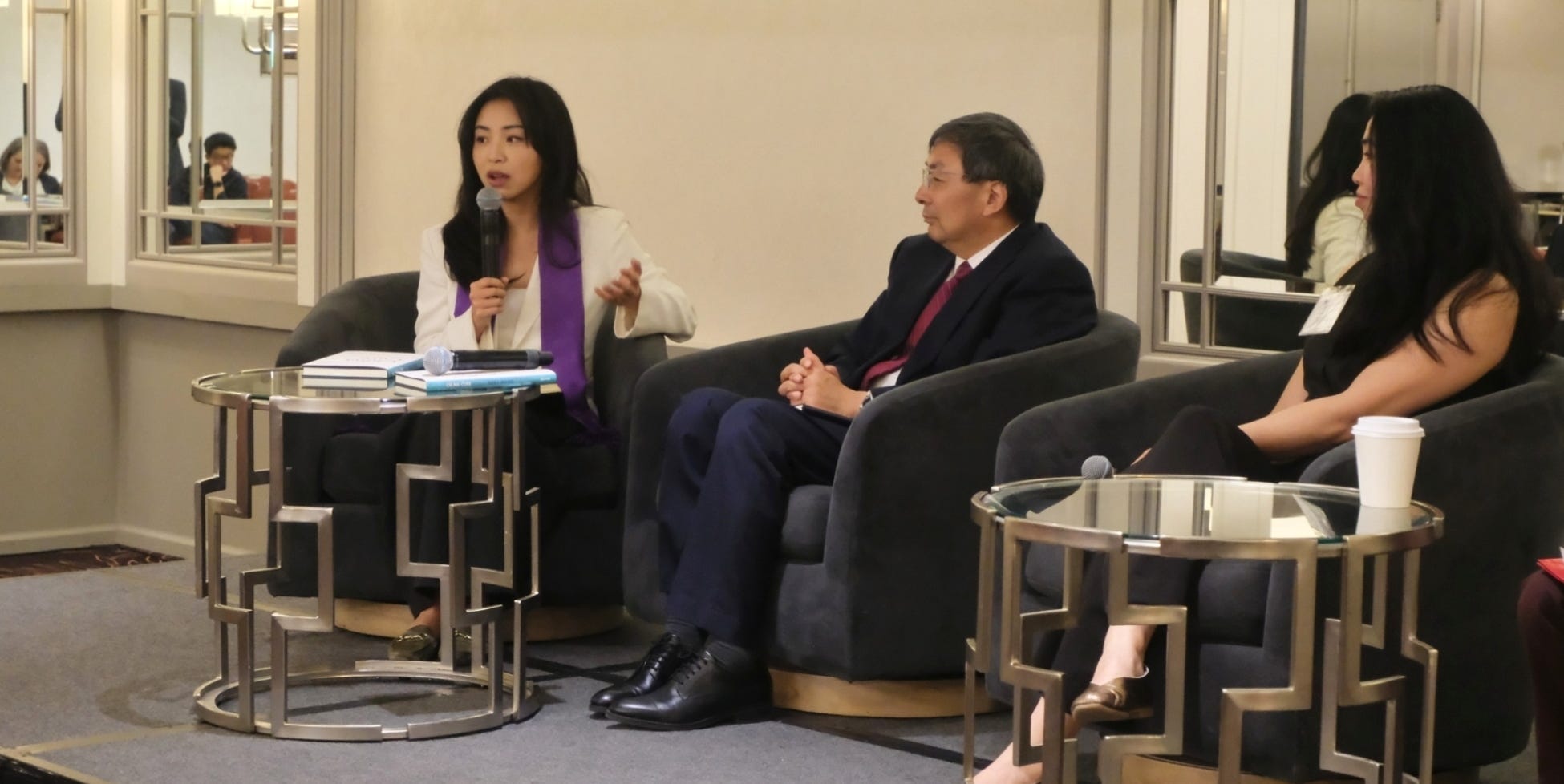
Over the weekend, I joined a conference organised by the National Committee on United States-China Relations (NCUSCR) in Boston, where Dean George Daley talked about the importance of continued international scientific collaboration in advancing medicine and improving human health.
I spoke on a panel with Professor Yanzhong Huang (who has also previously joined me on the China Health Pulse podcast), Aditi Nayak and Julia Pian from Atlas Partners, discussing China’s emergence as a biotechnology innovator and its growing engagement with the international pharmaceutical industry. The growing scientific and commercial interdependence between China and the US makes biotechnology a particularly interesting area of the bilateral relationship, at a time when much of the wider relationship is characterised by technological and geopolitical competition. With many thanks to Nitai Deitel and the NCUSCR team for bringing us together.
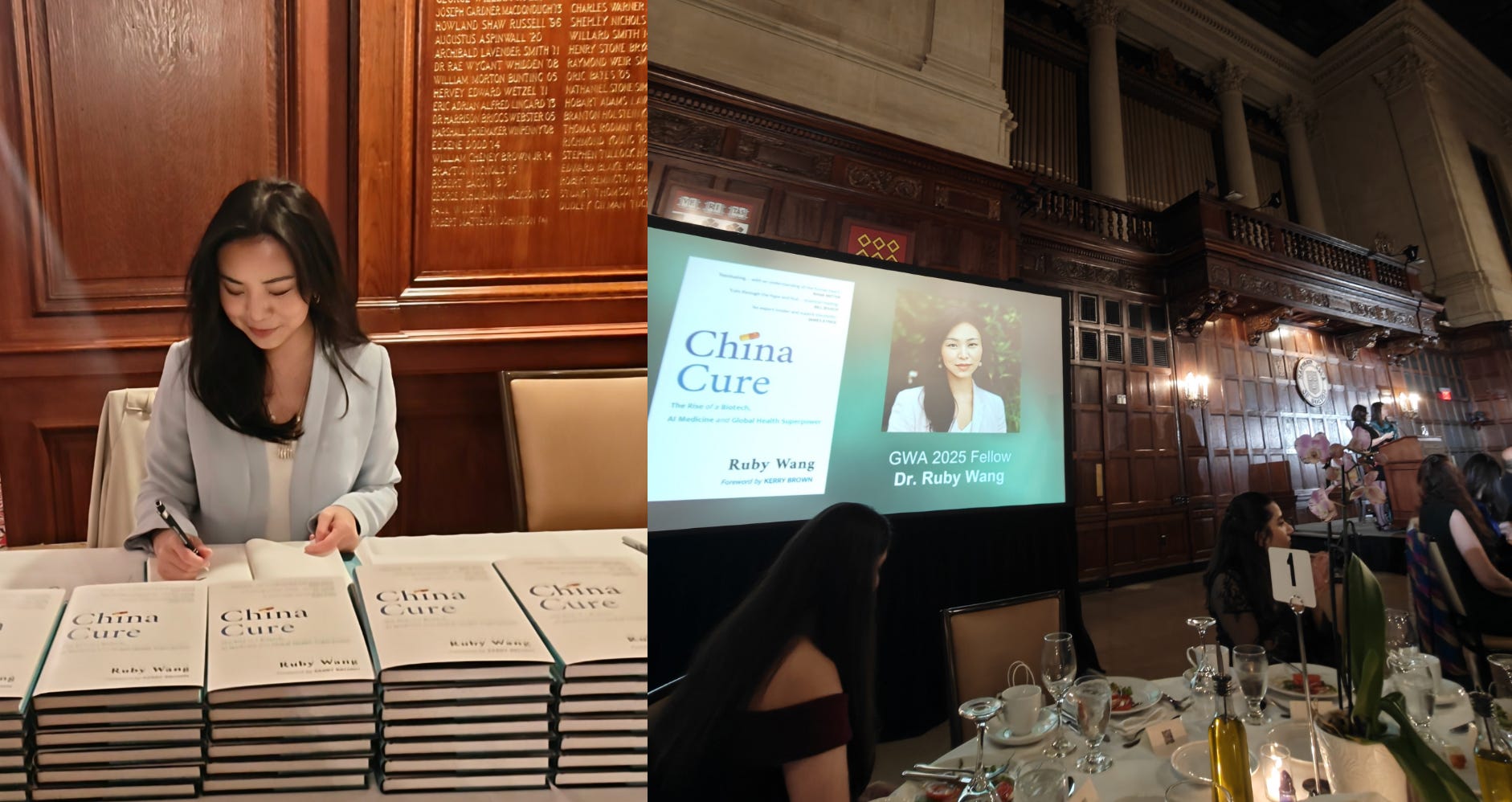
Another highlight was the Global Women Asia annual gala at the Harvard Club of Boston, where I had the pleasure of presenting China Cure and signing copies of the book. It was lovely to see familiar faces and meet new and wider members of the community in Boston.
New York
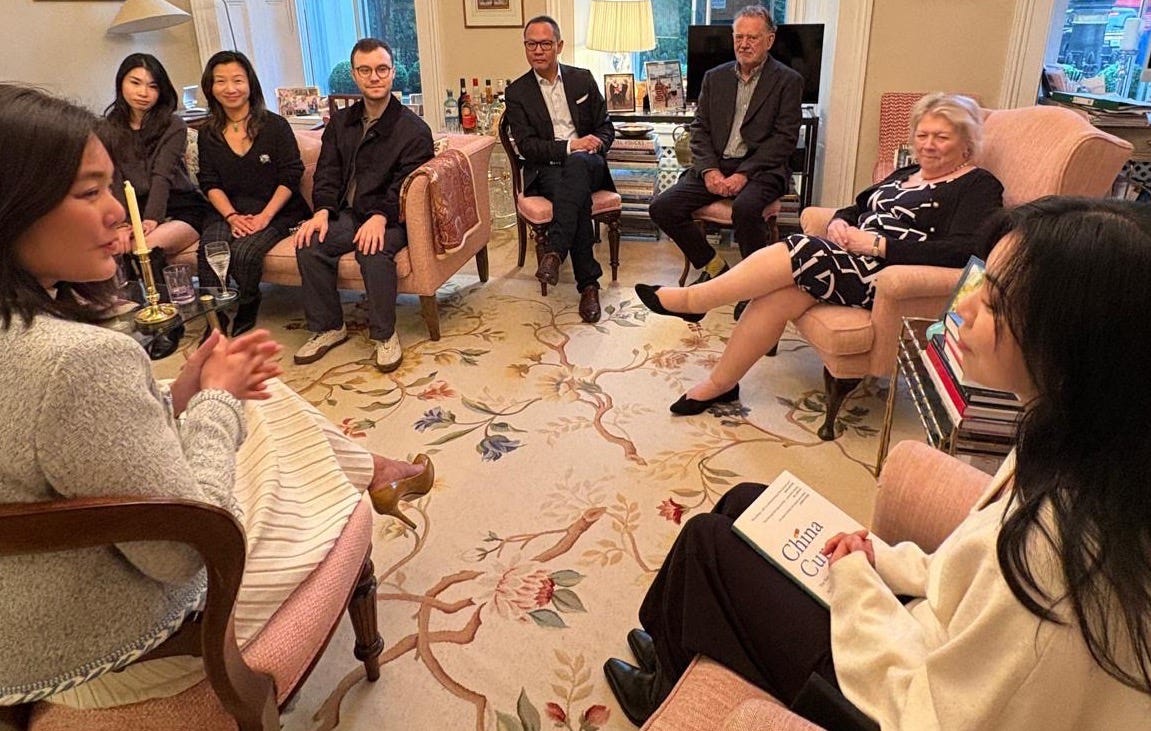
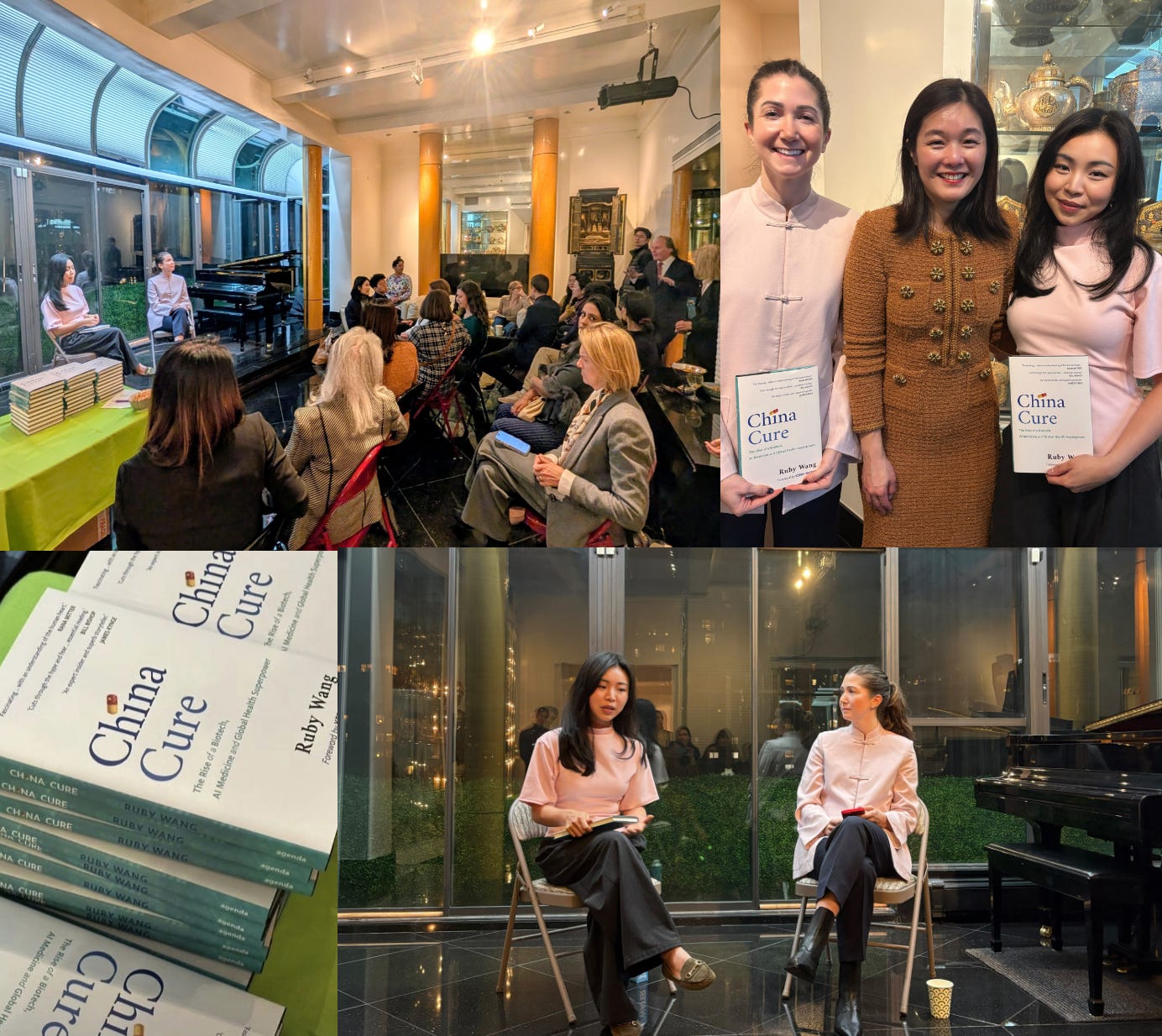
GWA hosted a private launch of China Cure in New York, with great thanks to Wenchi Yu, Elizabeth Knup, Eric Wong, Emily Chew and Dr Alice Tendell, and to Olivia Plotnick, substack friend and fellow GWA fellow, for moderating the discussion!
Writing a book has been, for much of the process, a solitary endeavour, and one of the greatest joys of publication has been bringing together friends and colleagues from different chapters of my life. It was particularly special to exchange perspectives on China with friends across business, policy and international affairs in New York.
I also joined Silicon Dragon Ventures and Rebecca Fannin for an industry and investor-facing biotech discussion in New York. Much of my consultancy work today concerns the growing international interest in Chinese pharmaceutical innovation, and I enjoyed exchanging perspectives with the New York investment and business community on the commercial opportunities and geopolitical complexities of this rapidly evolving sector - even though I had to join virtually, due to US flight controls that day!
One more stop in New York
I'll be back in New York on Wed 2nd December for one final book event this year, a private roundtable at Asia Society headquarters on the Upper East Side. If you're interested in joining, please request for an invitation via message to me, or to wma@asiasociety.org.
Recent media features
MERICS Podcast — China is changing the world’s pharma landscape
A conversation with Alexander Brown and Johannes Heller-John on China’s emergence as a source of innovative medicines, and what this means for pharmaceutical companies, policymakers and patients in Europe and China.
Nikkei Asia — China is emerging as a key testing ground for healthcare innovations
My latest opinion piece on what China’s successes and failures in biotech and AI medicine can teach the world about turning technological breakthroughs into commercially viable, affordable and effective healthcare.
Trouw (Netherlands) — An avatar as a doctor, and medication delivered to your home with one click
A feature in Dutch daily newspaper by journalist Pieternel Gruppen, who attended my King’s College London book launch, exploring China’s rapid development of digital healthcare, from AI doctors to online pharmacies.
The Wire China — Ruby Wang on Why China’s Healthcare Experiment Matters
An in-depth interview with Rachel Cheung on China’s healthcare ambitions, inequalities within its health system, AI-enabled drug discovery, and what other countries can learn from its experience.
AmCham Shanghai, Insight — Medicine’s New Map: China’s Growing Role in Global Healthcare (Autumn 2026; pp. 9–12)
An in-depth interview with Stephanie Sam for the American Chamber of Commerce in Shanghai on Chinese biotech’s global expansion, pharmaceutical licensing, AI medicine, and China’s growing healthcare presence in Africa and Latin America.
Christopher M. Schroeder’s Newsletter — Beyond the Headlines: China, America, and the Future of Biotech and Healthcare
A wide-ranging interview with Chris Schroeder, American entrepreneur, global venture investor and author of Startup Rising, who writes extensively on technology, entrepreneurship and innovation in emerging markets. We discuss US–China technological competition, cultural differences in healthcare, AI and robotics, and what Western healthcare systems can learn from China’s innovation model.
Gonville & Caius College, Cambridge — Caian on China’s Rise to Health Innovation Superpower
A lovely feature from the alma mater where I studied Medicine, Caius college at Cambridge, about the personal family story behind China Cure, the changing direction of global pharmaceutical innovation, and my journey from clinical practise into health policy, industry and now writing.
Once again, a huge thank you to all the wonderful hosts, moderators and organisers who made these events possible, it has been a real pleasure to reconnect with old friends, meet new people, and see the book make its way into so many different hands.
And to everyone who has supported China Cure so far: I’d love to keep hearing from you, and please do consider leaving a review on Amazon or Goodreads. It really does help more readers discover the book.
There will be more book events to come in 2027: to Shanghai, Hong Kong, Washington DC in the spring - keep a look out and keep in touch, if you are based in those cities!
best,
Ruby