


🔬This is a Real Diagnosis post at China Health Pulse, where we dive deeper into key topics and current trends.
Hello CHP readers,
It’s been a while since I last sat down to write something for this newsletter. A wonderful reason for this is that I’ve been fulfillingly busy: travelling to Kenya and Ethiopia in East Africa in June and more recently, in August, all across Brazil, as well as preparing for the launch of my new book.
Some of these adventures have been strictly professional: on-the-ground insights and engagements for my consultancy, LINTRIS Health, and other strategic analysis. Some has fed into my ongoing policy and academic research. However, much of it also contributes towards my ever-expanding aspirations to make more sense of the whole of global health (the entire pie!) so that some of the fragments that sit apart today might be able to come together, better - and I would like to believe that such hopes are more than just the doctor in me talking!
Having now returned to London, I recently attended a policy conference, where, while well-organised and informative overall, I found that far too many of the panels and discussions still circled around the same topics we’ve all heard time and again: pressures, workforce, productivity, funding, digital transformation. It all reminded me how common it is, particularly in established, fragmenting systems, to keep debating within inherited assumptions about how things are organised. Inward-looking, tired. Too much talk, not enough solutions.
My travels had the opposite effect. Journeying far from home can bring you closer to it: to appreciate familiar things differently and see contrasts more clearly. Some approaches may travel well and others are inseparable from their political or cultural context, but looking at how very different systems approach familiar problems can make the questions themselves feel fresh again.
Having spent most of my professional career finding ways to bridge East and West on health and care, I found my Brazil trip especially interesting to reflect on. My travels began in Belém and Santarém in the northern state of Pará and then east to Bahia, travelling through the Amazon and learning about riverine communities, remote access and primary care; on to Brasília and the centre of federal health policy; and finally to São Paulo, where I met hospitals, pharmaceutical companies, research and policy organisations and philanthropic foundations.
As a gigantic and sophisticated middle power with its own institutions, interests and bargaining power, Brazil nevertheless shares many health system challenges with China, as a similarly continent-sized country: from vast geographies and uneven access, to large populations, public-private divides, pressure on health workforces and the increasingly urgent question of how technology can help health systems scale.
This trip also provided me with a much more concrete way to think about an argument I recently made in a commentary in Nature: that China’s growing role in global health should be judged not only by the speed, investment and technical capability it can bring, but by whether those partnerships strengthen local capacity, preserve sovereignty and leave countries better able to shape their own health systems afterwards. Governments, industry and global health institutions across the West, and indeed everywhere, should pay closer attention in both directions.
As I reflect more deeply about what I have been observing and learning, consider this an informal first attempt at pulling together some thoughts on health systems, technology, culture, power - and of course, China.
Brazil’s health needs more attention
Most of us already understand certain aspects of Brazil’s global importance. It is Latin America’s largest economy and country, a key member of BRICS, a major Western Hemisphere power and longstanding partner of Western nations, and one of China’s most important economic relationships in Latin America. Brazil’s agriculture feeds global supply chains at extraordinary scale, while the Amazon and its biodiversity have become central to any serious discussion of climate, food security and the environment.
And yet, Brazil’s health receives far less international attention, despite it running one of the largest universal health systems in the world across more than 200 million people, alongside a gigantic pharmaceutical, hospital, research and private-health economy. On my travels across the country, I kept returning to several features of the system that I think deserve much greater reflection.
System optimisation at scale
At the centre is the Sistema Único de Saúde (SUS), which places health in the Constitution as a right and gives every Brazilian access to a universal public health system free at the point of use. Perhaps because of my background as a doctor trained and practising in the UK’s National Health Service, almost everyone I met spoke to me about how SUS had been inspired by the NHS. Built some decades after the NHS through Brazil’s own health reform movement, democratic transition and 1988 Constitution, SUS developed into something distinctly Brazilian: decentralised delivery, community health and federal responsibility across a country of vastly different scale and complexity (we will come back to how that federal architecture in particular has impacted the Brazil-China relationship, later).
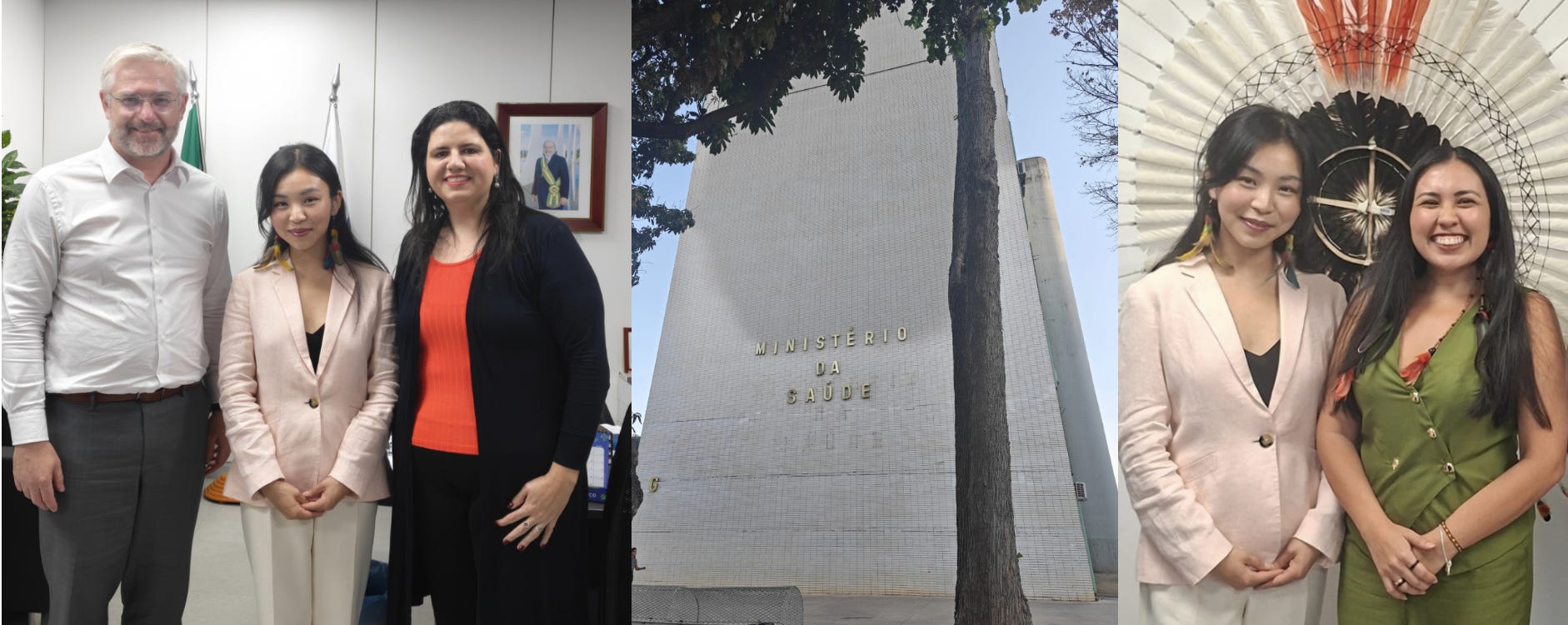
During my meetings in Brasília with Brazil’s Vice Minister of Health, Executive Secretary Adriano Massuda, I was struck by the size and variation of the portfolio he and his teams are managing. Brazil now encompasses nearly 5,570 municipalities, each holding substantial responsibility for services on the ground while collectively belonging to one “universal” system. The same SUS that encompasses transplantation, oncology, advanced diagnostics and major academic hospitals in São Paulo also has to reach remote populations across immense distances.
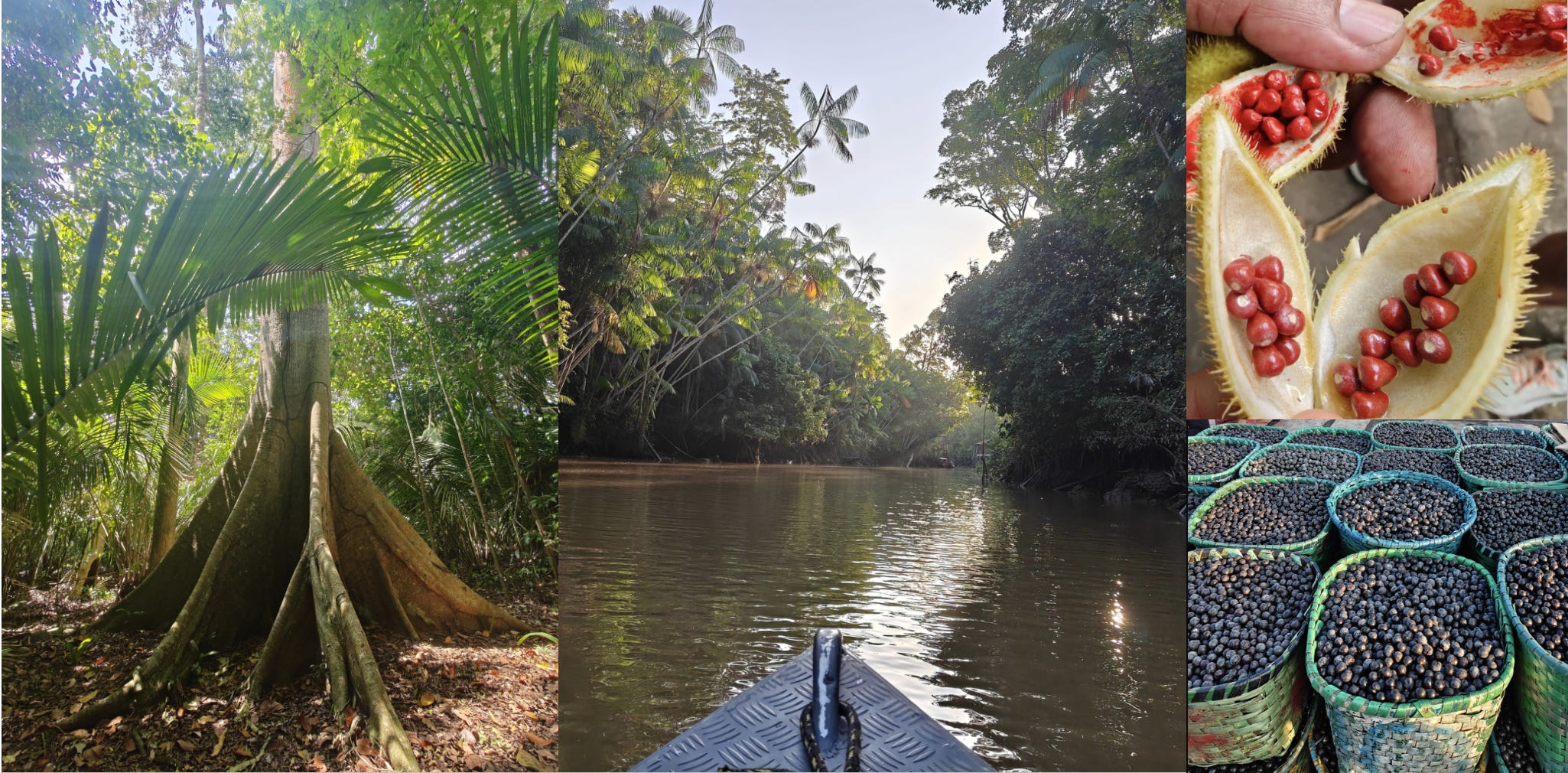
In Pará and Bahia, I saw services travelling by boat towards riverine communities because geography makes the conventional model of patients travelling towards fixed facilities impractical. What I found particularly interesting comparatively was how much the reality of universality therefore depends on local implementation: the competence, workforce, infrastructure and ingenuity of individual municipalities can determine what a national constitutional right looks like on the ground.
But decentralisation does not mean that each municipality functions as a self-contained health system. Conversations with local leadership, including the director of Santarém’s municipal hospital, made clear how quickly weaknesses elsewhere in the network can accumulate at a referral centre: patients travelling long distances, limited specialist capacity closer to home, pressure on beds and theatres, and the constant challenge of moving people between primary, secondary and tertiary care across a huge geography. Local autonomy therefore sits alongside deep regional interdependence.
This piece has relevance far beyond Brazil. That decentralised structure has produced enormous variation in how services are organised and how well municipalities perform, which creates inequalities, but also an unusually rich environment for understanding which combinations of primary care, management, financing, workforce and local adaptation actually work. Institutions such as IEPS and Umane are operating in precisely that space: trying to turn variation into evidence, identify interventions that can improve system performance, and work out what can be scaled without assuming that an intervention successful in São Paulo will simply transplant into Pará.
The wider lesson is therefore about what has to remain strong at each level for decentralisation to work: capable local management, usable data, adequate financing, referral networks, workforce and mechanisms for learning systematically from variation rather than allowing it simply to reproduce inequality. Health systems everywhere are wrestling with the same underlying problem of what can genuinely be delivered closer to communities, what still requires regional concentration, and how the two can function as one system. Brazil has the scale as well as decades of experience to make it an enormous laboratory for exactly that problem.
Distinctive funding and commitment
Such demands on the system must be supported by strong central commitment, and Brazil’s political prioritisation of health is indeed particularly striking. For all the justified debate within the country around whether SUS receives enough money (a familiar argument everywhere, for no health system ever believes it has enough resources) health still occupies an unusually prominent position within Brazil’s federal spending. The enacted 2025 budget allocated around R$245 billion to public health, and the Ministry of Health was described in Congress as holding the third-largest ministerial budget.
However, the actual composition of that spend does make things a little more complicated. It is to the chagrin of many of the policymakers and public health and policy researchers I spoke to, that while Brazil devotes 9-10% of GDP to health, government and compulsory schemes financed only 45% of the total. Voluntary private insurance still accounted for 27% - far above the OECD average and higher than in any OECD country - while roughly another 27% remains paid out of pocket.
Public-Private
That apparent contradiction is one of the features of Brazil I find most interesting. Health is highly prioritised politically and SUS remains foundational to the social contract, but a very large private health economy nevertheless sits alongside it. Finding an optimal balance between public purpose and private capital, expertise and provision is perhaps the hardest recurring health-policy question across every system.
Britain is watching private provision grow around a still predominantly tax-funded NHS under ever greater pressure. Discussions, like those at my recent London conference, too often begin with fiscal and workforce pressures and end with what the Treasury can afford to stretch, while increasingly visible two-tier care raises questions about faster access for those able to pay and how much fragmentation can occur before equity begins to erode. The US begins from a very different position: enormous flows of private capital support much of the world’s pharmaceutical, biotechnology and medical innovation, while affordability and unequal access remain persistent weaknesses at home.
Brazil has spent decades negotiating both sides of this equation at the same time, and at continental scale. It has not solved the public-private tension, but I do think that the particular institutional mechanisms it has developed to bring capability sitting outside government into public-system priorities are distinctive and interesting. My conversations with major pharmaceutical companies operating in Brazil showed just how deeply companies must understand SUS, public procurement and reimbursement while simultaneously operating across insurers, hospitals and commercial markets.
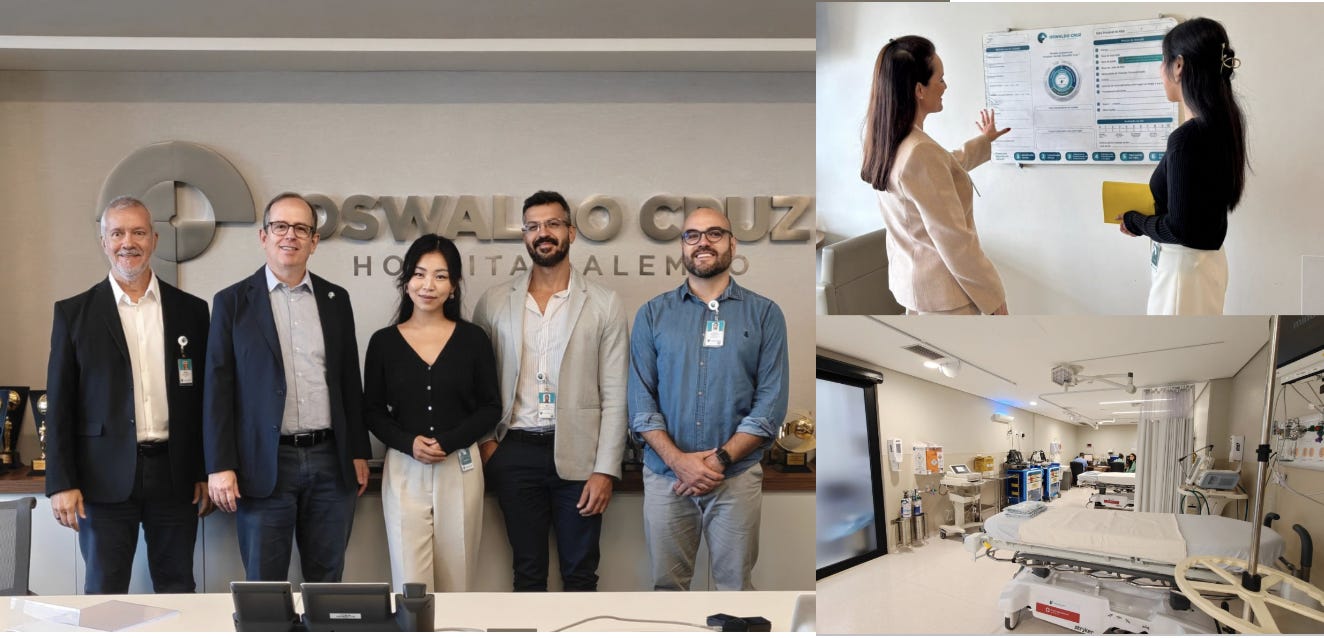
And Brazil’s philanthropic hospitals add another distinctive mechanism. At Hospital Alemão Oswaldo Cruz in São Paulo, I learned more about PROADI-SUS, through which recognised hospitals of excellence use resources associated with their tax immunity to work with the Ministry of Health on research, evidence generation, technology assessment, workforce development and management.
Other countries also use private and non-profit institutions to deliver public goals, but I was struck by how Brazil has built formal mechanisms through which organisations with advanced clinical, managerial, research and technological expertise can be asked to solve problems that matter to SUS. PROADI-SUS converts fiscal privilege into agreed projects intended to strengthen the capabilities of SUS itself.
The potential value lies in using institutions such as Oswaldo Cruz as capability multipliers: testing models, generating evidence, evaluating technologies, training people and developing management or digital approaches that can strengthen a much larger public system. And beyond capability itself, I think that trust is a large part of the equation.
Public-health traditionalists are often wary of private or philanthropic involvement for good reason: different incentives raise concerns around influence, commercial benefit, cherry-picking and the gradual erosion of public provision. The challenge is how to use outside expertise without surrendering control over priorities, accountability or equity. PROADI-SUS does not remove those tensions, and in some ways its existence acknowledges them. Rather than assuming that public and non-state incentives naturally align, Brazil has created formal mechanisms in which benefits, obligations and public priorities are made explicit. I think of this as a form of “governed trust”.
Every health system contains valuable expertise, technology and capital outside the state, while also having good reason to be cautious about how that capability is used. Brazil has accumulated useful experience in this difficult middle ground: aligning incentives, making obligations explicit and directing non-state expertise towards public-system goals.
Population diversity & scientific value
Brazil has another key asset which makes it distinctly attractive to global biopharma, life-sciences and healthtech companies, whether from West or East. It contains one of the world’s largest highly admixed populations, with richly complex combinations of Indigenous, African, European, Asian and other ancestry that vary substantially across regions.
As medicine moves further into genomics, precision medicine, large clinical datasets and AI, that diversity becomes increasingly scientifically valuable. Much of the world’s genomic infrastructure still disproportionately reflects people of European ancestry, limiting how well genetic associations, disease-risk models and precision medicine translate across populations. AI tools developed on narrow populations similarly need validation elsewhere.
Greater ancestral diversity can improve the underlying science, and Brazil offers real-world scientific value that is difficult to produce elsewhere. As global drug development heats up, these strengths give Brazil considerable leverage in deciding what it wants from those relationships: trial participation, research leadership, data infrastructure, scientific training, manufacturing and domestic clinical-development capability — and how much of the resulting value is retained for Brazilian patients and institutions.
Indigenous Health & Openness to Difference
A final feature that I noted was Brazil’s willingness to build and explicitly make cultural and geographic difference unusually visible within the health system itself. Brazil carries an immensely difficult history of indigenous dispossession, alongside vast contemporary differences in geography, language, culture and access.
After spending time in the Amazon learning about Indigenous communities, traditional knowledge and the practical difficulties of providing care across enormous distances, I met Secretary Lucinha Tremembé in Brasília, who leads the Secretariat of Indigenous Health, SESAI (and who also very kindly gifted me a pair of beautiful, colourful earrings from her community).
SESAI coordinates a dedicated indigenous-health subsystem within SUS that serves over 821,000 indigenous people across the nation. Its 34 Special Indigenous Health Districts, or DSEIs, are organised around territory, population and ethnocultural relationships rather than municipal or state boundaries, where care is formally designed to be participatory and differentiated according to epidemiological and sociocultural needs. Universal health systems everywhere often struggle to reconcile equal entitlement with populations whose geography, language, culture or relationship with the state require different forms of care. But in Brazil, we see already how some of that adaptation has been built into the institutional architecture itself.
Implementation remains difficult, of course, and remote access, staffing, diagnostics, specialist referral, continuity and trust still create large gaps between formal recognition and consistent delivery, all impacted further by Brazil’s history of Indigenous dispossession. But I think there is something important in the attempt itself: for universality to still allow for the possibility that different populations may need different routes towards the same entitlement to health. Brazil has spent decades confronting questions of cultural pluralism, remote care, community participation and differentiated provision that increasingly diverse societies elsewhere are only beginning to address. The Brazilian experience is useful to analyse because increasingly diverse societies everywhere should take seriously the idea that equality of access may require different forms of delivery.
All in all, Brazil already has the scale, institutions, scientific assets and political commitment of a major health power. It therefore enters its relationship with China with considerably more bargaining power, scientific capability and health-system experience than simply a story of “Chinese influence”.
Brazil and China
Brazil and China are two continent-sized states, together home to more than 1.6 billion people, with enormous domestic markets, large scientific and industrial systems and unusually consequential roles within their respective regions. China is Brazil’s largest trading partner; Brazilian exports to China reached US$100 billion in 2025 and bilateral trade around US$171 billion. In the first eight months of 2026 alone, China accounted for more than 30% of Brazilian exports.
As Latin America’s largest economy, population and territory, Brazil encompasses established pharmaceutical and vaccine institutions, an internationally experienced regulator, substantial manufacturing capacity and a gigantic health market through both SUS and the private sector. It sits in the Western Hemisphere, in overlapping time zones with North America, while maintaining deep relationships with the US and Europe as well as considerable diplomatic autonomy of its own.
That combination makes Brazil quite different from a conventional “Global South recipient” of Chinese health diplomacy. It can certainly consume Chinese technology, but it can also test it, regulate it, manufacture it, improve it, bargain over it and contribute assets of its own. The two are increasingly capable of building regionally as well as globally consequential health partnerships without necessarily being mediated by Western or multilateral institutions.
Health diplomacy has been building for years
Brazil-China health cooperation increasingly sits across several layers at once: government-to-government diplomacy, BRICS institutions, regulators, scientific organisations, companies and research networks. The main bilateral mechanism is COSBAN, the China-Brazil High-Level Commission for Consultation and Cooperation. Created in 2004 and co-chaired by the two countries’ vice-presidents, it is Brazil’s principal mechanism for regular dialogue with China and one of its broadest structures with any international partner, spanning trade and investment, industry, science and technology, agriculture, finance and other strategic areas. Health therefore sits inside a much larger relationship through which both governments are already discussing economic development, industrial capacity and technology.
The two countries also meet through BRICS, where health cooperation has progressively widened from infectious disease and vaccines towards regulation, local production, research, AI, data governance and health-system resilience. Under Brazil’s BRICS presidency in 2025, the two health ministers agreed to strengthen regional production and expand research and development, deepen cooperation between public-health institutes and regulators, and work together on AI and data governance. The world’s largest emerging health markets are developing their own ideas about production, regulation and technological capacity rather than waiting for frameworks to be designed in North America or Europe. Standards, supply chains and research partnerships are increasingly being discussed through institutions in which Western governments are not necessarily at the centre.
Related:

The story of CoronaVac
One of the most distinctive examples of how the Brazil-China health relationship has already played out in practice is CoronaVac. Beyond the familiar story of Chinese vaccine diplomacy, it is a much richer case of politics, institutions and Brazil’s subnational paradiplomacy: China provided an important technological asset; Brazilian federalism allowed an institution capable of using it to act; and Brazil’s national public-health machinery ultimately enabled scale.
In June 2020, the São Paulo state government under Governor João Doria and the state-owned Instituto Butantan announced a partnership with Chinese pharma giant Sinovac to test and produce the COVID vaccine, CoronaVac. Brazil’s Butantan brought clinical-trial infrastructure, vaccine expertise and institutional credibility; China’s Sinovac brought the candidate vaccine, production know-how and technology. The Brazilian Phase III programme eventually involved around 13,000 volunteers across multiple research centres.
Then the politics became extraordinary. President Bolsonaro’s federal government and the São Paulo state government disagreed sharply over pandemic measures broadly, and CoronaVac specifically. In October 2020, Brazil’s health minister announced plans to acquire 46 million doses from Butantan, but Bolsonaro publicly overruled the move the following day, and questioned the Chinese vaccine. But the federal government’s opposition did not stop São Paulo itself from continuing.
Brazil’s distinctive constitutional architecture helps explain why. Because health responsibilities are shared across federal, state and municipal levels, the Supreme Federal Court reaffirmed the authority of states and municipalities to take their own public-health measures rather than allowing the federal executive to monopolise the response. Butantan added another layer of autonomy – though it is a state institution rather than a federal agency, it had enough scientific expertise, manufacturing infrastructure and international standing to negotiate directly with a Chinese biotechnology company, and run a major clinical programme.
The second half of the story is perhaps even more remarkable. Within eight months of Brazil’s regulator, Anvisa, authorising CoronaVac for emergency use,Butantan delivered 100 million doses via the National Immunisation Programme across the entire nation. So a Chinese technology negotiated through a Brazilian state institution, despite opposition from the country’s president, eventually became one of the pillars of Brazil’s national vaccination campaign. The closest intuitive comparison would be something like California or New York pursuing a vaccine partnership directly with a Chinese biotech company while the White House publicly opposed that vaccine - and then Washington later purchasing it for nationwide distribution. The legal systems are different, so it is not an exact analogy, but it gives some sense of how unusual the political sequence was.
This is also an interesting case in how the national identity of a health technology can change once it enters another country’s institutions. Chinese origin did initially matter: surveys found greater rejection of Chinese-origin vaccines, with country of origin itself associated with vaccine hesitancy. But in a later survey in January 2021, reported confidence in CoronaVac at 76.4%, almost equally comparable with 80.1% for the Western vaccines Oxford-AstraZeneca and Covishield.
We cannot claim that CoronaVac permanently changed Brazilian attitudes towards Chinese products, but certainly, there is a relevant piece here about how, as Chinese-origin assets are increasingly licensed and move into foreign pipelines, including European or American biopharma companies, they may eventually have very little visible “Chinese” identity at the point of care. This means that even if geopolitics may shape how governments and industries talk about these medicines, patients still encounter them through regulators, hospitals, physicians and trusted pharmaceutical brands, and will form their own responses towards what they are receiving.
From Chinese pipelines to global medicine
Chinese biotech companies increasingly need international clinical-development networks to turn drugs discovered in China into medicines that can be registered and commercialised globally. I described earlier why Brazil’s large and genetically diverse patient population gives it particular value at this upstream stage of global biopharma, and indeed, Western pharmaceutical companies have used Brazilian investigators, hospitals and patients in global trials for decades. But Chinese biotechs are increasingly entering those same international networks as their pipelines become more innovative and internationally ambitious.
A good example is BeOne Medicines (formerly BeiGene) a China-founded and now Swiss-domiciled, global biopharma company. Its PD-1 oncology drug tislelizumab was developed through an international clinical programme, with the Phase III RATIONALE-303 lung-cancer trial including numerous Brazilian oncology centres. The resulting evidence supported subsequent regulatory approval in Brazil. And Brazil’s involvement extended beyond patients and trial sites: the first author of the 2026 long-term analysis was Brazilian oncologist Pedro de Marchi, working alongside Chinese investigators and BeOne scientists.
China is now highly capable in biomedical discovery, early development and running sophisticated trials at home. But many gaps remain further downstream, in global multicentre development, foreign registration, international medical affairs, commercial channels and building overseas operating teams. Indeed, China’s 2026–30 pharmaceutical-industry plan (published 18th September) is unusually explicit in acknowledging that its international expansion still relies heavily on licensing assets out, and sets out ambitious targets for Chinese companies to move further into joint development, co-commercialisation and their own overseas clinical and commercial operations.
This is part of the extraordinary rise in Chinese licensing to Western multinationals. Out-licensing gives Chinese biotechs capital, shares the cost and risk of late-stage development, and plugs their science into the global regulatory and commercial infrastructure Western pharma has spent decades building. The trade-off is that Chinese companies also give up some downstream economics, control and the organisational learning that comes from taking a medicine through global development themselves.
Brazil could become one useful part of the international operating experience that Chinese biotechs now need to build for themselves, exposing them to sophisticated foreign regulators, international investigators and a health system whose institutions, reimbursement structures and market-access pathways are very different from China’s own, to complement the much deeper capabilities that they still urgently need to build in the US and Europe.
There is useful learning in the other direction too, for Brazil. China’s biotech sector has become particularly notable for development speed, cost discipline, rapid patient recruitment and tightly connected CRO, hospital and manufacturing ecosystems. Brazil already has extensive experience with Western multinational pharma, but Chinese partnerships offer different operating models of speed and efficiency for Brazilian institutions to incorporate into their own system.
Related:

Digital health: learning selectively
I should first state my own bias here: I believe meaningful digitisation of healthcare is absolutely necessary. Every health system I have worked in is dealing with some combination of fragmented information, workforce shortages, rising demand, increasingly complex patients and expensive expertise concentrated in too few places. I cannot imagine solving those problems at scale without much better use of data, interoperability, digital pathways, remote care and, increasingly, AI.
Yet the gaps remain enormous. The barriers are cultural, structural and political all at once. Health data is deeply sensitive, and societies make very different judgements about privacy, data-sharing and algorithmic decision-making. At the same time, developed country systems carry decades of incompatible records, legacy software, procurement systems and organisational structures that were never designed to communicate with one another. Bureaucracy adds further layers as responsibilities for technology, budgets, data and clinical services are often scattered across different institutions, none able to compel the others to move at the same speed.
And then there is the politics of money: tech transformation requires governments to spend substantially before the benefits can become visible. Governments therefore have to invest now in infrastructure, integration and workforce change, in order to save money, improve productivity or avoid future costs later (often beyond the same budget cycle, ministry or even government). That can be a much harder sell than the short term options of another hospital wing, hiring more staff or addressing an immediate waiting list.
This is one reason I have written so much about China’s digital-health ecosystem, which has been unusually willing to experiment at scale with internet hospitals, connected hospital networks, AI and digital platforms, driven partly by enormous patient volumes, specialist concentration and uneven access. There is much that other systems should not copy wholesale, but observe and selectively learn.
Brazil is already doing exactly that. Its Ministry of Health has been actively sending multiple delegations to study China’s health technology and hospital models over the past few years. Last October, Health Minister Alexandre Padilha travelled with a federal delegation whose programme included Chinese smart hospitals being studied as references for Brazil’s own plans. This March, Anvisa joined another government mission focused specifically on technology transfer, visiting pharmaceutical and medical-device manufacturers as well as online hospitals using AI, connected devices and robotics. When I met Vice Minister Adriano Massuda and his team in Brasília, I was therefore not surprised that smart hospitals and China’s digital-health development formed much of our conversation.
I was struck by the level of pragmatism. Brazilian policymakers recognise that Chinese experience can be studied, adapted, rejected in part or combined with their own technology and institutional practice. Brazil’s smart-hospital programme is already moving into implementation through SUS, including intelligent ICUs and a planned major smart hospital; the Ministry has explicitly linked parts of that work to experience and technological cooperation with China. As of last month, six intelligent ICUs had been connected to a national command centre using continuous monitoring and AI-supported risk assessment, with further expansion planned.
As I recently wrote in Nature, other health systems could afford to be equally pragmatic. Privacy, governance and technological sovereignty matter enormously, but they should not become excuses for permanent digital paralysis. If China has developed a better way to connect hospitals, move expertise remotely or use data at scale, study it. Adapt what fits local institutions and reject what does not.
Related:

And the curious case of Traditional Chinese Medicine
The Brazil-China health connection I found most surprising was actually the oldest. As early as 2006, Traditional Chinese Medicine and acupuncture were formally incorporated into Brazil’s national policy for integrative and complementary practices within SUS. Today, SUS recognises 29 such practices, including acupuncture, medicinal plants and phytotherapy.
Chinese medical practices first reached Brazil through Asian migration much earlier. Acupuncture then spread gradually through professional networks and practitioners, and by the 1970s the Brazilian Acupuncture Association had been established, and professional councils began recognising acupuncture before its eventual incorporation into national SUS policy and medical school training. Professional organisations estimate that hundreds of thousands of people now practise acupuncture in Brazil, while physicians, physiotherapists, nurses and other Brazilian health professions have incorporated it into mainstream professional practice, serving huge population demand.
I became increasingly curious about this fascinating phenomenon. Why has Brazil become so comfortable with giving a foreign medical tradition from halfway around the world such formal space inside a publicly funded universal health system? I asked academics, SUS policy specialists and TCM practitioners as I travelled across the country, but no one gave me one completely satisfying answer, and several shared honestly that they simply did not know!
I suspect there probably is no single reason. Immigration, professional regulation, the role of non-medical practitioners, and the fact that Brazilian healthcare itself developed through a heterogeneous mixture of Indigenous, African, European and other therapeutic traditions may all have contributed to gradual institutional acceptance over more than a century.
And I do think that the cultural piece is key. Brazil seems to be distinctively willing to accommodate plurality, including medical plurality. Chinese medical practices entered a society and health system with a long history of absorbing, contesting and adapting ideas from elsewhere, alongside its own rich traditions of Indigenous and other forms of therapeutic knowledge. The interesting point here is about how a health system decides what to do with practices that sit outside its dominant methodologies: to ignore, prohibit, leave unregulated, or actually bring them into a formal framework where evidence, professional standards, safety and public accountability can at least be debated.
This complicates a common perception about China’s global health influence. Not everything Chinese that becomes embedded abroad is about contemporary state strategy, or economic diplomacy. Some forms of influence develop slowly through migration, professional communities and local demand, and are then absorbed into domestic institutions on local terms. Those may ultimately become the forms of foreign influence that people encounter most closely in everyday life.
What now, and what next?
I am publishing this only days before Brazil goes back to the polls. The first round of its presidential election takes place on 4th October, with a second round on 25th October if required.
Whoever wins will inherit many of the same difficult health-system problems I encountered throughout my trip. SUS has to finance universality while demand and technological costs rise; specialist waiting lists remain long; responsibility is fragmented across federal, state and municipal government; workforce and access vary enormously by geography; and ambitious plans for digital integration still have to be made to work across thousands of different institutions.
A timely analysis published this week by IEPS, one of the organisations I met in São Paulo, makes this point in stark terms. It examined 95 health proposals across the six presidential programmes with at least 2% support and found that 95% require additional resources, 83% depend on coordination between different levels of government, and 56% substantially overlap with policies or programmes that already exist within SUS.
The political choices are nevertheless meaningfully different. Lula largely proposes to deepen the current direction: investing in public capacity and primary-specialist care integration, developing digital-health infrastructure, and continuing to treat health as industrial policy, using SUS purchasing, domestic production and technology transfer to reduce technological dependence. Flávio Bolsonaro places relatively greater emphasis on revising SUS reimbursement, using private capacity to tackle waiting lists, and integrating public and private services digitally. Both therefore confront many of the same problems, but through rather different ideas about where additional capability should come from.
And internationally, the election could substantially change the political framing of Brazil-China cooperation. Lula explicitly supports deeper engagement with BRICS and the Global South, and his government has spent the past four years expanding cooperation with China while emphasising Brazilian sovereignty, industrialisation and technology transfer. Flávio Bolsonaro has signalled much closer alignment with the United States and has questioned Brazil’s continued participation in BRICS and Chinese dependence in strategic sectors, while still promising pragmatic commercial engagement “from China to the European Union, from the United States to Asian markets”.
Brazil is making those choices just as China itself has set out a much bigger global pharmaceutical ambition.
On 18 September, ten Chinese government departments published the country’s pharmaceutical-industry plan for 2026–30. I have been keenly analysing it all for my consulting work, because some of the targets are extraordinary.
By 2030, China wants its innovative-drug industry to grow by at least 20% annually, Chinese-developed first-in-class medicines to account for at least 25% of the global total, and at least five Chinese-developed drugs to achieve more than US$1 billion each in annual global sales. More broadly, the plan calls for a major increase in the international influence and competitiveness of China’s pharmaceutical industry.
These targets make much more concrete something that has been debated for some time, particularly amid Western - and especially US - conversations around competition and security: the scale of China’s global ambitions in biotech and pharmaceuticals.
The plan makes clear that China no longer measures success only by whether it can build a sophisticated industry at home. It increasingly wants Chinese-discovered medicines, companies and technologies to hold significant positions in healthcare markets around the world. The plan may be concentrated around industrial policy, but it is also an ambitious statement about where China intends to stand in the global pharmaceutical system.
Western pharmaceutical companies will encounter Chinese competitors, partners and assets across more therapeutic areas and markets. Governments will have to distinguish ordinary pharmaceutical competition and scientific exchange from genuine questions of technological dependence, sensitive data and national security. And countries like Brazil in Latin America, as well as across Africa, the Middle East and Asia will have more potential partners competing over markets and relationships that were once much more heavily shaped by European and American companies.
Brazil’s next government will therefore be negotiating with an increasingly outward-looking China at the same time as the US and Europe have their own strategic reasons to remain deeply engaged with a major Western Hemisphere power. The practical response is to pay attention to what China is building, distinguish genuine risks from ordinary competition, learn where something works better, and remain useful enough so that countries with real choices still want to work with them.
Pre-order my new book - CHINA CURE: The Rise of a Biotech, AI Medicine and Global Health Superpower.
I will be launching the book in London (KCL, 19th Oct) and Oxford (21st Oct), with more dates to come, as well as in the US East Coast in November - so do keep an eye out, sign up and hope to see some of you there.
If you’d like to read or listen to more of my recent work on China, health and technology:
Nature: China is changing the shape of global health. The terms are still up for negotiation - on China’s expanding health partnerships and how countries can preserve local capacity and sovereignty.
Journal of Medical Internet Research: When the Algorithm Starts Seeing the Patient First: China and the Changing Role of Physicians — on what China’s rapid adoption of AI in healthcare means for doctors and health systems elsewhere.
Rest of World: China is excelling in health tech. That’s good news for the world - a recent interview on China’s biotech and digital-health rise, and what it means internationally.
Prof G Podcast with Scott Galloway/China Decode: I joined Alice Han and James Kynge to discuss my book and the economic and security implications of China’s rise in biotech.
